


Perchlorate in Drinking Water
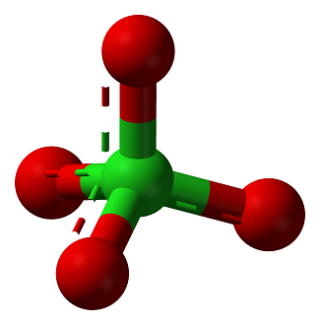
The EPA proposed a National Primary Drinking Water Regulation (NPDWR) and Maximum Contaminant Level Goal (MCLG) for perchlorate as a result of the D.C. Circuit’s May 2023 decision in NRDC v. Regan.
The EPA is required to sign a final rule by May 21, 2027 to comply with its consent decree obligations.
On this page:
- 2026 Proposed Perchlorate Rulemaking
- Background
- May 2023 Court Decision
- March 2022 Review of Withdrawal Action
- July 2020 Action
- June 2019 Proposed Rule
- Perchlorate Peer Reviews
- Supplemental Information
- Federal Register Notices
2026 Proposed Perchlorate Rulemaking
On January 2, 2026, the U.S. Environmental Protection Agency (EPA) signed a proposed National Primary Drinking Water Regulation (NPDWR) and Maximum Contaminant Level Goal (MCLG) for perchlorate as a result of the D.C. Circuit’s May 2023 decision in NRDC v. Regan.
The EPA is proposing a health-based Maximum Contaminant Level Goal (MCLG) of 0.02 mg/L (20 µg/L). The EPA is co-proposing enforceable Maximum Contaminant Levels (MCLs) for perchlorate of 20 µg/L, 40 µg/L, or 80 µg/L.
The EPA will accept comments to the public docket identified by Docket ID No. EPA-HQ-OW-2024-0592 at http://www.regulations.gov by March 9, 2026.
The EPA held a virtual public hearing on February 19, 2026, where the public was invited to provide the EPA with verbal comments. A transcript of the verbal comments along with the EPA's presentation on the proposed rule, public hearing agenda and commenter list can be found in the summary linked below. A recording of the public hearing will be posted here as soon as it becomes available.
For information about perchlorate and the proposed National Primary Drinking Water Regulation for perchlorate:
- Notice of Proposed Perchlorate National Primary Drinking Water Regulation
- Fact Sheet: Questions & Answers: Proposed National Primary Drinking Water Regulation for Perchlorate (pdf)
- Fact Sheet: The EPA’s Proposed National Primary Drinking Water Regulation for Perchlorate: Fact Sheet for Public Water Systems (pdf)
- Additional supporting information is available in Docket ID No. EPA-HQ-OW-2024-0592
Background
Perchlorate is commonly used in solid rocket propellants, munitions, fireworks, airbag initiators for vehicles, matches, and signal flares. Perchlorate may occur naturally, particularly in arid regions such as the southwestern United States and is found as an impurity in hypochlorite solutions used for drinking water treatment and in nitrate salts used to produce nitrate fertilizers, explosives, and other products. The EPA has been evaluating perchlorate for decades. Below is a summary of previous evaluations of perchlorate.
The EPA issued a report, Reductions of Perchlorate in Drinking Water, detailing how perchlorate levels in drinking water supplies have decreased since the EPA made a determination to regulate perchlorate in 2011.
Additionally, the EPA is providing, Steps Water Systems Can Take to Address Perchlorate in Drinking Water, with recommendations and best practices for PWSs that may be concerned about levels of perchlorate in drinking water. Read frequently asked questions about perchlorate in drinking water
May 2023 Court Decision
In May 2023, in NRDC v. Regan, the D.C. Circuit vacated and remanded the EPA’s July 2020 withdrawal of its determination to issue a drinking water regulation for perchlorate. The panel majority held that the EPA lacked authority under the Safe Drinking Water Act to withdraw a determination to regulate a contaminant and must proceed to regulate, despite new and additional data and analyses that changed the scientific underpinnings of the original regulatory determination.
March 2022 Review of Withdrawal Action
In March 2022, the EPA announced the completion of its review of the July 2020 perchlorate action pursuant to the requirements of Executive Order 13990. The Agency concluded then that the July 2020 withdrawal action was supported by the best available peer reviewed science and that it was conducted in accordance with the Executive Order. The Agency also announced several measures it was taking to ensure that public health is protected from perchlorate exposure in drinking water. Read the EPA’s Press Release & the 2022 Plan to Address Perchlorate Contamination (pdf) (135 K).
July 2020 Action
On July 21, 2020, the EPA withdrew the 2011 determination to regulate perchlorate and made the determination to not issue a regulation for perchlorate. Based on the best available, peer-reviewed science, as required by the Safe Drinking Water Act (SDWA), the EPA determined that finalizing an NPDWR for perchlorate would not present a meaningful opportunity for health risk reduction for persons served by public water systems, and therefore revised its determination that a national regulation of perchlorate was justified under the SDWA.
- May 2023 D.C. Circuit Court Decision (pdf) (315 K)
- Federal Register Notice: Drinking Water: Notice of Final Action on Perchlorate (July 2020)
- Supporting documents are available in Docket ID No. EPA-HQ-OW-2018-0780
- Press Release: EPA Issues Final Action for Perchlorate in Drinking Water (June 2020)
- Report: Reductions of Perchlorate in Drinking Water (pdf)
- Fact Sheet: Steps Water Systems Can Take to Address Perchlorate in Drinking Water (pdf)
- Press Release: EPA Notes Successes in Reducing Perchlorate in Drinking Water (May 14, 2020)
June 2019 Proposed Rule
On June 26, 2019, the EPA proposed a National Primary Drinking Water Regulation (NPDWR) and Maximum Contaminant Level Goal (MCLG) for perchlorate. In the preamble to the proposed rule, the EPA sought comment on withdrawing the 2011 determination to regulate based on the updated health effects information developed as a result of the 2013 Science Advisory Board (SAB) recommendations and the EPA’s updated analysis of the occurrence of perchlorate in public water systems. Despite proposing an MCLG and Maximum Contaminant Level (MCL), the EPA’s analysis conducted in support of the 2019 proposal suggested that perchlorate did not occur in public water systems with a frequency and at levels of public health concern and that an NPDWR for perchlorate did not present a meaningful opportunity for health risk reduction in persons served by public water systems as required to regulate under the SDWA.
The Agency also requested comment on all relevant aspects of the proposed rule including, but not limited to the proposed MCLG and MCL of 56 micrograms per liter as well as the alternative MCLG and MCL values of 18 micrograms per liter and of 90 micrograms per liter, perchlorate monitoring and reporting requirements for public water systems, a list of treatment technologies that would enable water systems to comply with the MCL, and affordable compliance technologies for small systems serving 10,000 persons or less. The EPA also requested comment on its methodology for deriving the MCLG, the underlying assumptions and analysis of its cost and benefit estimates, and other specific items listed in the proposed rule.
- Read the Federal Register Notice
- Additional supporting information is available in Docket ID No. EPA-HQ-OW-2018-0780
Perchlorate Peer Reviews
As part of the EPA’s commitment to ensuring the safety of America’s drinking water, the Agency conducted two independent and sequential expert peer reviews to determine the appropriate scientific approach for understanding the adverse health impacts of perchlorate in drinking water.
The EPA collaborated with Food and Drug Administration scientists to implement the 2013 Science Advisory Board (SAB) recommendations to develop a Physiologically Based Pharmacokinetic/Pharmacodynamic (PBPK/PD) or Biologically Based Dose Response (BBDR) model that integrated available health related information in a robust and transparent analysis of the effects of perchlorate on thyroid hormone production. A peer review was conducted on the draft model and model report in January 2017. After considering the findings of this review, the EPA revised the Perchlorate BBDR Model to focus on increasing the scientific rigor of the model and modeling results. Based on SAB recommendations and support from peer-reviewers, the EPA developed a two-stage approach linking the revised BBDR model results with quantitative information on neurodevelopmental outcomes from epidemiological studies. The EPA also developed an alternative population-based approach that uses the revised Perchlorate BBDR Model to evaluate a shift in the population of pregnant women who could be hypothyroxinemic.
Final Peer Review Reports
The final reports for both peer reviews are available through Docket ID No. EPA-HQ-OW-2016-0439.
Supplemental Information
Technical Fact Sheet
Prior EPA Health Documents
2005 Perchlorate Reference Dose
2009 Interim Health Advisory
- Interim Drinking Water Health Advisory for Perchlorate, EPA 822-R-08-25, December 2008
Federal Register Notices
January 2026 Notice of Proposed Perchlorate Rule
- Federal Register Notice: National Drinking Water Regulations: Perchlorate (January 2026)
Notice of 2020 Withdrawal Action on Perchlorate
- Federal Register Notice: Drinking Water: Notice of Final Action on Perchlorate (July 2020)
June 2019 Notice of Proposed Perchlorate Rule
Public Meeting Notices
- Notice of a Public Meeting: Stakeholder Meeting Concerning EPA's Intent To Regulate Perchlorate Levels in Drinking Water - September 20, 2012
- Notification of a Public Meeting and Public Teleconference of the Science Advisory Board: Perchlorate Advisory Panel - July 18-19, 2012 and September 25, 2012
- Notice of a Public Meeting - March 3, 2011