


Action Update: EPA Identifies the Spilled Chemical Compound in Garnett, Kansas
LENEXA, KANSAS (JAN. 30, 2025) – U.S. Environmental Protection Agency (EPA) has identified the chemical compound spilled in Garnett, Kansas, on Dec. 31, 2025. Recent laboratory analysis corroborates EPA’s preliminary field screening results with a “high level of confidence” that the corrosive substance was sodium aluminate.
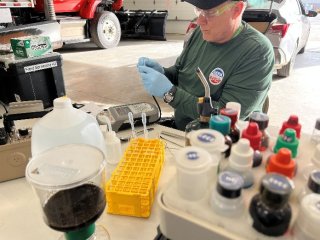
Field tests were conducted early in the response and identified the material as a strong base with a pH level of 14. Strong bases are reactive chemicals that undergo various chemical changes when they are exposed to the elements. These characteristics made collecting a pure sample for broad-spectrum analysis difficult. Substances with a pH of greater than or equal to 12.5 are considered hazardous based on the Resource Conservation and Recovery Act’s corrosivity characteristic.
“I want to thank the people of Garnett and Anderson County for their patience and cooperation with EPA and our partners during this response,” said EPA Region 7 Administrator Jim Macy. “Applying sciences in the field and taking the time to ensure accurate results is an important part of the emergency response process that takes time to get accurate results. We want to be confident in both our field and laboratory analyses before announcing results to the public. Communities in the Heartland should know that if any substance posed an immediate threat to life or their health, EPA would notify them and take immediate action with the help of local first responders.”
The laboratory conducting the analysis was able to account for chemical byproducts and reactions in the samples of the spilled material. The identification of the material as sodium aluminate supports EPA’s initial field screening techniques and analyses conducted at the response. These analyses enable EPA’s responders to characterize substances and direct responses appropriately.
Sodium aluminate is a chemical compound that is typically used in water and wastewater treatment, paper and glass manufacturing, and as a solidification accelerant in the construction industry. EPA responded to the spilled sodium aluminate in Garnett, Kansas, to prevent potential human exposure to the material after the material was spilled along two miles of roadway and impacted over 260 vehicles by an unknown, and still unidentified, party.
Throughout the week of Jan. 4, 2026, EPA treated 266 impacted vehicles in Garnett with a vinegar-water solution followed by a traditional car wash.
EPA worked in Unified Command along with its partners the Kansas Department of Health and Environment (KDHE), the Kansas Department of Transportation (KDOT), Anderson County Emergency Management, and the City of Garnett.
To report a spill, or suspected spill, of a hazardous substance, please contact the National Response Center at 800-424-8802 or the EPA Region 7 Spill Line at 913-281-0991.