


Fraud Alert: Asphalt Sealer Scam
The U.S. Environmental Protection Agency Office of Inspector General is issuing this fraud alert to highlight new tactics recently adopted by perpetrators of the asphalt sealer scam. This scam involves fraudsters posing as contractors to target homeowners and businesses.
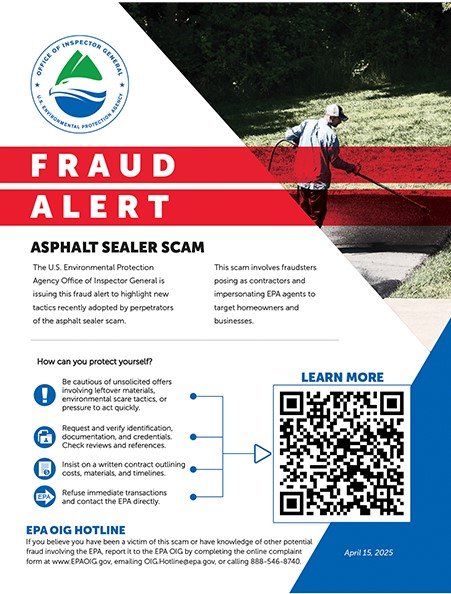
They claim to have leftover materials from a nearby job and offer a quick driveway sealing or asphalt paving service at a discounted price. The work performed is usually poorly done, unfinished, or unnecessary, and the materials used are low quality or watered down. After completing the job, the scammers often demand a higher payment than originally quoted.
A new twist on this long-time scam involves individuals impersonating EPA agents coming back after the initial service is completed and claiming that the materials used for the sealing or paving job create an environmental violation that must be corrected immediately. The scammers claim that the homeowner must either pay a fine or penalty or provide reimbursement for environmental remediation service. In one instance, a victim paid hundreds of thousands of dollars for unnecessary remediation work.
An EPA agent will never direct or arrange remediation work on the spot nor personally collect payment for environmental penalties. Legitimate EPA enforcement processes involve formal investigations, written notices, and coordination with certified professionals. Any required remediation or penalties will have clear instructions and will be communicated through official EPA documents, such as violation notices or administrative orders. Additionally, the EPA accepts payments only through specific, secure methods. Authorized payment channels include electronic options such as Vendor Express, Fedwire, and Pay.gov, as well as traditional mail-in payments directed to designated lockboxes. The EPA does not solicit or accept payments through unsolicited phone calls, emails, or in-person demands.
This criminal scam, which can also involve other types of construction and home repair work, is often perpetrated by a fraud ring that targets a specific area for a short period, then moves on to the next town or state, making the fraudsters difficult to detect or identify.
How can you protect yourself from scams like this?
- Be cautious of unsolicited offers, particularly those involving leftover materials, environmental scare tactics, or pressure to act quickly.
- If someone claiming to be an EPA agent insists on immediate remediation work or demands payment through a method inconsistent with those discussed above, request identification and written documentation, refuse immediate transactions, and always contact the EPA directly to verify the legitimacy of the situation.
- Always verify a contractor’s credentials, check reviews and references, and insist on a written contract outlining costs, materials, and timelines.
If you suspect that you have been victim to a scam involving an individual impersonating an EPA agent, you should immediately contact the EPA OIG Hotline at OIG.Hotline@epa.gov.