


Collaboration with Taiwan Ministry of Environment

Taiwan is an environmental leader in the Indo-Pacific region. EPA established an agreement with Taiwan Ministry of Environment (MOENV) in 1993, under the auspices of the American Institute in Taiwan (AIT) and Taiwan Economic and Cultural Representative Office (TECRO), to advance joint environmental programs.
EPA's close partnership with MOENV has now evolved into a robust platform for sharing experience and expertise with each other as well as assisting environmental agencies and partners in the Indo-Pacific, Latin America, and Africa regions. Through this partnership, U.S. and Taiwan environmental authorities have worked to manage the environment and reduce pollution through projects, research, and knowledge exchange.
In 2014, EPA and MOENV officially launched the International Environmental Partnership (IEP), a network of experts from around the world working together to strengthen capacity for addressing environmental challenges. In 2020, the IEP expanded to collaborate with Ministry of Health and Welfare (MOHW), Ministry of Education (MOE), Ministry of Economic Affairs (MOEA), and Ocean Affairs Council (OAC). To date, the IEP has:
- Expanded mercury monitoring in the Asia Pacific region to harmonize atmospheric mercury monitoring;
- Established a regional air quality protection program to strengthen air quality management;
- Supported countries in developing new approaches to managing electronic waste;
- Advanced the Global Environmental Education Partnership in environmental literacy.
Explore our work with MOENV:
Recent Events

December 2025: EPA and MOENV partnered to organize the Emerging Contaminants Characterization and Remedial Practice Workshop in Taiwan. EPA experts joined counterparts from across the Indo-Pacific to engage stakeholders from multiple sectors to discuss ongoing efforts on site remediation and emerging practices and technologies.
October 2025: EPA partnered with MOENV and Thailand Pollution Control Department to organize and execute a contaminated site management capacity building workshop. As part of Thailand’s efforts to effectively manage the threats posed by abandoned, uncontrolled hazardous wastes sites, this technical workshop focused on short-term measures to 1) increase site security, 2) increase site stability, and 3) reduce community exposure to contamination. The event included three days of training, group exercises, and exchange, and two days of field site visits to hazardous waste sites, and petrochemical complexes.
September 2025: EPA was invited to provide keynote remarks by Taiwan Ocean Affairs Council at their International Conference on Marine Environmental Management. Victoria Tran, Acting Assistant Administrator for the Office of International and Tribal Affairs delivered a keynote address highlighting EPA’s efforts on marine debris, as well as prevention and management of chemical and oil spills.
September 2025: As part of the International E-waste Management Network, EPA, MOENV, and other partners co-organized a workshop on e-waste in Brazil. The theme focused on exploring the potential of digital technology and SI applications in e-waste management, and included opportunities for site visits. Experts from Argentina, Brazil, Chile, Colombia, Malaysia, the Philippines, Taiwan, Thailand, the U.S., and Vietnam participated in the trainings and provided information on their efforts related to e-waste management.
- September 2024: EPA was invited to provide a keynote speech for a workshop organized through the Global Cooperation and Training Framework (GCTF). American Institute in Taiwan (AIT), Taiwan Ministry of Foreign Affairs (MOFA), Japan-Taiwan Exchange Association (JTEA), Australian Office Taipei, and Canadian Trade Office in Taipei hosted the “GCTF International Workshop on Setting an Ambitious Path towards a Net-Zero Future.” Jane Nishida, then-Assistant Administrator for the Office of International and Tribal Affairs provided a keynote speech on EPA's efforts on the ties between environmental protection and economic growth.
- September 2024: EPA and MOENV co-organized a workshop on air quality in Taiwan. Experts from Mongolia, Taiwan, Vietnam, the Philippines, Indonesia, and the U.S. attended to learn more about National Ambient Air Quality Standards Attainment Planning and the AirNow Fire and Smoke Map. MOENV also shared their efforts to address mobile and point source pollution.
- June 2024: Officials from EPA and private sector hosted the 2024 International Technical Exchange on Emerging Contaminants and Remedial Practices to an audience of hundreds of Taiwan stakeholders and working group participants from across the Indo-Pacific region. This annual activity had regularly been held in person. Hybrid workshops were held in 2022 and 2023 with this gathering being the first live, in-person delivery of this workshop since before Covid-19.
- November 2023: EPA and Taiwan joined Thai officials in Bangkok, Thailand for a trilateral Capacity Building for Remediation, Site Assessment, and Management program. EPA and Taiwan officials and experts from the academic and business sectors in Taiwan delivered a two- day workshop for Thailand Pollution Control Division staff and officers. This was followed by conducting site visits, debriefings, and community engagement to learn about, assess, and provide practical evaluations and suggested approaches to address major contaminated sites. Engagement has continued as EPA and MOENV work with Thailand on remediation policies and operations.
- August 2023: To celebrate 30 years of environmental cooperation between the U.S. and Taiwan, the International Environmental Partnership hosted a commemoration event. During the event, Jane Nishida, then-Acting Administrator for the Office of International and Tribal Affairs, and Ya-Fen Wang- Deputy Minister of MOENV provided opening remarks. Several videos and posters were also displayed highlighting the accomplishments of this long-standing partnership.
- August 2023: To commemorate the elevation of then Taiwan Environment Protection Administration to the MOENV, Taiwan hosted an inauguration ceremony. During the ceremony, Taiwan officially appointed their new Minister. Additionally, Jane Nishida, then-Acting Administrator for the Office of International and Tribal Affairs provided brief congratulatory remarks alongside other distinguished guests.
- October 2023: EPA and MOENV, with support from US Embassy/Ulaanbaatar organized a technical exchange in Mongolia with experts from different organizations and departments. These discussions and exchanges focused on air quality topics such as monitoring, data analyzation, and other similar concerns.
Environmental Priorities

According to the World Health Organization, approximately 7 million people died in 2012 as a result of air pollution exposure. To address this challenge, EPA and MOENV have collaborated on air quality protection for nearly twenty years.
In 2018, EPA and MOENV launched the South & Southeast Asia-Air Improvements in the Region (SSEA-AIR) program to make measurable reductions to air pollution in Indo-Pacific countries. Together EPA and MOENV have introduced eight Asian countries to this program. In 2019, at the SSEA-AIR Workshop in Taiwan, the partners learned how EPA and MOENV conduct air quality action planning to achieve results.
Reducing Exposure to Mercury
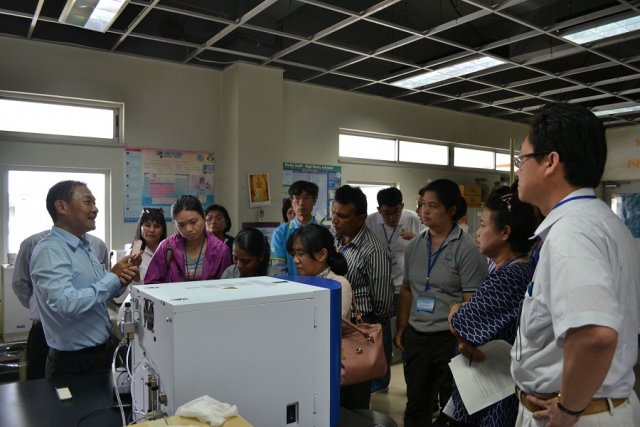
Mercury is a naturally occurring element widely found throughout the environment. Processes such as power generation from coal-fired power plants, incineration of waste, and metal processing emit mercury to the atmosphere. Like many forms of air pollution, mercury transcends national borders. Increasing industrialization has made Asia the main source region of mercury emissions to the global atmosphere.
To address this, EPA partnered with MOENV, the National Atmospheric Deposition Program, and Taiwan’s National Central University to launch the Asia Pacific Mercury Monitoring Network (APMMN) in 2012. APMMN shares information, data, tools, and technologies to expand coordinated mercury monitoring capacity in the Asia-Pacific region; provides training and support to scientists in the region; and develops baseline mercury data useful to regional and global modelers. APMMN seeks to systematically monitor wet deposition and atmospheric concentrations of mercury in a consistent, standardized network of stations throughout the region.
Learn more:
Cleaning Up E-waste

Discarded cell phones, tablets, and other electronic devices, commonly called e-waste, can be recycled so that gold, silver, copper, and other valuable materials can be reused. Recycling e-waste not only provides these valuable elements as a useable resource, but also prevents materials from being thrown into landfills, where harmful materials, like lead and mercury, can pollute the environment and endanger human health.
EPA and MOENV have collaborated since 2011 to build global capacity for the environmentally sound management of waste electrical and electronic equipment. To support this goal, EPA and MOENV coordinate the International E-Waste Management Network (IEMN). The IEMN enables environmental officials from within and beyond the Asia-Pacific region to exchange information and best practices on e-waste management. Over the years, the IEMN has hosted webinars focused on regional efforts to address e-waste, and on specific topics related to e-waste management.
Learn more:
Building Strong Institutions and Legal Structures
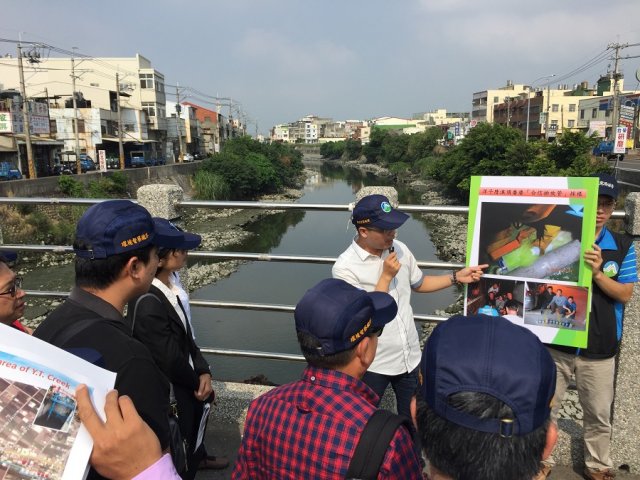
Strong environmental laws that protect our natural resources and safeguard our health must be complemented by effective enforcement. To establish an enforcement regime that effectively detects, corrects, and deters violations requires thoughtful strategies, well trained inspectors, supporting legal tools, and a fair and just sanction system.
EPA and MOENV are currently cooperating bilaterally on issues of environmental enforcement. EPA hosts inspectors from Taiwan for study tours in the U.S. to learn about enforcement and compliance approaches, learning from experts at EPA Headquarters and the National Enforcement Investigations Center. The two organizations are also working together to share new methods and approaches with each other and other partners. For example, EPA shared information with MOENV on waste water continuous emission monitoring systems management and enforcement, river water quality abnormal polluter findings, evidence preservation, CAA, CWA, RCRA cases, litigation, toxicology in enforcement, and water sensor and GMAP technologies, among many other topics. Recently, EPA and MOENV held a joint training to share information on standard practices, crime scene investigation, and new enforcement technologies with investigators from two Southeast Asian countries.
Addressing Contaminated Soil and Groundwater

With rapid economic development, soil and groundwater pollution has become an increasingly serious challenge for many developing countries in Asia. Contaminated sites impact human health, particularly the poor, children, elderly and other vulnerable communities. Cleaning up contaminated sites reduces the impact of pollutants on groundwater sources. This improves ecological systems and the food supply both in Asia and the U.S.
To achieve this, EPA and MOENV experts serve as technical trainers for agencies and institutions across the Asia-Pacific region on the clean-up of contaminated sites, addressing topics such as forced-air remediation, bioremediation and phyto-remediation. EPA works with MOENV’s Soil and Groundwater Pollution Remediation Fund Management Board to deliver annual technical workshops for Taiwan and international attendees that gather for technical exchange on emerging contaminants and remediation treatment technologies. EPA and the Board are also engaged in a trilateral partnership with Thailand to consult on and elevate site remediation capacity there and explore additional opportunities to collaborate on capacity building partnerships in the region.
Programs include:
Promoting Environmental Education
EPA collaborates with MOENV to integrate environmental education into all sectors of our societies including businesses, schools, communities, and families. EPA and MOENV coordinate programs such as Eco-Campus Partnership Programs, Kids Making Sense, and the Global Environmental Education Partnership to promote quality environmental education and empower youth around the world to drive positive change in their communities.
Programs include:
Key Partners
The following links exit the site:
- Ministry of Environment
- Ministry of Health and Welfare
- Ministry of Education
- Ministry of Economic Affairs
- Ocean Affairs Council
- American Institute in Taiwan
- Taipei Economic and Cultural Representative's Office
- North America Association for Environmental Education
- National Atmospheric Deposition Program