


Maumee AOC

Leah Medley
(medley.leah@epa.gov)
312-886-1307
On this page:
Latest News
Overview
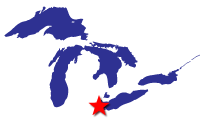
Located in northwest Ohio, the Maumee Area of Concern (AOC) covers 787 square miles and includes several watersheds draining to Lake Erie, making it one of the largest AOCs in the United States.
The Maumee AOC has been the site of industrial and municipal development for nearly two centuries. For years, unregulated waste disposal, contamination from old industrial sites and dumps, combined sewer overflows, and disposal of dredged materials contributed to contamination entering the waterway. Contaminants of concern include polychlorinated biphenyls (PCBs), heavy metals, and polycyclic aromatic hydrocarbons (PAHs). For example, in the Ottawa river, high levels of PCBs and other contaminants led to a no-contact advisory for over 25 years. Some areas, such as the Toussaint Wildlife Area, were historically wetlands, but more than 90% of the wetlands in northwest Ohio have been lost due to human activities.
Beneficial Use Impairments
Beneficial Use Impairments (BUIs) are designations given by the International Joint Commission (IJC) that indicate severe environmental degradation in AOCs. Removing BUIs demonstrates progress in cleanup and restoration. Up to 14 BUIs may be designated for an AOC. As cleanup actions are completed and monitoring confirms environmental improvements, BUIs are removed over time. Originally, the Maumee AOC had 10 BUIs. The list below shows which BUIs have been removed, and which remain. Once all BUIs are removed, the process of delisting the AOC can begin.
- Restrictions on Fish and Wildlife Consumption (pdf) Removed August 2022
- Degradation of Fish and Wildlife Populations
- Fish Tumors or Other Deformities
- Degradation of Benthos
- Restrictions on Dredging Activities (pdf) (4.5 MB) - Removed August 2024
- Eutrophication or Undesirable Algae
- Beach Closings
- Degradation of Aesthetics (pdf) (4.7 MB) - Removed July 2023
- Added Costs to Agriculture or Industry (pdf) (4.6 MB) - Removed September 2015
- Loss of Fish and Wildlife Habitat
Partners for Clean Streams, in cooperation with the Ohio Environmental Protection Agency, created the Maumee AOC Data Management and Delisting System for tracking and visualizing remediation work to support removal of BUIs.
EPA has continually worked with federal, state, and local partners to execute remediation and restoration work in the area and address existing beneficial use impairments. Efforts to remediate contaminated sediments and restore habitat have made significant progress, but much work remains to be done. Two Great Lakes Legacy Act (GLLA) sediment cleanup projects have been completed within the Maumee AOC: the Ottawa River and Otter Creek projects. Potential future GLLA projects include Swan Creek and the Lower Maumee River. The success of these projects will continue to improve plant and animal populations, help remove BUIs, and support the eventual delisting of the AOC. As progress continues, the City of Toledo and the surrounding area will benefit from a healthier environment and the economic advantages of an accessible, healthy waterfront. These efforts also have the potential to improve quality of life for residents by restoring local natural resources. Highlighted below are a few examples of the many restoration and remediation projects.
-
Completed Project Highlights
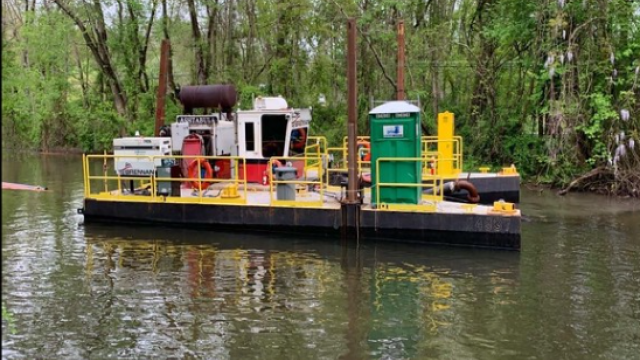
Remediation and restoration project accomplishments.
-
Table of Projects
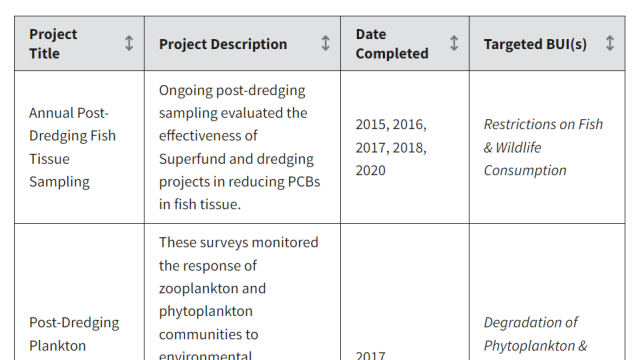
Remediation and restoration project table.
-
Restoration Documents
Remediation and restoration documents.
Feasibility Study Highlight: Lower Maumee River and Swan Creek
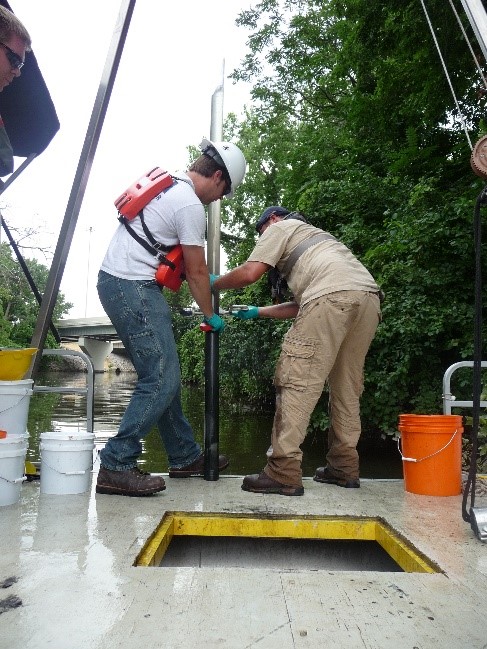
EPA entered into a Great Lakes Legacy Act Project Agreement with Ohio EPA to perform Focused Feasibility Studies (FFS) in the Maumee AOC in Toledo, Ohio. The FFSs evaluated remedial alternatives to address contaminated sediments in the Lower Maumee River and in Swan Creek, a tributary to the Maumee River. The Lower Maumee River FFS was completed in September 2023. The Swan Creek FFS was majorly complete in March 2024. Future action is on hold due to funding availability.
Remedial Design Project Highlight: Lower Maumee River (LMR)

In March 2024, EPA entered into a Great Lakes Restoration Initiative (GLRI) Cooperative Agreement (CA) with the Toledo Lucas County Port Authority (TLCPA) to perform Remedial Design (RD) in the Lower Maumee River. This RD included two project areas to address sediments contaminated with PAHs, PCBs, and heavy metals. RD for the Sway Bridge Project Area was completed in July 2025 and is moving into Remedial Action (RA) in fall 2027 through another GLRI CA with TLCPA. The RA project will address 121,000 CY of sediment primarily contaminated with PAHs. RD for the Wastewater Treatment Plant Project Area was substantially completed in July 2025. RA is targeted for 2028 or 2029, subject to funding availability.
Remediation Project Highlight: Ottawa River Area 4X/4Y

In August 2026 EPA entered into a Great Lakes Restoration Initiative (GLRI) Cooperative Agreement (CA) with Ohio EPA. While the Ottawa River was remediated in 2010, a pocket of contamination was identified during remedy effectiveness assessment sampling in 2020. Ohio EPA will select a preferred remedial alternative and develop a remedial design to address sediment contaminated with toxic levels of PCBs in a section of the Ottawa River (Dredge Management Units (DMUs) 4X and 4Y). Once complete, the project can move to construction phase, which will contribute to the removal of BUI impairments and will help protect human health and the environment from the adverse effects associated with exposure to contaminants of concern.
Partners
- National Oceanic and Atmospheric Administration
- U.S. Army Corps of Engineers
- U.S. Fish and Wildlife Service
- U.S. Forest Service
- U.S. Geological Survey
- Ohio Lake Erie Commission
- Partners for Clean Streams
- Maumee AOC Advisory Committee
- Great Lakes Commission: Maumee River
- City of Toledo
- Ducks Unlimited
- Lucas County
- The Nature Conservancy
- Ohio Department of Natural Resources
- Ohio EPA
- University of Toledo
- Bowling Green State University