


From the Desk of the Regional Administrator - "EPA’s Brownfields Program Empowers Local Solutions and Second Chances"
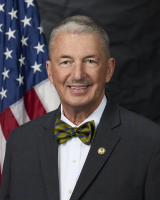
LENEXA, KAN. (AUG. 10, 2026) – At EPA Region 7, our Brownfields team aims to strengthen communities through partnership across federal, state, and local governments. We mean it when we say that the Brownfields program gives second chances to people and places.
EPA recently announced its 2026 Brownfields Grant selections in Iowa, Kansas, Missouri, and Nebraska. These grants will be used for cleanups, Revolving Loan Funds, and assessments. Of the thirteen grants in our region, six will go toward environmental assessment activities.
Assessment grants are a key piece of the Brownfields Program, offering communities a hand in prioritizing sites, conducting assessments, and developing plans. Region 7 has multiple examples of these grants kicking off community growth, and we hope that sharing these stories empowers even more of our community members to join in environmental revitalization and reuse efforts.
A Community Hub in Springfield, Missouri
In 2006, the same year that Springfield, Missouri’s Fairbanks Elementary School shut its doors for good, Amy Blansit bought her home just across the street in the historic Grant Beach neighborhood.
It didn’t take long for the vacant building, which had operated as a school for 100 years, to become the city’s most blighted site.
Blansit watched the decline from her front porch as windows shattered, trespassers roamed the halls, and teenagers climbed the roof. She watched as the building passed from one developer to another, with none willing to take on the mounting issues.
Finally, she’d had enough and picked up the phone to file a complaint with the city. She called for six years, until one day, the voice on the other end was an old friend from college.
“Want to complain?” the friend teased. “Why don’t you do something about it?”
So, she did.
In February 2013, Blansit and her late husband, Drew Lewis, bought the Fairbanks building, saving it from certain demolition. In a string of heroic feats, she remediated 3,000 square feet of the building on her own — then recruited curious and helpful neighborhood volunteers to begin working on the rest.
Beginning with Brownfields Assessments
Before Blansit ever had the chance to purchase the Fairbanks building, the city of Springfield cleared the way for the building’s reuse by using EPA Brownfields Assessment Grant funds to conduct environmental site assessments.
Environmental site assessments are investigations that identify environmental concerns on a property, and they protect future owners from facing liability for contamination they did not create. These investigations are conducted by qualified environmental professionals, such as engineers and geologists, who assess the property.
To find out more about an unoccupied property, concerned individuals like Blansit can reach out to their state environmental agency or contact their local dangerous building department.
Harnessing Brownfields Funding

In the case of the Fairbanks building, Blansit poured tens of thousands of her own dollars into the project. She secured a $115,000 bank loan and some grant funding, but that was nowhere near what she needed to finish the remaining 20,000 square feet of the renovation.
Then came a critical breakthrough: the city had EPA Brownfields Cleanup Grant funds available to allocate – and the Fairbanks was the perfect fit. Blansit received around $250,000 in funding from the city of Springfield that, according to her, was the final push to get the Fairbanks completely remediated.
Blansit, in an interview, said it was the Brownfields funds that made this project possible, noting that school would have been torn down without the funding.
Twelve years later, the once-blighted school is now The Fairbanks Community Hub, home to the Drew Lewis Foundation, named in honor of Blansit’s late husband. The one-acre property houses the community garden dreamed of by Blansit and Lewis; a playground; a bike shop offering free bikes and repairs for neighborhood children; and a coffee shop operated by high school students in Springfield’s vocational program.
It’s one of many examples of the promise of EPA Brownfields assessments and funding.
Using Brownfields Grants for Veterans-focused Redevelopment
Three hours north of Springfield, the city of Kansas City, Missouri, used an EPA Brownfields Assessment Grant to clear the way for redevelopment by Footprints Inc., an organization that provides transitional housing for homeless veterans.

Footprints Inc. hosted a ribbon-cutting ceremony on April 30, 2026, at their new Heroes Home Gate location in the city’s Ivanhoe neighborhood. The Region 7 Brownfields team was in attendance to celebrate this milestone achievement with fellow leaders from the city of Kansas City, Missouri, the Missouri Department of Natural Resources, and U.S. Department of Veterans Affairs.
At the event, Heroes Home Gate Executive Director Joel Bailey highlighted that grants and partnerships went into making the veteran’s housing a reality. “Things don’t get built without money,” he said during his speech.
Across our region and nation, the Brownfields program doesn’t just clean up contaminated properties – it opens doors for long-term investment, job creation, and neighborhood stability.
Jim Macy is the administrator for EPA Region 7, which consists of Iowa, Kansas, Missouri, Nebraska, and nine tribal nations. He previously served in leadership roles at Missouri Department of Natural Resources and Nebraska Department of Environment and Energy.
New in 2026: EPA Region 7’s “From the Desk of the Regional Administrator” newsletter gives residents of Iowa, Kansas, Missouri, and Nebraska a chance to hear from Regional Administrator Jim Macy on EPA’s work in their communities.