


Navigating Funding for Brownfields Revitalization
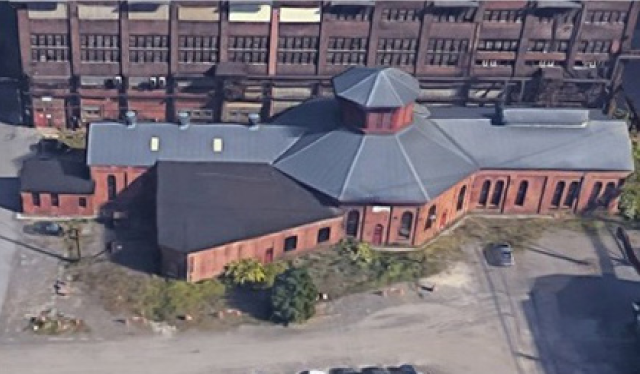
EPA's Brownfields grants and technical assistance programs can help your community get started on brownfields revitalization using site assessment, cleanup, reuse planning and job training activities.
Leveraging EPA's resources can help you secure additional funding and financing to make your brownfield site ready for reuse, upgrade infrastructure, attract private sector investment and complete redevelopment.
Early investments are a great start but often are not enough to see a brownfield site all the way to reuse.
Where to Find Funding and Financing for Brownfield Reuse Projects
Federal and state agencies, philanthropy and private organizations offer a range of funding, financing and technical assistance opportunities.
Federal Funding Opportunities
The Brownfields Federal Programs Guide provides a central source of information for over 80 federal programs that offer grants, loans, loan guarantees, tax incentives and other resources to support activities at the various stages of brownfield revitalization process. Resources to help your community plan, assess, clean up and redevelop activities are included in the Guide.
State Funding Opportunities
Your state may offer funding and technical assistance that can help your community address brownfields. For the several federal funding programs that are administered by or sub-granted to your state, you can direct your efforts to the appropriate state agency even when the funding is federal in origin.
Philanthropic Foundation Grants
Many national and regional foundations have made community revitalization and economic development projects a central focus of their grants, with brownfield site reuse fitting nicely into those goals. Check if your locality has a community foundation that can become a funding partner and help spur and plan brownfield revitalization. Start by checking out the "Foundation Directory" and the "Community Foundation Locator" at the Council on Foundations.
Private Finance
Often, larger, more costly brownfield revitalizations will take more than just grants. Obtaining private financing is common. There are many sources, including federal- and state-subsidized financing sources, tax incentives and other resources that can fill these gaps. Start by checking out the Council of Development Finance Agencies, whose website provides the Federal Financing Clearinghouse, the State Financing Program Directory, an Online Resource Database and sector-specific Resource Centers focused on finance.
Get Organized with a Resource Roadmap
It can be helpful for your community to develop a Resource Roadmap for the overall brownfields revitalization. A roadmap is a list of discrete, smaller and interrelated projects that together form the larger redevelopment. Finding specific grant or financing for each smaller project will create leveraging and investment opportunities while building new community amenities. The goal of the roadmap is to sequence and match each smaller project to specific funding sources, then weave together the smaller projects into the overall vision.
Types of Brownfield Revitalization and Successes
Revitalization comes in many shapes and sizes, but there are tried-and-true ways to turn brownfields into productive community assets. Transformative brownfield efforts often go beyond cleanup alone. They can include multiple interrelated projects that strengthen neighborhoods and attract investment. These projects frequently support quality-of-life improvements, including:
- upgrades to streets, sidewalks and stormwater infrastructure
- new parks, playgrounds and multi-modal trails
- better access to job centers, the waterfront and fresh food
Such community-centered investments often spark further development and financing opportunities -- laying the groundwork for new buildings, services and long-term growth.
Some reuse examples are provided in the table below.
Brownfield Reuses | Led By | Typical Examples | Recent Real-Life Brownfield Successes |
| Mixed use | Private Sector | Apartments, multi-family homes, shopping centers, business offices, retail, mixed-use redevelopment, etc. | The City of Dubuque, Iowa, used $45.5 million in EPA and other federal and state grants to remediate contaminated properties and upgrade the public infrastructure in the Historic Millwork District. Today Millwork is an exciting destination center with over a dozen pre-WWII brick warehouse buildings transformed into 400,000 square feet of hotels, event spaces, restaurants, retail and offices together with 200 downtown residences. |
| Industrial and Manufacturing | Private Sector | Renewable energy, manufacturing warehouses, logistics centers, data centers, research and development facilities, regenerative agriculture, greenhouse facilities, etc. | At the once iconic former Weirton Steel Plant in Weirton, West Virginia, which closed with 13,500 jobs lost, the City is working with a private company to transform the 1,300-acre brownfield into "Frontier Crossings," a new manufacturing hub. One factory has opened, employing 750 skilled workers to produce innovative iron-oxide batteries for clean energy storage, and soon another factory will open, creating 600 jobs to manufacture distribution transformers. |
| Public Facilities | Public Sector | Community centers, affordable housing, transit facilities, police headquarters, water treatment plants, amphitheaters, public works yards, etc. | The Town of North Hempstead, New York, transformed a brownfield into a multi-use community center. The center has community meeting facilities, an event center, an NBA-size basketball court, an exercise center, teen and senior lounges, entrepreneurial support facilities, classrooms, a computer center, a crisis management resilience center, an art gallery and a broadcast studio for community uses. |
| Parks, Recreation and Open Space | Public Sector | Community parks, trails, sports fields and facilities, nature parks and riverside recreation, wildlife habitat, conservation areas, etc. | Once an industrial site with disastrous flooding, the City of Fredrick, Maryland remediated and redeveloped Carroll Creek Park to include pedestrian and bike paths, bridges, brick-paved pathways, fountains, sculptures, planters and landscaping that has sparked a lively retail, restaurant and entertainment district. |