Wildland Fires and Public Health Effects
On this page:
The Difference Between Wildfire and Prescribed Fires
A wildland fire is any fire that occurs in an area where there is little to no human activity or development. These areas can include forests, shrublands, grasslands, or wetlands.
As designated by statute (40 CFR § 50.1), there are two types of wildland fire:
- Wildfire (natural and human caused): “...any fire started by an unplanned ignition caused by lightning; volcanoes; other acts of nature; unauthorized activity; or accidental, human-caused actions, or a prescribed fire that has developed into a wildfire. A wildfire that predominantly occurs on wildland is a natural event.”
- Prescribed fire (also referred to as planned fires, controlled burns, or prescribed burns): “...any fire intentionally ignited by management actions in accordance with applicable laws, policies, and regulations to meet specific land or resource management objectives.”
A wildfire can enter the wildland urban interface or WUI, which is the line or area where the wilderness meets human development. A WUI fire results in the burning of both natural materials (e.g., trees, shrubs, etc.) and human-made structures and materials.
Prescribed fires are a critical tool for managing vegetation and mitigating future wildfire impacts, allowing for a more managed smoke event and a better prepared public than during a wildfire. Objectives for prescribed fires may include promoting natural environments, restoring and maintaining a fire-dependent ecosystem, controlling invasive species, mitigating the spread of diseases and pests, improving wildlife habitat (including critical habitats for threatened and endangered species), and enhancing the overall health of an ecosystem. Prescribed fire can be used to mimic historical fire regimes to maintain an ecosystem or to achieve safety objectives focusing on reducing hazardous flammable fuels to therefore decrease the occurrence, spread, and severity of wildfires. This type of fire differs from a wildfire because prescribed fires are conducted according to predetermined conditions and protocols, and allow for clear and timely public notification, meaning a burner can support desired land management outcomes while also minimizing adverse effects like smoke impacts.
Fire and Smoke

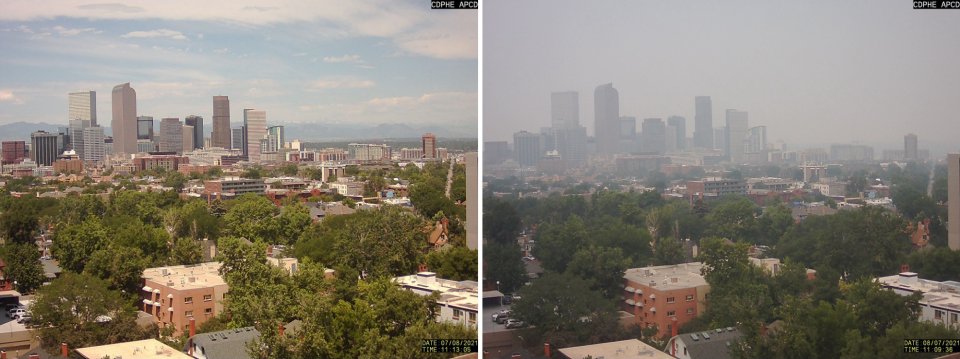
Wildfires can be dangerous and detrimental to public health due to the fire itself, and because the smoke emitted can travel long distances (i.e., hundreds to thousands of miles) and impact people near and far from the fire. Smoke is a complex mixture of air pollutants, of which fine particulate matter (PM2.5; particles with an aerodynamic diameter generally less than or equal to 2.5 µm) is the pollutant of greatest health concern.
Over the last few decades, a growing trend in the number of acres burned due to wildfire has resulted in a corresponding increase in smoke emitted and impacts on air quality. The increase in acres burned can be attributed to several factors including more than 100 years of wildfire suppression resulting in the build-up of fuel (e.g., bushes, shrubs), and hotter and drier meteorological conditions. In addition, an expansion of the wildland urban interface (WUI) is increasing the risk of a wildfire entering a community, and also the risk of human-caused wildfire.
Fire in neighboring countries can affect air quality in the U.S., as is evident by instances of smoke blanketing large portions of the U.S. from wildfires in Canada and Mexico. Additionally, large and often catastrophic wildfires in the wildland urban interface (such as Maui in 2023 and Los Angeles in 2025) are growing in frequency, resulting in new and challenging air quality issues.
The impacts of smoke, and corresponding increases in PM2.5, on air quality are not limited to wildfire, but also occur during prescribed fire, which is expanding in use to try to reduce the risk of catastrophic wildfire. However, the planned nature of prescribed fire and its occurrence on specific days and times provides an opportunity to prepare individuals and communities for smoke.
Health Effects of Smoke Exposure
Most healthy adults and children recover quickly from smoke exposure and will not suffer immediate serious or long-lasting health effects. However, some populations, including children, older adults, pregnant women, people with heart or lung disease and people with increased exposures such as outdoor workers, are at greater risk of experiencing health effects.
The understanding of the health effects of wildland fire smoke is rooted in the extensive evidence on short-term (or daily) exposures to PM2.5 that occurs on a typical day, not an extreme event like a wildfire. The health effects of short-term smoke exposure can range from less to more serious and include:
- Eye irritation
- Respiratory symptoms
- Coughing
- Increased phlegm
- Wheezing
- Difficulty breathing
- Respiratory effects
- Bronchitis
- Reduced lung function
- Asthma exacerbation and aggravation of other lung diseases
- Emergency department visits and hospital admissions
- Cardiovascular effects
- Heart failure exacerbation
- Heart attack
- Stroke
- Emergency department visits and hospital admissions
- Birth outcomes
- Pre-term birth
- Premature death
Less is known about the relationship between other durations of smoke exposure and health, but there is clear evidence that there is no PM2.5 concentration below which health effects have not been observed. Please see the EPA's Health Effects Attributed to Wildfire Smoke for more detailed information.