


EPA Support Before, During, and After a Wildland Fire
Wildfires expose communities to a number of environmental hazards, e.g., fire, smoke, and the byproducts of combustion. This webpage describes potential impacts to air and water quality resulting from wildfires and provides information about the role EPA plays in supporting communities before, during, and after wildfires.
This webpage also highlights resources with information about how to prepare for, respond to, and recover from wildfires. For a more comprehensive set of resources, please visit the Wildfire Resource Directory.
On this page:
Prepare: Before a Wildland Fire
Air Quality
Smoke from wildfires, even from wildfires tens or hundreds of miles away, and prescribed fires can affect public health, especially for populations with existing lung or breathing problems. It is critical that communities have partnerships, response frameworks and communication plans in place before smoke events. Communities should assess vulnerabilities in advance, plan for appropriate responses, take action during a smoke event, and assess how to continually improve their response. Individuals can also take action to protect their health.
EPA provides several types of resources to help communities and the public with air quality impacts before wildfires.
- Stay up to date: Sign up to receive air quality email notices for your ZIP code. Keep informed by following local news and other information channels where planned (prescribed) fires may be announced.
- AirNow: Wildfires resources and materials (e.g., factsheets such as Particle Pollution and Your Health) offer helpful recommendations for protecting human health before, during, and after a smoke event.
- Protect children's health: Review action steps and resources about how to Protect Children from Wildfires, Smoke, and Volcanic Ash.
- Plan for indoor air impacts: Visit EPA's Learn About Wildfires and Indoor Air Quality to learn more about the impacts of smoke on indoor air quality in homes, schools and commercial buildings and for guidance around what you can do before, during, and after a wildland fire to protect yourself and your indoor air quality.
- Be smoke ready: EPA's Smoke-Ready Toolbox for Wildfires includes resources that communities can use to help them prepare for smoke events.
- Resources for medical professionals: Wildfire Smoke and Your Patients' Health is a self-paced course for health physicians, registered nurses, and asthma educators. This web course identifies the health effects associated with wildland fire smoke, including which populations and life stages may be at greater risk of experiencing health effects from exposure, and actions for patients to take before and during a smoke event to reduce exposure (e.g., developing a Fire or Smoke Event Plan).
Support for public health officials: Wildfire Smoke: A Guide for Public Health Officials is intended to provide state, Tribal and local public health officials with information they need to be prepared for smoke events and, when wildland fire smoke is present, to communicate health risks and take measures to protect the public. Although developed for public health officials, this resource may be useful to others, including health professionals, air quality officials, and members of the public.
Water Quality
Wildfires present a direct risk to property and water and wastewater infrastructure assets, in addition to potential degradation of the water supply. Areas that have experienced a wildfire also are at an increased risk when there is flash flooding and resulting mudslides because the ground where vegetation has burned away cannot effectively absorb rainwater. In addition to watershed impacts, fire can have detrimental effects on the operation of drinking water and wastewater treatment, storage, collection and distribution systems.
- Designed for water utilities, the Wildfire Incident Action Checklist (pdf) includes best practices and a worksheet about how to reduce risks from wildfires.
Debris, Chemical or Fertilizer Storage, and Underground Storage Tanks
Wildfires can cause debris and impacts to otherwise safe storage infrastructure for chemicals and other materials. EPA offers guidance around preparing for, responding to, and recovering from natural disasters like fires, including considerations for disaster debris, chemical or fertilizer storage, and underground storage tanks.
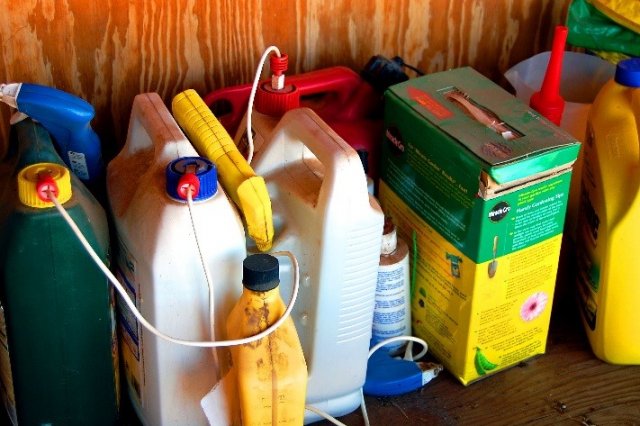
- Review considerations for disaster debris, chemical or fertilizer storage, and underground storage tanks in natural disasters like fires.
- Read about proper Containers, Containment, Storage and Disposal of Pesticides.
- Review requirements for Hazardous Waste Management Facilities and Units.
- Guide for storage tank owners: EPA developed wildfire-specific guidance on Preparation And Recovery For Underground And Aboveground Storage Tank Systems (pdf) to help underground storage tank (UST) and oil aboveground storage tank (AST) owners and operators prepare for and recover in the event of a wildfire.
Respond: During a Wildland Fire
Air Quality
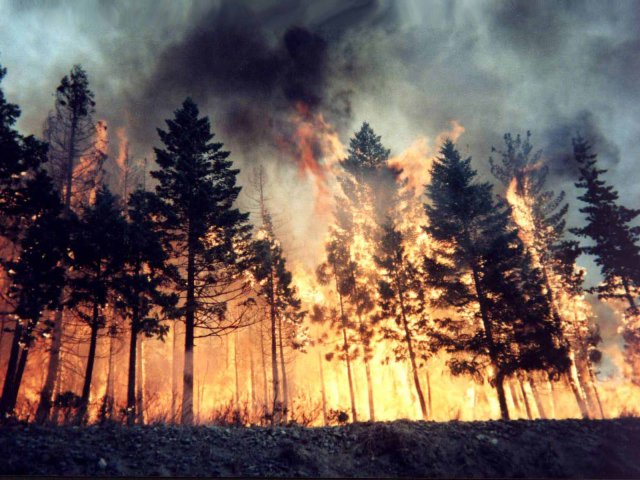
The most common reason for evacuation during a wildfire is the direct threat of engulfment by the fire, not exposure to smoke. However, leaving an area of thick smoke is generally a good protective measure for members of at-risk groups. When in an area impacted by smoke, whether from a wildfire or prescribed fire, it is good to know mitigation measures to reduce exposure. EPA has developed tools and resources to communicate air quality conditions during smoke events and the corresponding actions people can take to reduce smoke exposures and protect their health.
- Check the Fire and Smoke Map: The AirNow Fire and Smoke Map incorporates data from sensors, temporary air quality monitors, and regulatory air quality monitors to increase the information available to communicate air quality conditions during wildland fire smoke events. The map communicates the Air Quality Index (AQI), fire and smoke plume locations, smoke forecast outlooks, and actions to take to protect yourself based on current air quality in your area.
- Protect yourself from smoke: EPA's Reduce Your Smoke Exposure factsheet lays out individual actions that can help reduce exposure to smoke both indoors and outdoors.
Recover: After a Wildland Fire
Air Quality
After a wildland fire, be aware that smoldering materials may produce many pollutants. Various adverse health conditions can be caused by inhaling or ingesting even small amounts of these pollutants. Small children, the elderly, or people with preexisting respiratory conditions can be especially vulnerable to some of these pollutants.
- Protect yourself while cleaning up: EPA's Protect Yourself from Ash (pdf) (829 KB) factsheet describes how you can protect yourself and your family and avoid getting ash in the indoor air while cleaning up. Children, older adults, and people with heart or lung diseases, such as asthma, should not participate in cleanup work. Cleanup work can expose you to ash and other products of the fire that may irritate your eyes, nose, or skin and cause coughing and other health effects.
Water Quality
Wildfires can affect water quality by damaging wastewater infrastructure and introducing contaminants into the water supply. Fire can destroy, disrupt, or damage the operation of drinking water and wastewater treatment, storage, collection, and distribution systems. Wildfires can destroy vegetation, leading to increased soil erosion and flooding, which introduce potential contaminants into water bodies and supplies. After a fire, monitoring and addressing water quality issues is a priority.
- Fires can introduce a variety of pollutants, including volatile organic compounds (VOC), into water supplies. Learn more about strategies for managing VOC contamination in the factsheet: Addressing Contamination of Drinking Water Distribution Systems from Volatile Organic Compounds (VOCs) After Wildfires (pdf) .
- Explore how EPA researchers partnered with WaterStep, a nonprofit whose mission is to provide safe water and sanitation to communities, to develop a modular, mobile water treatment system known as Water on Wheels – Emergency Mobile Water Treatment System (also known as the WOW Cart) to provide safe water following an emergency event like a natural disaster.
Disaster Debris and Hazardous Waste
Wildfires can generate tons of debris and can include hazardous materials through the burning of building structures, household items, and chemicals. How a community manages disaster debris depends on the type and amount of debris and the waste management options available. Burying or burning is no longer acceptable, except when permission or a waiver has been granted, because of the side effects of smoke and fire from burning, and potential water and soil contamination from burial. Typical methods of recycling and solid waste disposal in sanitary landfills often cannot be applied to disaster debris because of the large volume of waste and reluctance to overburden existing disposal capacity.
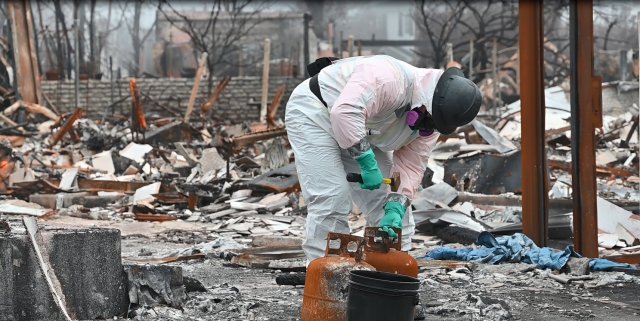
- Explore the Dealing with Debris and Damaged Buildings resource for information about planning, cleanup, and general cautions and considerations.
- Designed for planners, emergency responders, and other individuals responsible for making disposal decisions, the Incident Waste Decision Support Tool (I-WASTE DST) provides technical information, regulations, and guidance to work through important disposal issues to assure safe and efficient removal, transport, treatment, and/or disposal of debris and waste materials.