Smoke Readiness Social Media Messages
This page features sample social media messages that can be used to communicate about smoke events and safety measures people can take to minimize smoke exposure. Users of the messages are encouraged to consult and coordinate with their local emergency management, public health departments, fire departments, and other relevant stakeholders about local smoke communications and response recommendations.
On this page:
Sample Messages
Protect Yourself from Wildfire Smoke!
Smoke from nearby wildfires can increase your risk of breathing in harmful particles. Here are some simple steps you can take to protect yourself and your loved ones:
Tip #1: Stay Indoors and Close Windows
Stay inside in cleaner and cooler air as much as possible. If you have air conditioning, use it to keep cool and keep windows and doors closed, including overnight, to limit smoke from entering your home. If possible, install a high-efficiency filter (e.g., rated MERV 13+), and ensure your system’s fan is set to “On” instead of “Auto.” Check filters frequently and change them when they appear dirty. If you do not have air conditioning, check with your local government and community leaders about cooling centers.
Tip #2: Use Air Cleaners
Use a portable air cleaner or build a DIY air cleaner. Place it in a “clean room” where you spend most of your time.
Tip #3: Limit Outdoor Activities
Reduce the time and intensity of any outdoor activities. If you must be outside, wear a NIOSH Approved® N95® respirator, take frequent breaks, and hydrate in cooler areas.
Tip #4: Stay Updated
Check your local news and AirNow’s Fire and Smoke Map for the latest air quality updates. Go to fire.airnow.gov to stay updated on your air quality, wildfires, and smoke.
Together, we can stay #WildlandFireSmokeReady!
🚨 Wildfire Smoke Alert! 🚨
Protect yourself with these tips:
🏠 Stay indoors and keep windows closed. Use A/C with a high-efficiency filter (e.g., rated MERV 13+) if possible.
🌬️ Use portable air cleaners or build a DIY air cleaner in the room you spend most of your time in.
🚶♂️ Limit outdoor activities. Wear a N95® respirator if you must be outside.
📺 Check AirNow’s Fire and Smoke Map for current air quality information.
🛑 Protect Yourself from Wildfire Smoke! 🛑
Smoke from wildfires can increase your risk of breathing harmful particles, but here are simple steps you can take to protect yourself and your loved ones:
1️⃣ Stay Indoors and Close Windows: Stay inside, use A/C with a high-efficiency filter, and set your fan to “On.”
2️⃣ Use Air Cleaners: Buy in a portable air cleaner or create a DIY version. Place it in a “clean room” you spend most of your time in.
3️⃣ Limit Outdoor Activities: If you must go outside, wear a N95 respirator and take frequent breaks.
4️⃣ Stay Updated: Check AirNow’s Fire and Smoke Map for local air quality information.
Be Smoke Ready!
Reduce risks associated with wildland fire smoke
Stay informed with local news and by visiting the AirNow Fire and Smoke Map.
If possible, limit the time and intensity of outdoor activities and stay indoors with your windows closed.
Use an air cleaner to improve indoor air quality despite any smoke that leaks inside. If you do not have air conditioning, check with your local government about cooling centers.
Wildfire Smoke Tips for Our Community: Daily Tips
[Monday] As smoke from nearby wildfires affects our area, it's important to take proactive steps to protect you and your loved ones. This week, we’ll be sharing a daily smoke tip to help reduce risk.
[Tuesday] Tip of the Day: Stay Inside and Close Windows
Stay inside in cleaner and cooler air as much as possible, including overnight. If you have air conditioning, use it to keep cool and keep windows and doors closed to limit smoke from entering your home. If possible, install a high-efficiency filter (e.g., one rated MERV 13 or as high as your system can accommodate), and ensure your system’s fan is set to “On” instead of “Auto.” Check filters frequently and change them when they appear dirty. Close shades or blinds to keep the heat out during the day.
[Wednesday] Tip of the Day: Use Air Cleaners
Purchase a portable air cleaner to capture fine particles from smoke. If you cannot, consider building a DIY air cleaner. Check filters frequently and change them when they’re dirty. If you are not able to keep smoke out of your entire home, place your air cleaner in a designated “clean room” in your home where you spend most of your time.
[Thursday] Tip of the Day: Limit Outdoor Activities
Reduce the intensity and time of outdoor activities. If you need to be outside, try to limit time spent outdoors, reduce activity levels, take frequent breaks, and consider wearing a NIOSH Approved® N95® respirator, commonly called an N95 mask. If traveling in a car, turn the air conditioning on and set it to recycle air.
[Friday] Tip of the Day: Stay Updated
Check AirNow’s Fire and Smoke Map and follow local news for the latest information on air quality and actions you can take.
If you’re impacted by the #[location]Fire, be sure to first follow the instructions of local emergency management officials – stay tuned to local news in case you are asked to evacuate.
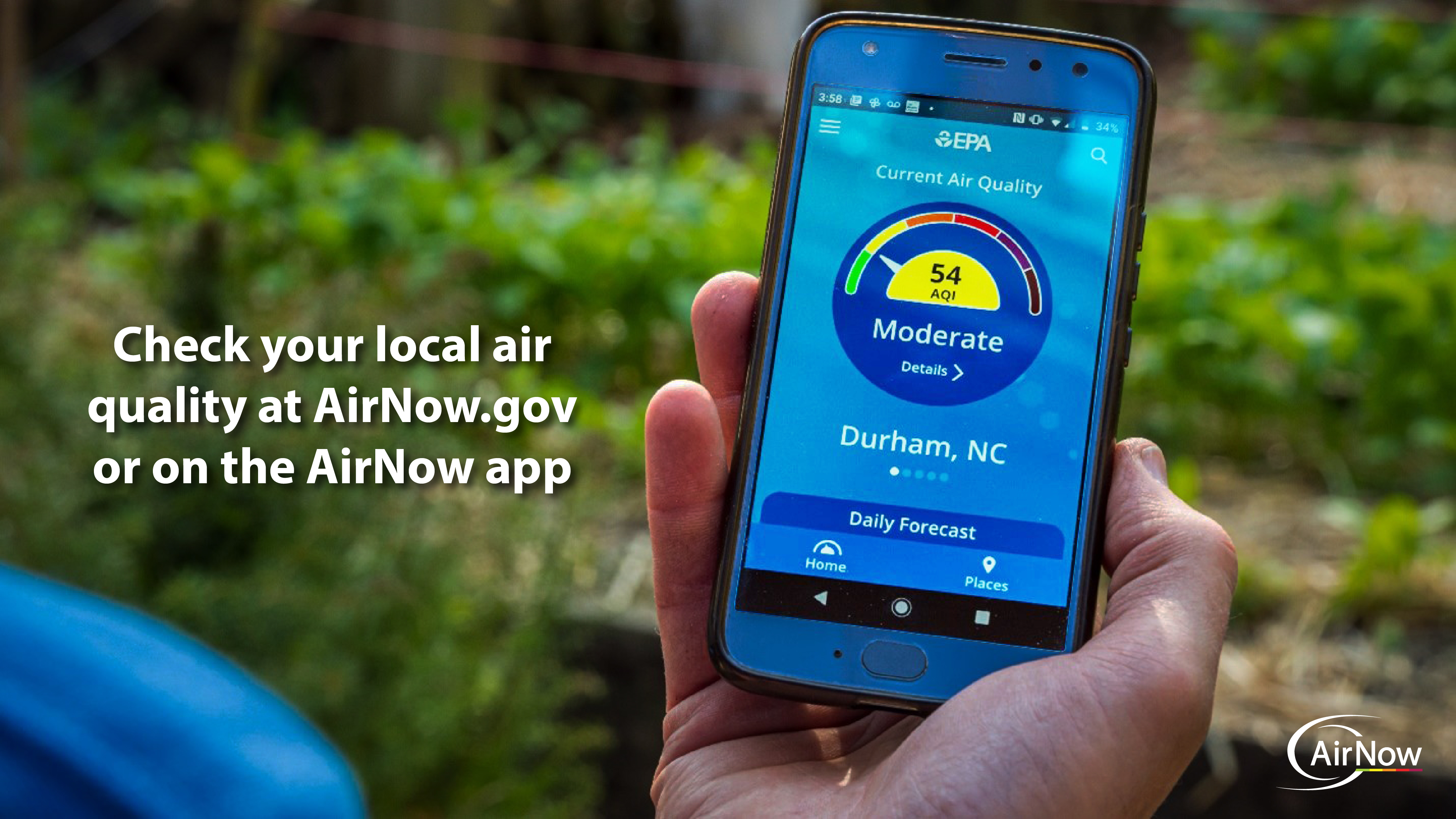
Looking for real-time air quality information on your phone? Download the free (and ad-free!) @AIRNow app to see #AirQuality conditions in your area. https://airnow.gov/airnow-mobile-app/
How do you know what actions to take if there is #WildfireSmoke in your area? Check out @AIRNow's Fire and Smoke Map! https://fire.airnow.gov.
Go to https://fire.airnow.gov or our free #AirNow app, and search your location, then click a colored circle on the map to learn more.
Smoke levels can change rapidly during the day, so check the #AirNowFireAndSmokeMap to track your air quality and learn steps to take to protect yourself and your loved ones.
#WildfireSmoke puts children at higher risk as their lungs are still developing. Protect your family during a wildfire:
Stay inside if it looks or smells smoky
Limit time outdoors
Use a portable air cleaner
Check air quality and find more information at http://airnow.gov
If you have heart or lung disease, asthma, or other chronic conditions, pay attention to how you feel and if symptoms of heart or lung disease worsen, consider contacting your healthcare professional
Stay informed to protect yourself and your loved ones.
Downloadable Graphics

DIY Air Cleaner to Reduce Wildfire Smoke Indoors Infographics (available in nine languages)

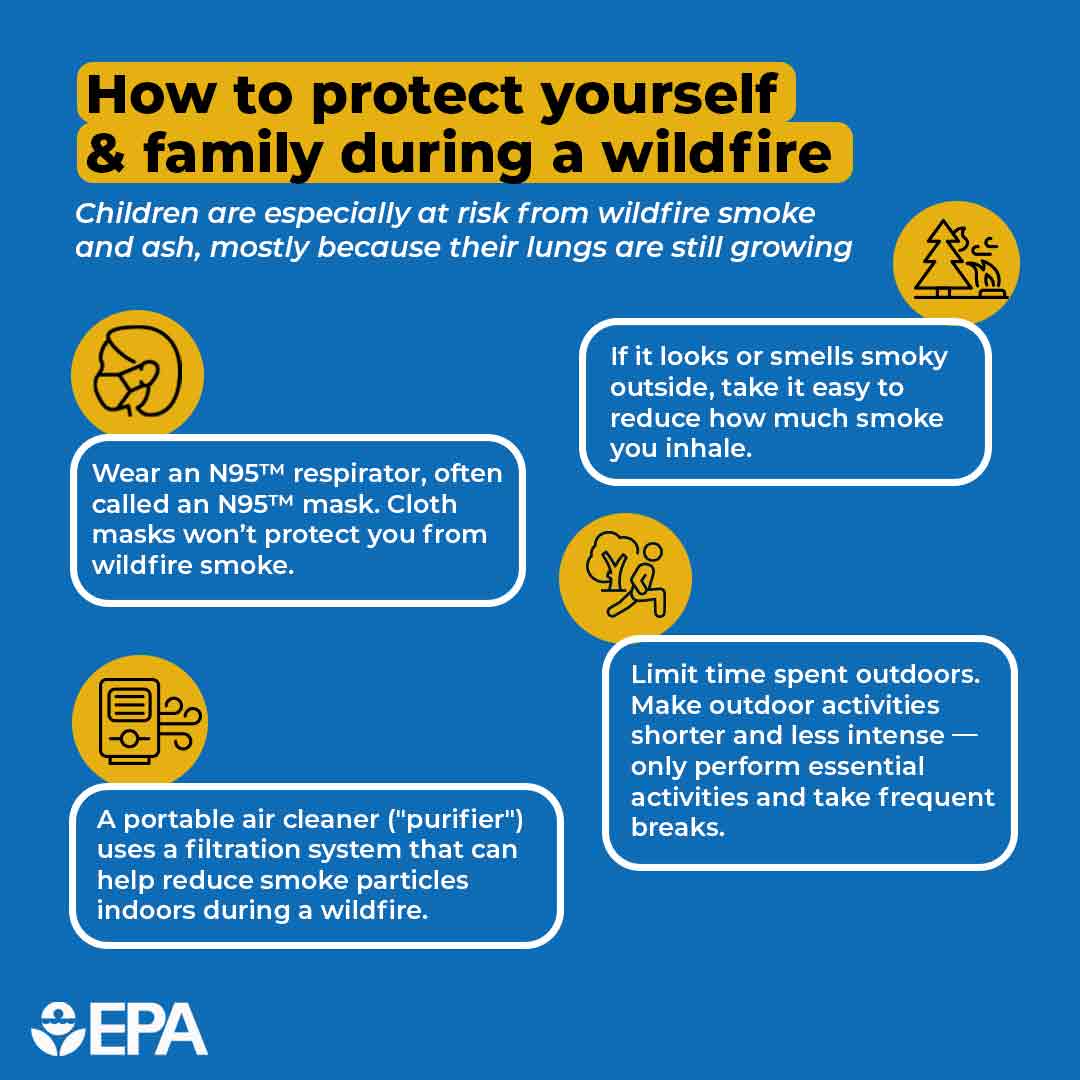
How to protect yourself and family during a wildfire (jpg)

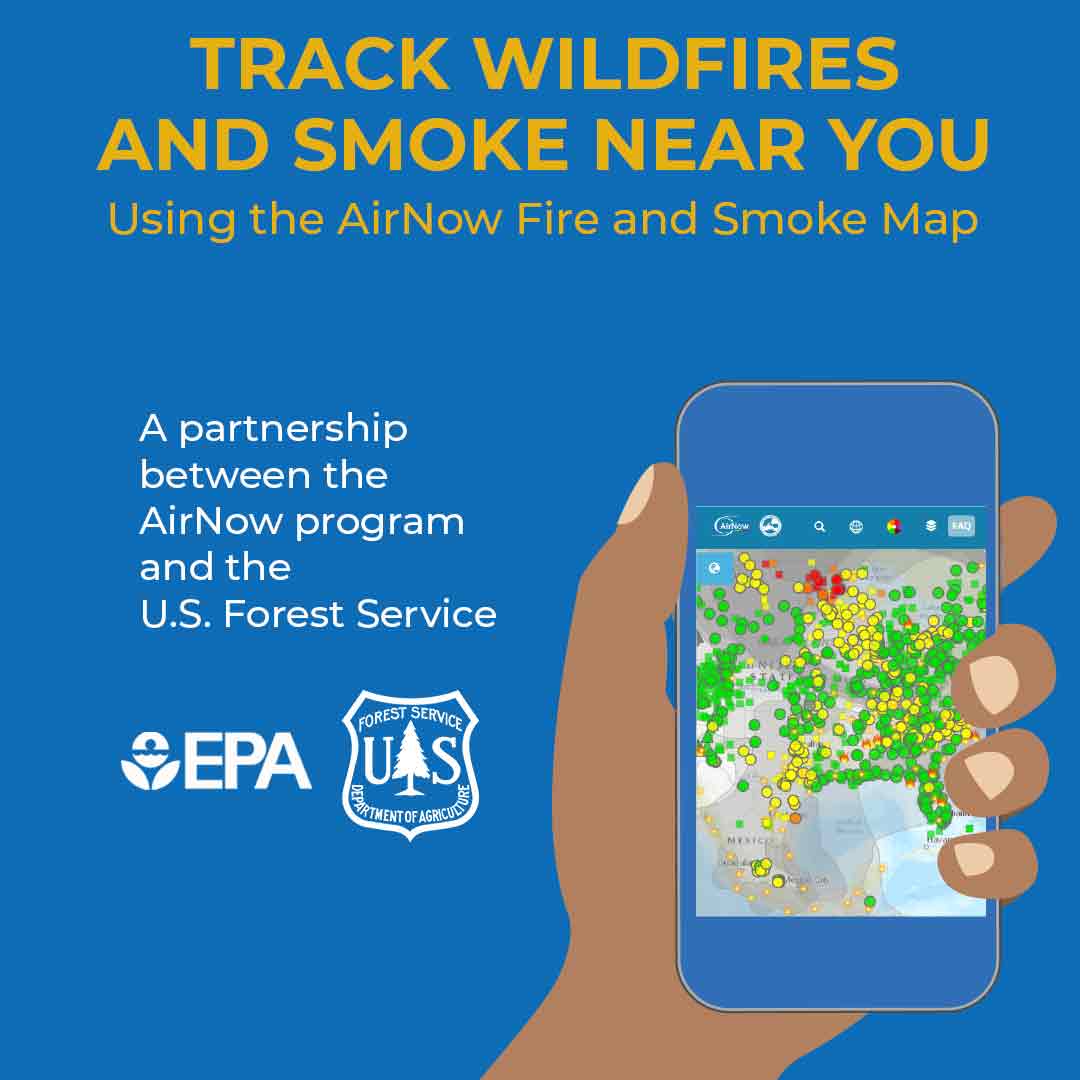
Track Wildfires and Smoke Near You (jpg)

Fire and Smoke Map Square (jpg)
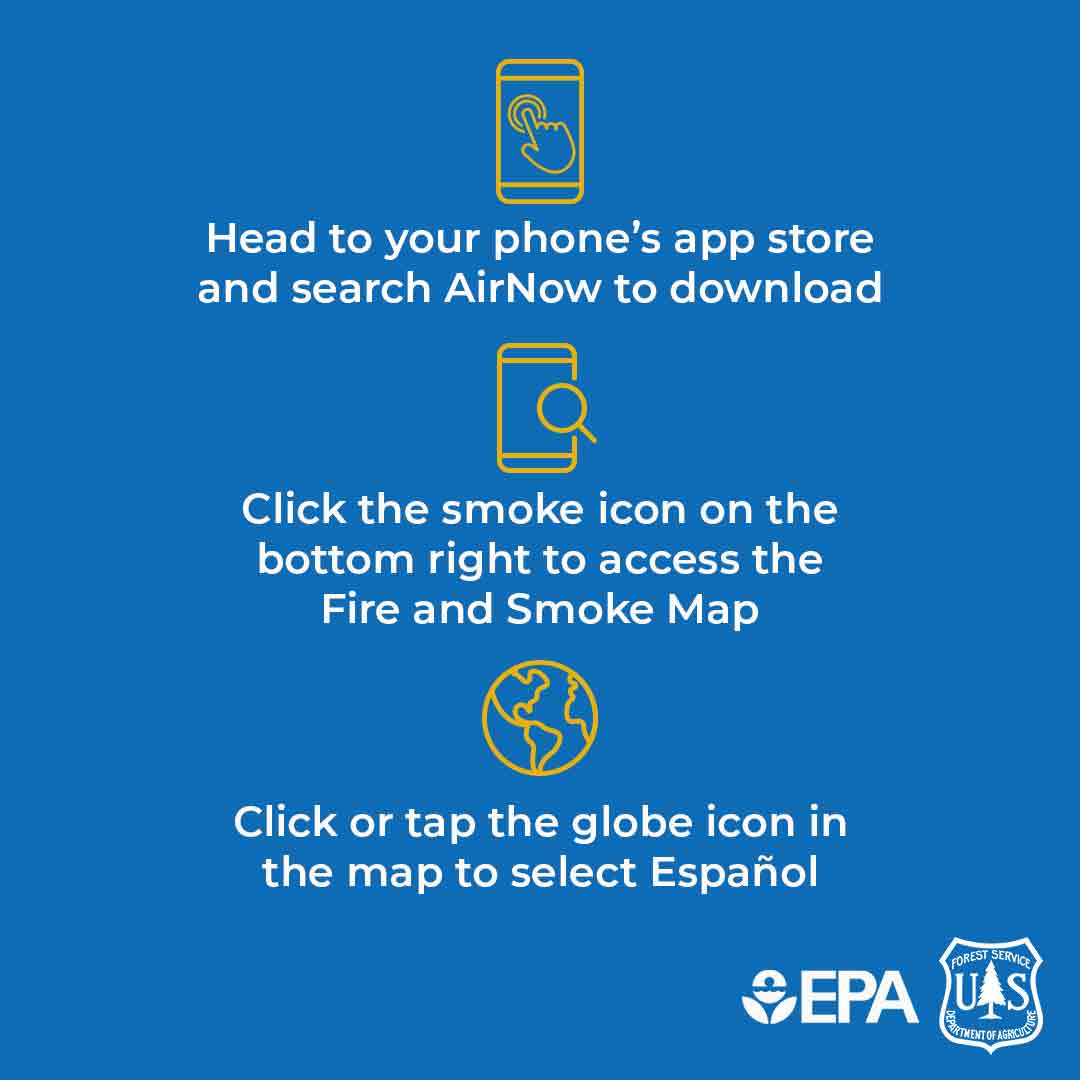

Fire and Smoke Map Spanish (jpg)



Wildfire Smoke HVAC Filter (jpg)


Make a Clean Air Room Infographic (jpg)


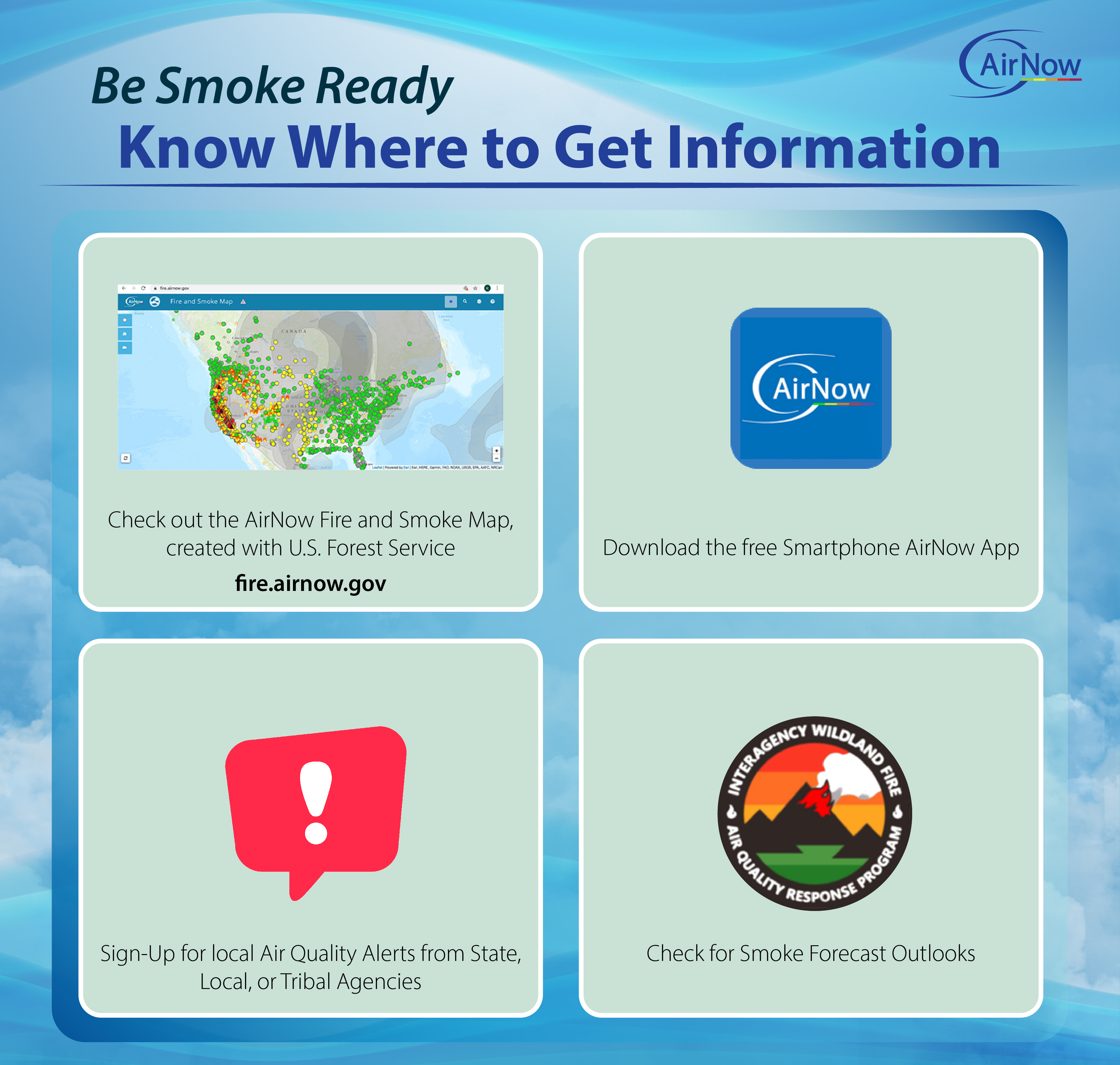
Be Smoke Ready: Know Where to Get Information (jpg)