


Battery Collection Tip Sheet: End-of-Life Household Small Format Damaged and Defective Batteries
On this page:
- Intended Audience
- Introduction
- Determining How to Manage Damaged and Defective Batteries
- Managing Damaged and Defective Lithium Batteries
- Managing Damaged and Defective Alkaline, Lead-Acid and Other Non-Lithium Batteries
Intended Audience

End-of-life Household Small Format Damaged and Defective Batteries is intended for state, Tribal, and local governments, as well as businesses or organizations that collect used small format batteries from households at locations such as retail stores and municipal buildings, and that may encounter small format damaged or defective batteries. It provides guidance for safely handling and managing damaged or defective batteries. Small format batteries include single-use batteries weighing less than 4.4 pounds and rechargeable batteries weighing less than 11 pounds.
Introduction
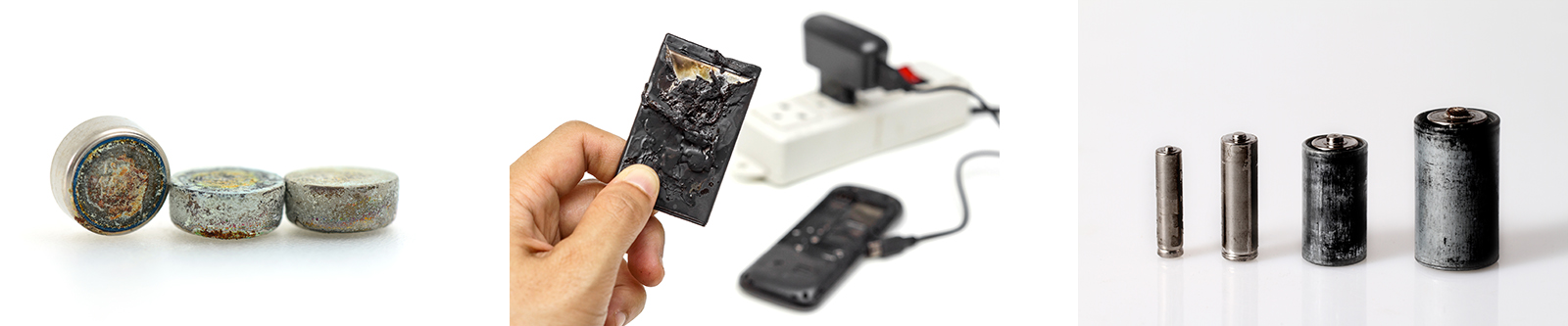
Damaged and defective batteries can vary in appearance
All battery chemistries, including lithium, alkaline and lead-acid, can pose health and safety risks when they are damaged or defective. The U.S. Consumer Product Safety Commission reports that these risks include a higher likelihood of catching fire (especially for lithium batteries), leakage of toxic substances and injury to handlers from chemical burns or electric shock.
- Damaged batteries are physically or visibly damaged. According to U.S. Department of Transportation Pipeline and Hazardous Materials Safety Administration's damaged and defective batteries guide (pdf), signs of battery damage may include bulging or swelling, odors, excess heat, smoke, discoloration, corrosion, damaged wires, leaking and odd noises.
- Defective batteries under Title 49, Section 173.185(f) of the Code of Federal Regulations do not perform to specifications or manufacturer's warranty or can produce a dangerous evolution of fire, heat or short-circuit. Certain types of defects, including damage to internal safety components or short-circuit protection measures, may not be visible upon inspection, while other defects may be visible.
All types and chemistries of batteries that show signs of damage or defects should be handled with care, but you must follow special safety protocols when managing and shipping damaged and defective lithium batteries due to elevated fire risks from these batteries.
Federal, state and municipal regulations may shape end-of-life damaged and defective battery protocols
Federal agencies and regulations define how to manage batteries, including damaged and defective batteries:
-

Swelling is a sign of damage and defects in lithium batteries and can precede battery fires. Source: iStock Federal regulations consider used batteries to be household hazardous waste when individuals generate them on the premises of temporary or permanent residences. Although household hazardous waste is exempt from regulation under the Resource Conservation and Recovery Act, sites collecting used batteries as household hazardous waste should manage them with care as they can still be dangerous. Household hazardous waste collection sites and alternative household hazardous waste collection sites can contribute to the safe management of batteries by diverting them from the municipal waste stream and managing them as hazardous waste.
- If a business or organization generates its own used batteries, including damaged and defective batteries (in addition to collecting them from households), it must handle the used batteries it generates in compliance with the Resource Conservation and Recovery Act and manage them separately from any household hazardous waste that it collects. If a battery cell is not breached, it may be managed under the streamlined universal waste regulations. If a battery cell is breached, the battery must be managed under the hazardous waste regulations for generators and transporters that apply to hazardous wastes that are not universal wastes.
-

Damaged or defective batteries are fire hazards and must be disposed of properly. Source: iStock Each state and municipality may have different rules and regulations for household hazardous waste and damaged and defective battery management. While this tip sheet aims to serve as a resource for household battery collection sites, which may encounter damaged and defective batteries, check with your state, county and local government's environmental, health or solid waste agency for additional requirements.
- When shipped, lithium batteries are hazardous materials regulated by U.S. Department of Transportation (pdf)(12.3 MB). Special packaging and labeling requirements apply, as outlined in the sections below.
Download or print: End-of-Life Household Small Format Damaged and Defective Batteries (pdf) .
Determining How to Manage Damaged and Defective Batteries
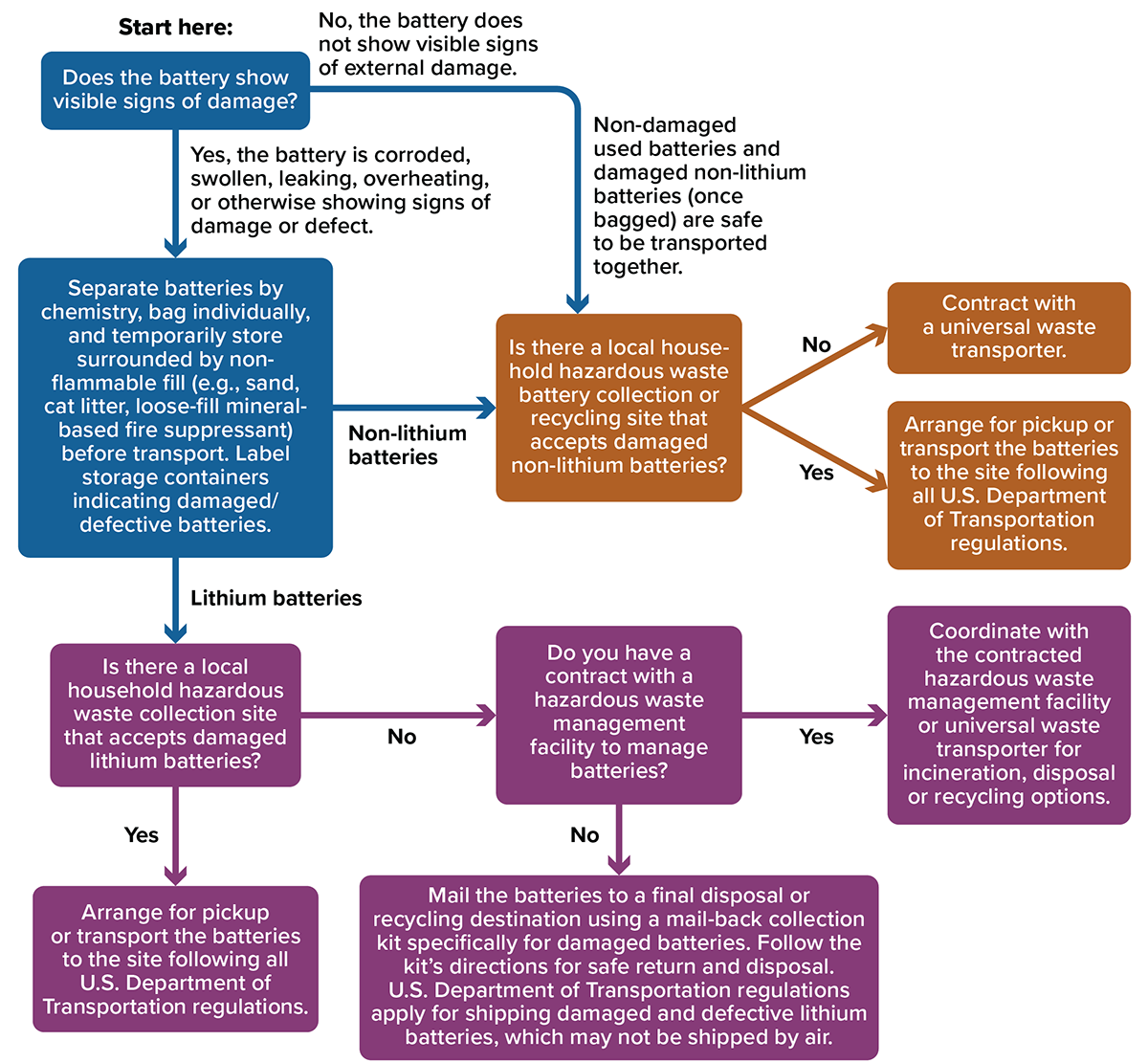
Before taking steps to safely collect, store and dispose of household damaged and defective batteries, non-governmental entities should contact the state, county or local government to determine if they allow alternative household hazardous waste collection sites (i.e., collection at a location other than typical municipal household hazardous waste collection sites) and if they have any household hazardous waste collection or management regulations. The decision tree below is designed to assist locations that are collecting end-of-life batteries from households by determining how to categorize and safely manage damaged and defective batteries. Refer to the additional resources in this tip sheet for more detailed guidance on steps from pre-collection to disposal and follow all local guidelines. Before engaging in household battery collection activities, the U.S. Environmental Protection Agency recommends contacting household hazardous waste collection locations to establish a collection agreement or a hazardous waste vendor to establish a contract for shipment and waste management or recycling.
The following subsections offer guidance on managing damaged and defective batteries by chemistry type. Management is broken out by chemistry because damaged and defective lithium batteries pose greater health and safety risks than other chemistries.
| Summary of Collection Best Practices for Small Format Damaged or Defective Batteries | |
|---|---|
What to do:
| What not to do:
|
Managing Damaged and Defective Lithium Batteries
Small format lithium batteries (both single-use and rechargeable) are commonly found in consumer electronics like cell phones, laptops, and tablets as well as in power tools and electric toothbrushes. In addition to the safe storage and handling recommendations for damaged and defective batteries listed above, damaged and defective lithium batteries require additional care, as described below. For more information on shipping and handling small, mid-, and large format lithium batteries, the U.S. Department of Transportation offers a Lithium Battery Guide for Shippers and other resources to understand the risks of damaged and defective lithium batteries (pdf).
Safe storage and handling of damaged and defective lithium batteries
In addition to the guidance above for safely storing damaged and defective non-lithium batteries, the U.S. Environmental Protection Agency and waste and recycling associations (pdf) recommend that you:
- Tape the exposed terminals of lithium batteries to reduce risk of sparking.
- Store damaged and defective lithium batteries in non-flammable materials, such as buckets filled with sand, cat litter or vermiculite, or a mineral-based fire suppressant material (following any manufacturer instructions for packaging guidance). Choose a plastic container and avoid metal to reduce fire risk.
Transporting damaged and defective lithium batteries
To safely transport damaged and defective lithium batteries for disposal, you can use any of the three approaches described below. In all three cases, you must package and transport them in accordance with U.S. Department of Transportation regulations.
Self-transport to household hazardous waste collection
If you plan to self-transport damaged and defective lithium batteries to a household hazardous waste collection site, search online for household hazardous waste collections near you or contact your local solid waste agency. The U.S. Environmental Protection Agency recommends that you confirm that your household hazardous waste collection site accepts collected household lithium batteries. While you are collecting them, store the damaged and defective lithium batteries in non-flammable material. Be sure to follow all U.S. Department of Transportation packaging and mailing guidelines (pdf) and regulations, if applicable, and keep the damaged and defective lithium batteries separate from both undamaged end-of-life lithium batteries and damaged and defective non-lithium batteries.
Contract with a waste transporter
If you choose to contract with a waste transporter to send collected household damaged and defective lithium batteries for recycling or disposal, the transporter must comply with U.S. Department of Transportation regulations. Compliance with Resource Conservation and Recovery Act universal waste transporter regulations is recommended and may be required in some states. A waste transporter may provide you with the U.S. Department of Transportation-compliant packaging in which to prepare or ship lithium and other damaged and defective batteries. Because many packages designed for shipping damaged and defective lithium batteries are subject to a U.S. Department of Transportation special permit, be sure to follow the exact protocols from your waste transporter or packing manufacturer for compliant use. Damaged and defective lithium batteries may not be transported by aircraft and are often prohibited from or require specialized clearance for overseas shipping due to increased fire hazard.
Shipping kit for small format damaged and defective lithium batteries

If you choose to ship damaged and defective lithium batteries for recycling, disposal or manufacturer return without contracting with a waste transporter, consider purchasing a shipping kit designed to comply with U.S. Department of Transportation regulations and be sure to follow all packaging instructions exactly as written. If not using a shipping kit, note that damaged and defective lithium batteries are subject to special regulations and packaging protocols before shipping due to increased risk of fire (Title 49 of the Code of Federal Regulations Section 173.185(f)):
- Individually package damaged and defective lithium batteries in non-metallic material, such as a plastic bag. Place only one battery per inner package.
- Surround the individually packaged battery with non-flammable and absorbent material.
- Use outer packaging compliant with hazardous material "Packing Group I" performance levels to pack the inner packages. This includes metal, wooden or solid plastic boxes or drums. Place only one inner package within each outer packaging. The U.S. Environmental Protection Agency's Incident Waste Decision Tool provides additional packaging and container guidance.
- Label packaging with the words "Damaged/defective lithium-ion battery" or "Damaged/defective lithium metal battery." The markings must be at least 12 millimeters (0.47 inches) in height.
Managing Damaged and Defective Alkaline, Lead-Acid and Other Non-Lithium Batteries

Non-lithium batteries—including alkaline (e.g., AA, AAA, C, D, 9V), lead-acid, nickel cadmium and nickel metal hydride—power everyday products, including alarm clocks, flashlights, calculators, remote-controlled products and children's toys. When damaged, they pose fewer safety risks than damaged and defective lithium batteries, but you should still carefully manage them to reduce environmental and human health risks. The U.S. Environmental Protection Agency encourages the public to dispose of all household batteries safely by bringing them to a household hazardous waste collection site for proper management.
Safely store and handle damaged and defective non-lithium batteries
To safely store and manage small format damaged and defective non-lithium batteries at collection sites:
- Wear personal protective equipment, including nitrile or latex gloves, when handling batteries with visible or suspected damage.
- To reduce the risk of sparking, tape the terminals (i.e., the metal contact points on both ends of a battery) of 9V alkaline and small sealed lead-acid batteries with transparent and non-conductive tape (e.g., packing tape). Surround damaged coin and button batteries with tape.
- Place individual damaged or defective batteries in sealed, clear plastic bags.
- Store leaking batteries in an acid-resistant container, such as polyethylene.
- Choose a safe and secure location for battery collection, away from flammable materials, sources of heat or inclement weather.
Local and state-specific considerations
Some states and municipalities do allow residents to dispose of alkaline batteries in curbside trash. However, the U.S. Environmental Protection Agency's best-practice recommendation for residentially generated batteries is to bring them to a household hazardous waste collection site, to avoid hazard exposure for workers and communities.
Because household hazardous waste management is regulated at the state and local levels, some states may apply battery regulations that are more stringent than federal Resource Conservation and Recovery Act guidelines. Check your state's waste policies before beginning a battery collection program.
Transporting damaged and defective non-lithium batteries
Self-transport to household hazardous waste collection
If you plan to self-transport damaged and defective non-lithium batteries to a household hazardous waste collection site, search online for household hazardous waste collections near you or contact your local solid waste agency. The U.S. Environmental Protection Agency recommends that you confirm that your household hazardous waste collection site accepts collected household batteries. Be sure to follow all U.S. Department of Transportation packaging and mailing guidelines and regulations, if applicable, and keep the damaged and defective non-lithium batteries separate from other batteries during transport.
Contracting with a waste transporter
If you choose to contract with a waste transporter to send collected household damaged and defective non-lithium batteries for recycling or disposal, the transporter must comply with U.S. Department of Transportation regulations. The chemistry of the non-lithium battery will determine whether U.S. Department of Transportation regulations are applicable. Compliance with Resource Conservation and Recovery Act universal waste transporter regulations is recommended and may be required in some states.