


EPA's role in protecting the Basin
Columbia River Basin Restoration Program
Congress amended the Clean Water Act in 2016 which directed EPA to establish a Columbia River Basin Restoration Program.
It was the first legislation to officially designate the national importance of restoring the Columbia River Basin — one of our nation’s largest watersheds.
In addition, Clean Water Act Section 123 directed EPA to:
- Assess trends in water quality.
- Collect and assess water quality.
- Identify possible sources of pollution.
- Provide grants to reduce pollution.
- Monitor to evaluate trends.
- Provide public education and outreach.
- Establish a working group to recommend projects and review progress.
This led EPA to establish the Columbia River Basin Restoration Working Group with representatives of states, Tribal governments, industries, and non-governmental organizations that meet semi-annually to share information on toxics reduction projects and coordinate on monitoring across the Basin.
It also led EPA to develop the Columbia River Basin Restoration Funding Assistance Program — a voluntary, competitive grants program that funds environmental protection and restoration programs throughout the Basin.
The Columbia River Basin Restoration Program is grounded in statutory direction, science, efficient use of resources, and meeting the needs of local communities by addressing legacy contamination and preventing new pollution through non-regulatory actions.
- 2022 Columbia River Basin Restoration Program Update (pdf)
- 2019 Columbia River Basin Restoration Program Update (pdf)
National Estuary Program
EPA's National Estuary Program is a non-regulatory program established by Congress in 1987 under the Clean Water Act to pioneer a broad and innovative approach to respond to threats to estuaries. It operates through partnerships among the EPA and other federal, state, and local organizations, industry, academia, environmental and business groups, and community residents.
There are 28 local National Estuary Programs, each with a director and staff, working with local stakeholders to improve the health of the waters, habitats, and living resources of their estuaries.
EPA provides annual funding, national guidance and technical assistance to the local NEPs.
Learn more about EPA's National Estuary Program.
Lower Columbia Estuary Partnership

The Lower Columbia Estuary Partnership was established in 1995. It is one of the 28 National Estuary Programs that protect and restore an estuary of national significance.
The Lower Columbia Estuary Partnership is a 501(c)3 non-profit corporation that works along the lower 146 miles of the Columbia River from Bonneville Dam to the Pacific Ocean.
It is a collaborative program led by farmers, educators, businesses and economic interests, conservation groups, citizens, state governments, federal agencies, and Tribal governments to restore and protect habitat, improve water quality, advance science, and provide information about the river to a range of audiences.
Visit Lower Columbia River Estuary Partnership to learn more about their work.
About the Columbia River Basin
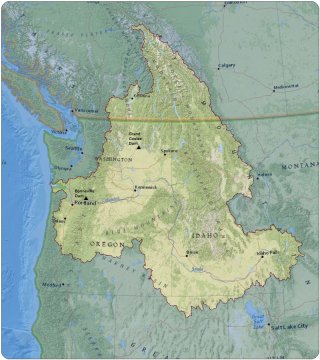
The Columbia River Basin is one of the nation's largest watersheds — covering more than 260,000 square miles and providing drainage for hundreds of rivers, creeks, and streams.
The Columbia River flows over 1,200 miles from its source in the Canadian Rockies to the Pacific Ocean. It's the second largest river in the U.S. by volume of water flow — behind only the Mississippi River.
The Basin is an economic engine for agriculture, hydropower, recreation, and shipping. It provides over 40% of the total hydroelectric power generation in the U.S., and delivers water resources for 8 million people and irrigation for over 7 million acres of farmland.
The Tribal people of the region have depended on it for food, trade, cultural and spiritual use for thousands of years.
Heavy use has also caused significant declines in water quality in some areas, putting human health at risk and threatening the survival of salmon and other species.