


Soil cleanups in Northport
- Summary
- Why is soil cleanup needed?
- What are the health risks?
- Do I have to clean up soil at my property?
- Why is my property eligible for soil cleanup?
- How will I know if my property is eligible for cleanup?
- How will I know if my property is chosen for cleanup?
- What if my property was sampled in the past, but was not eligible for cleanup at the time?
- If my property has not been sampled, will it be eligible for sampling or cleanup in the future?
Summary
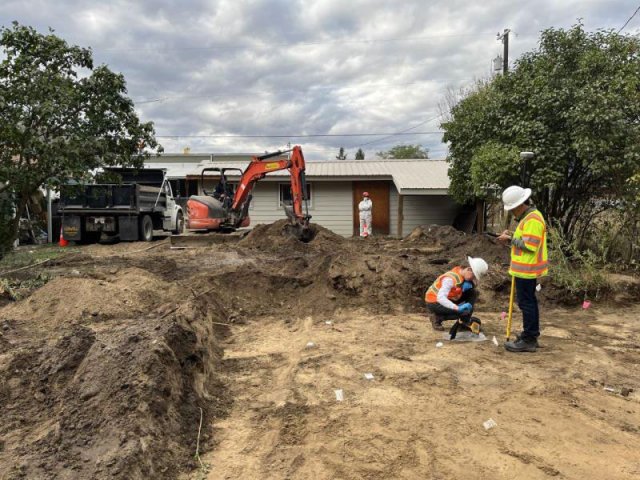
EPA will be cleaning up contaminated soil at residential properties in and around Northport within the Upper Columbia River Superfund site.
Early action soil cleanups may help protect residents’ lifelong health, especially young children and pregnant women.
EPA will pay for soil cleanup of properties with lead or arsenic above screening levels with assistance from the Washington Department of Ecology.
Why is soil cleanup needed?
EPA is assessing the extent of smelter-related contamination that will need to be addressed through long-term solutions to protect people’s health and the environment. The greatest potential health concern is from exposure to lead and arsenic in soil, so we are completing soil cleanups as the investigation continues.
EPA has offered soil sampling and potential cleanups at residential properties and common use areas in and around Northport, focusing on lawns, gardens, and play areas with a high likelihood of exposure to contaminated soil.
What are the health risks?
Residential properties where soil is contaminated with lead or arsenic may pose a health risk to current and future residents – especially young children and pregnant women.
A person can be exposed to lead and arsenic through direct contact with the soil in yards, gardens, and play areas. Soil and dust from the air can also get in food or drinks, on people’s hands or in their mouth and nose, and then be unintentionally swallowed or inhaled.
You can take meaningful actions to protect children and adults from exposure to lead that can improve lifelong good health.
For more information about health risks:
- Washington Dept. of Health lead website and fact sheet: Protect Your Family from Lead in the Upper Columbia River (pdf).
- Washington Dept. of Ecology Dirt Alert program for how to reduce exposure to lead and arsenic in soil.
- Centers for Disease Control and Prevention childhood lead poisoning website.
Do I have to clean up soil at my property?
No. EPA encourages you to have contaminated soil removed and replaced, especially if young children, women of childbearing age, or pregnant women are present. However, we will only clean up soil with written consent for access from the property owner.
Why is my property eligible for soil cleanup?
If a residential property has been sampled, it is eligible for potential early action cleanup when levels of lead or arsenic in soil are higher than site screening levels:
- 200 mg/kg for lead based on the 2025 EPA Residential Lead Directive.
- 18 mg/kg for arsenic based on measured site background levels.
We are prioritizing early action soil cleanup at residential properties with soil contamination above the screening levels and where there are higher potential health risks, such as properties where:
- Vulnerable populations are present, such as children, pregnant women, and/or women of childbearing age.
- Vulnerable populations have unlimited access to the property year-round.
- A residence is occupied year-round.
- High-use areas are, such as play areas, gardens, and yards.
Additional health risk information that may be considered is if property residents have received blood lead testing with their health care provider and have elevated blood lead levels (above 5 ug/dL).
How will I know if my property is eligible for cleanup?
If any of the higher risk factors above apply to you and you would like to request free soil cleanup, have questions about eligibility, or are not interested in cleanup, please contact Cass Galasso (galassoirish.cascade@epa.gov), 509-713-8488. EPA will also be contacting eligible residential property owners to offer soil cleanup.
How will I know if my property is chosen for cleanup?
EPA will communicate with all property owners who volunteer for early action soil cleanup and keep them informed about their status. If a property is not chosen for cleanup in 2026, it may be included in cleanup in 2027. For properties that are not included in early action cleanup, they will be included in the final remedy or cleanup plan at the site.
EPA will provide a Proposed Plan for public comment to gather feedback before deciding on the final cleanup plan. This document is a roadmap for how EPA intends to address contamination and provides a recommended cleanup plan or remedy.
We will work to involve the community and consider public comments and feedback before selecting and documenting the final cleanup remedy in the Record of Decision.
If you have questions throughout the process, please contact us for an update.
What if my property was sampled in the past, but was not eligible for cleanup at the time?
The screening levels for lead and arsenic have been lowered over time. EPA is evaluating all residential properties sampled in the past to identify:
- Properties where cleanup did not occur because the screening level was higher than it is now.
- Properties where cleanup occurred, but contaminated soil may remain at portions of the property.
If your property was sampled or cleaned up in the past and you want to know if you are eligible for upcoming cleanup, please contact Cass Galasso (galassoirish.cascade@epa.gov), 509-713-8488.
If my property has not been sampled, will it be eligible for sampling or cleanup in the future?
Over 150 previously sampled residential properties will likely be eligible for cleanup, and many residential properties have not yet been sampled.
We are prioritizing early action cleanup at properties previously sampled for lead and arsenic where results show a higher health risk to people as part of the long-term solution to protect people’s health and the environment.
Future recommended actions, including potential sampling or cleanup, will be described in the Proposed Plan and Record of Decision for the site.