


Oasis Mobile Home Park Public Water System; Thermal, CA
- English
- En español
- October 2026 Public Notice
- Background
- Sampling Results
- Sampling Zone Map
- Frequently Asked Questions
- Additional Information on Arsenic Buildup
- Documents
- Footnotes
October 2026 Public Notice: Termination of Bottled Water Deliveries
Under the September 14, 2021, Emergency Administrative Order (Order), Oasis Mobile Home Park (Oasis) was required to provide alternative water (bottled water) to residents in direct response to arsenic contamination in the drinking water system. Additionally, California Environmental Protection Agency (CalEPA), through the Safe and Affordable Funding for Equity and Resilience (SAFER) program and in coordination with Riverside County, has provided additional supplemental alternative water to residents.
Under the terms of the Order, Oasis was required to take weekly arsenic samples at the drinking water treatment plant to monitor and maintain arsenic levels below the maximum contaminant level (MCL) of 10 parts per billion (ppb) in compliance with the Safe Drinking Water Act (SDWA). Since early 2023, lab analysis of samples collected at the drinking water treatment facility has shown arsenic levels consistently at or below the MCL, based on a running annual average. Additionally, EPA conducted widespread home sampling in 2024 and 2025 to analyze arsenic in the distribution system and consumer premise plumbing (e.g., pipes within the homeowner’s property).
Based on these sampling results, EPA is prepared to make a determination that arsenic levels in the Oasis drinking water system no longer pose an imminent and substantial endangerment to the public health of Oasis drinking water consumers. EPA is also prepared to make a determination that residents may consume the water for drinking, cooking, bathing, and brushing teeth.
Background
September 14, 2021
EPA issued an Emergency Administrative Order under Section 1431 of the Safe Drinking Water Act An Act passed by the US Congress in 1974. The Act establishes a cooperative program among local, state and federal agencies to insure safe drinking water for consumers. (SDWA) 42 U.S.C. § 300i to Oasis Mobile Home Park, Thermal, California. EPA determined that conditions exist at Oasis’ public water system that may present an imminent and substantial endangerment to the persons served by the public water system. EPA’s decision was based on sampling results that indicated high arsenic levels, that exceeded the maximum contaminant level (MCL) [1], in the distribution system (premise plumbing), well source water, and at the entry point to the distribution system.
The Order and its requirements are necessary to ensure adequate protection of public health at the public water system. The Order requires, in part, that Oasis provide alternative water, notify the public of the high levels of arsenic, identify and correct the cause of the high arsenic levels, and perform increased monitoring and reporting.
August 23, 2023
The United States Department of Justice (DOJ) filed a Civil Complaint, on behalf of EPA, against the operators of Oasis, alleging failure to properly maintain and operate Oasis’ primary drinking water well, treatment and distribution systems and wastewater system, and failure to perform corrective measures to protect the health of those who consume the drinking water.
January 23, 2025
EPA announced a consent decree with the operators of the Oasis Mobile Home Park to resolve violations of SDWA. The consent decree requires the Park’s operators to upgrade the Park’s drinking water and wastewater systems and pay a $50,000 penalty.
The consent decree requires extensive upgrades and operational improvements to the drinking water system at Oasis over the next two years. In addition to the $50,000 civil penalty, key requirements include:
- Installation of alarms on the drinking water treatment system to monitor its operation;
- Addition of at least 80,000 gallons of water storage capacity;
- Installation of a booster pump and purchase of critical replacement parts;
- Ensuring that qualified public water system operators are at the Park seven days per week until the Park’s operators install the alarm system;
- Development of comprehensive standard operating procedures for the public water system;
- Mandatory quarterly meetings with EPA to review compliance progress with the consent decree; and
- Notification to EPA as soon as possible and no later than twenty-four hours if consent decree violations or other issues pose an immediate threat to public health or the environment.
The consent decree also requires the operators to work with an EPA contractor to develop a wastewater system assessment, expected to be completed by March 2026. The operators must fix problems identified during the wastewater system assessment after the Oasis drinking water system improvements are completed.
Oasis, located in California's Eastern Coachella Valley, sits within the Torres Martinez Desert Cahuilla Indians Tribal Reservation boundaries. With an estimated population of 1,000 people, it is the valley's largest mobile home facility and primarily serves agricultural workers. While situated on Tribal land, the public water and wastewater systems at Oasis operate independently from Tribal control or ownership. The Park’s drinking water system uses groundwater that has high levels of naturally occurring arsenic. Arsenic is a known carcinogen, and drinking high levels over many years can increase the chance of lung, bladder, and skin cancers, heart disease, diabetes, and neurological damage.
Sampling Results
As part of EPA’s ongoing enforcement, EPA has taken arsenic [1] and iron [2] samples (iron levels were taken to better understand arsenic levels) at the kitchen taps of homes served by the Oasis public water system periodically since April 2023. The results, recorded in parts per billion (ppb), are below.
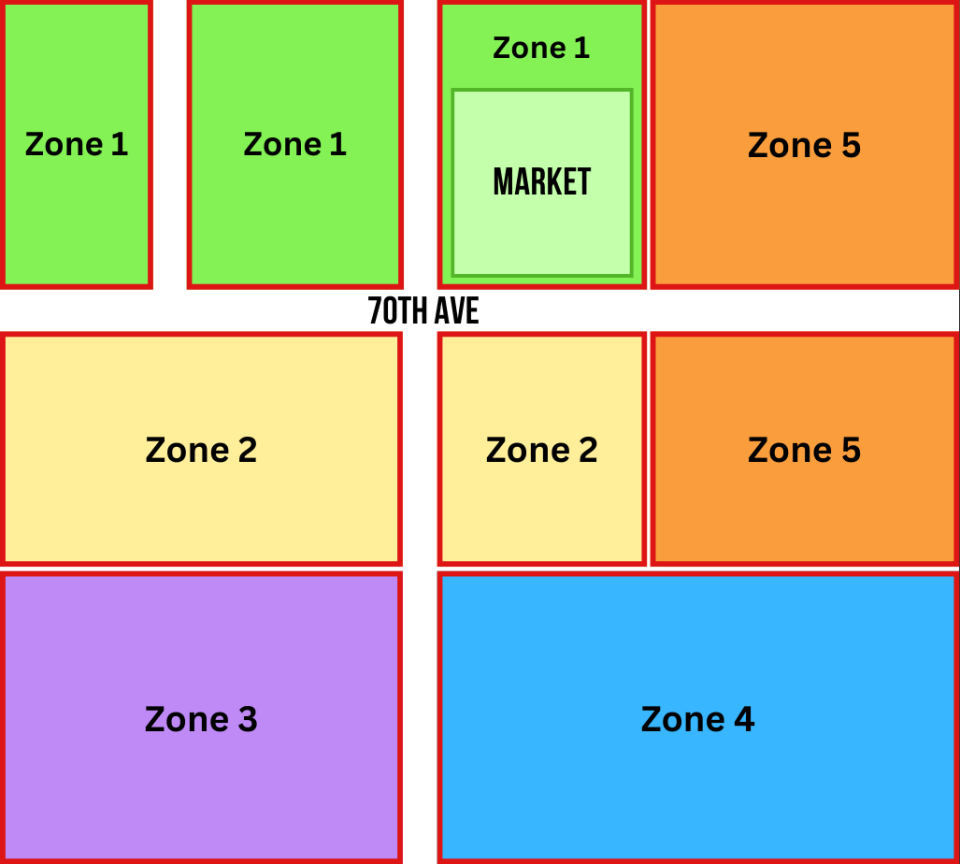
To protect resident privacy, EPA is committed to safeguarding sensitive information by not disclosing specific home numbers in the sampling results. Instead, EPA is using unique identifiers (such as Zone 3/A1) to publicly report changes in arsenic and iron levels for each home location without compromising individual privacy. For example, location Zone 3/A1 identifies home A1 is located in Zone 3. A map of Oasis divided between different zones for purposes of sampling within the distribution system can be viewed in the Sampling Zone Map. Additionally, location Z3/A1 represents the same home location in all sampling results. Home locations not included in any specific sampling event means that specific home location was not sampled during that specific sampling event (such as the resident was not home at the time of sample collection).
*Note: Issues with the treatment system led to a rise in arsenic levels between May and August 2024. Oasis adjusted the treatment system after the August 2024 sampling event which led to significantly less home samples exceeding the arsenic MCL in January 2025.
^Note: In May 2026, Oasis installed new PEX pipes in the premise plumbing of the two homes with kitchen tap samples above the MCL. Home samples taken after the piping installation were consistently under the arsenic MCL.
* Sample was compromised during the shipping and handling process. No data is available.
^ Sample was collected from the bathroom tap instead of the kitchen tap.
Sampling Zone Map
Below is a map of Oasis divided between different zones for purposes of sampling within the distribution system. Zones correlate with the sample location results above. To protect resident privacy, EPA is committed to safeguarding sensitive information by not disclosing specific home locations in the sampling results.
Frequently Asked Questions
What if arsenic levels rise again?
EPA requires Oasis to maintain effective arsenic treatment and monitor arsenic levels via routine samples collected in accordance with the SDWA. EPA retains the authority to reinstate alternative water requirements if Oasis fails to maintain the arsenic treatment, if arsenic levels increase consistently such that its running annual average exceeds the arsenic MCL, and/or if arsenic levels in the distribution system otherwise pose a potential imminent and substantial endangerment risk to residents. EPA will continue to exercise oversight over drinking water and wastewater system maintenance, operations, and future improvements.
How did EPA assess arsenic in premise plumbing?
In 2024, EPA launched a voluntary home sampling program to identify the cause and distribution of elevated arsenic levels in the premise plumbing. Samples were taken from indoor kitchen taps and outdoor hose spigots. After each sampling event, EPA communicated sample results to participating residents and publicly reported the results.
What actions has Oasis taken to address high levels of arsenic?
Since early 2023, Oasis has made significant upgrades to its treatment system, adjusted treated water chemistry, and instituted a consistent operations and maintenance program, effectively reducing the arsenic levels at the treatment facility to below the MCL. However, EPA home sampling events revealed high arsenic levels persisting in the distribution system and consumer premise plumbing. To address the elevated arsenic levels, Oasis removed the deteriorated water storage tanks, installed a new storage tank, and maintains a consistent monthly flushing program through its fire hydrants.
These elevated levels were likely a result of unstabilized water pH fluctuations that allowed cycles of arsenic-containing iron particulate to accumulate and release from post-treatment facility iron surfaces, such as uncleaned and unmaintained galvanized storage tanks, any galvanized service lines, and galvanized premise plumbing and fixtures.
Additional Information on Arsenic Buildup
Ways to prevent arsenic buildup in your home plumbing (premise plumbing)
- Flush your kitchen tap monthly
- Run the cold water until it runs clear, especially if you have galvanized pipes or notice discoloration, to reduce sediment buildup in pipes.
- Discoloration or odor in water could be due to iron leaching from galvanized pipes and may not always indicate a health risk.
- Never use your hot water tap for drinking, cooking, and preparing infant formula.
- Replace galvanized premise plumbing (i.e., pipes, fixtures)
- Galvanized steel can hold arsenic and release it later.
- The homeowner of a mobile home is responsible for maintaining and replacing plumbing inside the home.
- Install an NSF-certified Point‑of‑Use (POU) filtration device
- POU devices approved (NSF/ANSI 58 for arsenic removal) and certified by a third-party entity (e.g., NSF International, Water Quality Association) can be purchased at the homeowner’s expense and installed for an additional layer of treatment at in-home taps.
- A Water Filtration System/POU factsheet with further information can be found on the EPA Oasis website.
Documents
- DOJ Complaint Against Oasis Mobile Home Park for Alleged Safe Drinking Water Act Violations | Queja del Departamento de Justicia contra Oasis Mobile Home Park por presuntas violaciones de la Ley de Agua Potable Segura (pdf)
- Emergency Administrative Order: Oasis Mobile Home Park | Orden administrativa de emergencia: Oasis Mobile Home Park (pdf)
- Oasis Mobile Home Park Drinking Water Fact Sheet (pdf)
- Oasis Mobile Home Park Water Filtration System Fact Sheet (pdf)
- Residential Flushing Procedure Handout (pdf)
- Arsenic and your Distribution System Brochure (pdf)
Footnotes
- EPA has established National Primary Drinking Water Regulations (NPDWRs) under the Safe Drinking Water Act (SDWA) that set mandatory water quality standards for drinking water contaminants. These are enforceable standards called "maximum contaminant levels" (MCLs) which are established to protect the public against consumption of drinking water contaminants that present a risk to human health. An MCL is the maximum allowable amount of a contaminant in drinking water which is delivered to the consumer. EPA set the MCL for arsenic at 10 parts per billion (ppb) to protect consumers against the effects of long-term, chronic exposure to arsenic in drinking water.
- EPA has established National Secondary Drinking Water Regulations (NSDWRs) that set non-mandatory water quality standards for 15 contaminants. EPA does not enforce these "secondary maximum contaminant levels" (SMCLs). They are established as guidelines to assist public water systems in managing their drinking water for aesthetic considerations, such as taste, color, and odor. These contaminants are not considered to present a risk to human health at the SMCL. The SMCL for iron is 300 ppb.