


Upcycling Basics
On this page:
- EPA's Wasted Food Scale
- Basics of Upcycling
- Commercial Upcycling
- Shopping for Upcycled Food
- Upcycling at Home
EPA's Wasted Food Scale
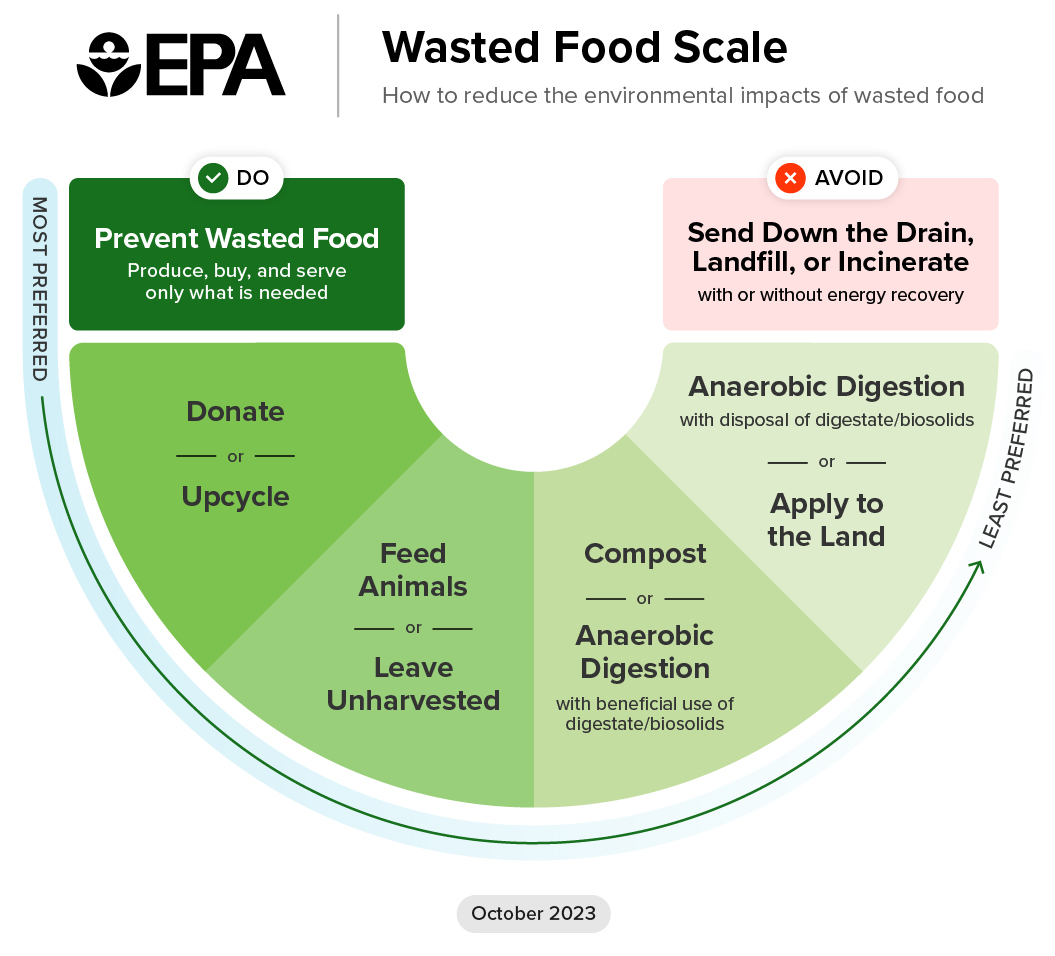
Upcycling is in the second tier of EPA’s Wasted Food Scale. Parts of food that are typically not used and wasted can be upcycled into new food products. Upcycling food is one of the most preferred pathways because it keeps food in the human food supply chain, thus avoiding the wasting of resources used to produce it upstream in its lifecycle.
Basics of Upcycling
Upcycling is creating a food product from surplus food, food byproducts, and ingredients that otherwise would have left the human food supply chain. Foods that use ingredients that otherwise would not have gone to human consumption, are procured and produced using verifiable supply chains, and have a positive impact on the environment, are considered upcycled.1
From large manufacturers to individual households; anyone can upcycle.
Commercial Upcycling

Authors: Abderrahmane Aït-Kaddour et al.
Common reasons why food or scraps that could be upcycled are wasted instead include:
- Cosmetic factors (i.e., foods that were rejected by manufacturers and retailers due to undesirable size, shape, color, blemishes, sugar content, etc.).
- Scraps and ingredients are not traditionally utilized (i.e., stems, leaves, husks, peels, shells, rinds, etc.), or
- Scraps and ingredients are a by-product of some food manufacturing process. (i.e., leftover pulp fiber from juicing, spent grain from breweries, etc.)
Some of the most common new upcycled food products include:
- Fiber ingredients and supplements
- Protein powders
- Baked goods
- Tea
- Snack foods like chips, crackers, etc.
Shopping for Upcycled Food
Shopping for upcycled food can help incentivize farmers and manufacturers to make use of otherwise wasted food and food ingredients.
Look for company statements saying their product contains an upcycled ingredient.
Look for third party upcycled labels on packaging.
Upcycling at Home
Upcycling at home can help save money by utilizing more of the food you buy. A few examples of websites that have recipes for upcycling food at home include Save the Food, The Spruce Eats, and The Upcycled Food Association.

Sources Cited
- Upcycled Food Association. Upcycled Foods are Delicious, Nutritious, and Prevent Food From Being Wasted