


Assess and Improve Your School Environment
Start with these EPA guidance documents to improve the school environment. Pollutants found in the school environment can be especially harmful to children's health, compared to adults.
These resources are created for facilities managers, custodians, principals, school and district administrators, and teachers.
Sensible Steps to Healthier School Environments

Reducing exposures to environmental hazards in schools can help improve children’s health while reducing absenteeism and lowering school employee turnover.
The Sensible Steps to Healthier School Environments (pdf) addresses some of the most common areas of environmental health concerns found in schools. It also provides one-stop access to facts about these hazards and the many existing low-cost or no-cost measures, programs and resources available to help prevent, reduce, and resolve each of them
Assess Your School's Health
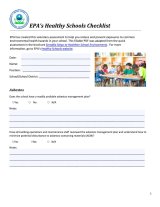
The Healthy Schools Checklist (pdf) is a 16-page voluntary assessment will help you assess your school's current environmental health, and reduce and prevent exposures to common environmental health hazards in your school.
This fillable PDF was adapted from the quick assessment in the brochure, Sensible Steps to Healthier School Environments.
School Environmental Health Guidelines
States can play a critical leadership role in promoting healthy school environments for children.
The School Environmental Health Guidelines are intended to assist states in establishing and implementing school environmental health programs for K-12 schools. The practices recommended within these guidelines can also be applied, with appropriate adaptation, to a wide range of school-related institutions, including child care and early learning centers.
School Siting Guidelines
A well-located, thoughtfully designed, soundly built and efficiently operated school enhances the educational process by providing a safe and healthy environment for children, teachers, and other staff and provides many opportunities to meet multiple community goals.
EPA developed voluntary School Siting Guidelines that encourage, inform and improve consideration of environmental factors in local school siting decision-making processes.
Sensible Guide for Healthier School Renovations
During school renovations it’s important to be aware of potential environmental hazards and know the best practices for healthy and sustainable schools.
The Sensible Guide for Healthier School Renovations (pdf) provides an overview of how to avoid key environmental health hazards and ways to minimize children’s exposures as schools prepare for and undergo renovations.
Healthy Child Care & Early Learning Facilities Self-Assessment

The Healthy Child Care & Early Learning Facilities Self-Assessment is a simple to use checklist that helps you identify common environmental exposures and risks. It provides easy to implement solutions helping users tackle environmental challenges.