


Researchers at Work
Our scientists perform cutting-edge research to provide the strong, scientific foundation that supports our Agency's mission to protect human health and the environment. We have hundreds of incredible researchers and the profiles on this page are just a small sample of the astounding workforce in ORD.
Science Careers at EPA
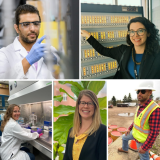
Want to help protect your environment? Improve the health of all Americans? From geology to mechanical engineering, from biology to chemistry, EPA is looking for scientists, technologists and engineers to perform cutting-edge research in a dynamic learning environment — research that can help make this a cleaner, more sustainable planet. Learn more about science careers at EPA.
| Name | Description of Work |
|---|---|
| Cathleen Wigand, Ph.D. | EPA research ecologist Dr. Cathy Wigand works on coastal resiliency, climate adaptation, and wetland restoration and frequently collaborates with local, state, and federal partners in her work. Dr. Wigand started her career with EPA over 25 years ago and has applied her skills to studying a variety of environmental issues including assessment methods for monitoring wetland health, evaluating climate change impacts on wetlands, implementing coastal resiliency restoration projects, and examining interactions between oyster aquaculture and eelgrass meadows. Her EPA research has included field surveys, field manipulations, and laboratory mesocosm experiments. And, her work has taken her throughout the USA, including Puerto Rico, and to distant shores, including Australia, China, Argentina, Uruguay, Mexico, Brazil, and Spain. |
| Karoline Barkjohn, Ph.D. | EPA researcher Karoline Barkjohn works on understanding and improving data from lower cost air sensors. She is working on several exciting projects, including analyzing data from air sensors across the U.S. to better understand their performance and limitations; working with contractors to develop open-source tools making air sensor data analysis more accessible for those without strong coding backgrounds; providing scientific support to the AirNow Fire and Smoke map team to provide the public with reliable air sensor data on government webpages; planning a workshop to bring together experts to understand how to take air sensor data and turn it into community impacts, through reductions in air pollution or exposure; and communicating research results through presentations, papers, and websites. |
| Christopher Nietch, Ph.D. | Dr. Chris Nietch is a research ecologist with a Ph.D. in biological and marine sciences from the University of South Carolina. Over his 20 years with EPA, his research has focused on harmful algal bloom ecology and risk characterization and how to best apply nutrient pollution reduction programs and practices in watersheds. He also directs research at the U.S. EPA’s Experimental Stream Facility (ESF), where he leads process-based mesoscale ecotoxicology studies focusing on how stressors impact the aquatic life and functioning of small stream ecosystems. |
| Yongping Yuan, Ph.D. | EPA researcher Yongping Yuan works on watershed hydrology and water quality. She focuses on the occurrence, persistence and causation of sediment- and nutrient-impacted streams and waterbodies. This allows her to seek the most effective alternative practices that minimize the environmental impacts of anthropogenic activities and increase sustainability of surface and subsurface water resources. |
| Brandon Jarvis, MS | EPA water quality modeler Brandon Jarvis develops and implements state-of-the-art water quality modeling tools to address nutrient issues in coastal and freshwater ecosystems. His research combines innovative field measurements with water quality models to inform ecosystem condition and recovery from nutrient-related stressors, such as low dissolved oxygen and harmful algal blooms. |
| James McCord, Ph.D. | EPA chemist James McCord does research focused on identifying and characterizing new chemical contaminants in a range of environmental and biological samples. This work is primarily uses a technique called nontargeted analysis which uses high resolution mass spectrometry (HRMS) to identify chemicals in samples. Much of James’ research is focused on studying per- and polyfluoralkyl substances (PFAS), a persistent and widespread human-produced class of chemicals. When not conducting research James is an avid baker and student of a variety of traditional handcrafts including printmaking, bookbinding, and woodworking. During his time off, you’ll also frequently find him hiking, rock climbing, and backpacking. |
| Jennifer Olker, Ph.D. | EPA biologist Dr. Jennifer Olker works in the Center for Computational Toxicology and Exposure in the Office of Research and Development. She serves as the research lead on the ECOTOX Knowledgebase; a comprehensive resource providing single chemical environmental toxicity data on aquatic and terrestrial species. |
| Emma D’Ambro, Ph.D. | EPA researcher Emma D’Ambro studies the atmospheric occurrence and fate of per- and polyfluoroalkyl substances (PFAS). Research and regulatory efforts have traditionally focused on PFAS in water, particularly drinking water, but the interest in understanding PFAS in the atmosphere is rapidly growing. |
| Kate Mulvaney, Ph.D. | EPA researcher Kate Mulvaney is a social scientist who focuses on the human dimensions of coastal ecosystems and water quality. In January 2025, Kate was awarded the Presidential Early Career Award for Scientists and Engineers (PECASE), the highest honor bestowed by the U.S. government on outstanding scientists and engineers early in their careers. She’s currently developing a survey for urban beaches to better understand the social value of these resources. |
| Ryan Lepak, Ph.D. | EPA Researcher Dr. Ryan Lepak focuses on understanding pathways of PFAS and mercury exposure in fish across the Great Lakes. Using historical fish archives, Ryan and the team construct timelines of PFAS and mercury exposure to analyze lakes’ responsiveness following the reduction of industrial emissions, particularly the voluntary phase-out of PFOS in the early 2000s. With a background in chemistry and environmental toxicology, Dr. Lepak combines his passion for multidisciplinary research with his love for the Great Lakes, striving to connect scientific findings with community engagement to promote environmental health and sustainability. |
| Chelsea Hintz, Ph.D. | EPA researcher Chelsea Hintz is a biologist in EPA’s Office of Research and Development (ORD) Center for Environmental Solutions and Emergency Response (CESER). She joined the Agency in 2019 and her current research focuses on the impact of environmental contamination in aquatic systems. She currently works on several projects, one of which is evaluating the impact of spilled oil in freshwater environments, and another is evaluating the impact of contamination within green infrastructure (specifically, bioretention cells). |
| Kiara Lech, Ph.D. | Dr. Kiara Lech is a biologist and works on oil spill research, including studies to understand oil biodegradation and the effects of oil in freshwater ecosystems. Her team just completed the experimental portion of a crude oil exposure study at EPA’s Experimental Streams Facility (ESF) assessing ecological impacts of oil in freshwater ecosystems. She is in the process of developing a study assessing the effectiveness of bioremediation agents on oil biodegradation, in collaboration with EPA Region 5. Kiara is also finalizing the results of an earlier study looking at how photochemical weathering of crude oil affects oil biodegradation. |
| Rebecca Massa Nachman, Ph.D., MPH | EPA epidemiologist Rebecca Nachman works on health assessments for EPA’s Integrated Risk Information System (IRIS) program. She contributed to the recently finalized IRIS assessment of hexavalent chromium and currently is working on IRIS assessments of methylmercury and ethylbenzene. She also recently took the lead on a systematic review of the literature that aims to improve estimates of potential exposure to harmful chemicals in the environment from dietary intake of fish and other aquatic biota among communities that practice subsistence consumption (i.e., rely on natural resources like aquatic biota for dietary intake). Subsistence consumption of aquatic biota has cultural significance to many communities including, but not limited to, indigenous groups. Improving these rate estimates will help inform EPA decisions to protect the most at-risk communities. |
| Jason Sacks, MPH | Meet EPA Senior Scientist Jason Sacks! Jason works to protect and improve air quality by helping to develop Integrated Science Assessments, which form the scientific basis of the National Ambient Air Quality Standards and conducting research and developing assessments on the health risks of wildfire smoke. |
| Holly Mortensen, Ph.D. | EPA researcher and recent recipient of the Arthur S. Flemming Award Holly Mortensen builds computational tools to help in the analyses and integration of environmental health and toxicologically relevant data types. Her research focuses on two diverse areas, Adverse Outcome Pathway and Nanomaterials Environmental Health research (nanoEHS). Holly has created and developed the EPA Adverse Outcome Pathway Database (AOP-DB), a database and user interface useful in the organization and biological interpretation of AOP information, and the EPA NaKnowBase, a knowledge base containing the results from ORD publications on the actions of engineered nanomaterials in environmental or biological media. Most recently, Holly is the technical lead of a “common language” effort for nanoEHS data for the EPA Chemical Safety and Sustainability National Program. |
| Serena Chung, Ph.D. | Serena Chung is the Extramural Research Lead for EPA’s Air, Climate, and Energy (ACE) Science to Achieve Results (STAR) extramural research program. Prior to joining to the EPA, she was a research professor in the Laboratory for Atmospheric Research at Washington State University (WSU), where her research focused on interactions between air quality and climate. |
| Max Krause, Ph.D. | Max focuses on the emissions of waste management facilities, particularly landfill gas and leachate emissions. He does a combination of laboratory work and computer modeling. His current research interests are in remote sensing technologies, elevated temperature landfills, food waste biodegradation, and PFAS treatment of leachate. He also provides technical support to the regions, states, and the public on both of EPA’s landfill models. |
| Jacqueline Bangma, Ph.D. | Dr. Jacqueline Bangma is a chemist at EPA focusing on the identification and quantification of emerging per- and polyfluoroakyl (PFAS) substances in humans, wildlife, and the environment. |
| Kelsey Miller, Ph.D. | Analytical chemist Kelsey Miller works to support EPA’s efforts to address per- and polyfluoroalkyl substances (PFAS). Her research focuses on developing targeted and non-targeted liquid chromatography-mass spectrometry methods for detection of PFAS in different environmental media. |
| Vito Ilacqua, Ph.D. | Dr. Vito Ilacqua researches the connections between air pollution, climate change, and indoor air quality. His research has contributed to the National Climate Health Assessment. He also oversees cutting-edge research on environmental health around the country, funded by EPA. |
| Vasu Kilaru | Vasu Kilaru studied optics and astrophysics as an undergraduate at the University of Rochester and attended graduate school at Duke University for resource economics and policy. At EPA, Kilaru works to safeguard the public’s health from the negative effects of air pollution. |
| Aimen Farraj, Ph.D., DABT | As the Principal Investigator/Research Biologist of the Cardiopulmonary and Immunotoxicology Branch of the Environmental Public Health Division at the EPA, Dr. Aimen Farraj focuses on understanding the potential adverse health effects of exposure to air pollution in order to improve public health standards in an innovative way. |
| Angela Batt, Ph.D. | EPA research chemist Dr. Angela Batt works in EPA’s National Exposure Research Laboratory where she identifies contaminants of emerging concern in source and drinking water. When she is not researching how to keep our waters clean, Angela loves cooking—especially gluten-free foods! |
| Sherri Hunt, Ph.D. | Dr. Sherri Hunt is the Principal Associate National Program Director for Air and Energy (ACE) in the Office of Research and Development (ORD). She continues to publish articles in peer-reviewed journals and recently was a co-editor for a book on Multiphase Chemistry in the Atmosphere. After working for several years as the Air and Energy Matrix Interface in EPA Science To Achieve Results grant program, Sherri spent a year on an interagency detail as a Program Director at the National Science Foundation. Prior to her current position, she worked as the coordinator for the Science and Technology Policy Council. While working in the STAR program, Sherri was a project officer on over 60 grants, led writing teams for over dozen solicitations, and coordinated the Air, Climate, and Energy Centers for the ACE program. |
| Mehdi Hazari, Ph.D. | EPA scientist Mehdi S. Hazari is a recipient of the 2011 Presidential Early Career Award for Scientists and Engineers. The award is the highest honor bestowed by the U.S. government on outstanding science and engineering professionals in the early stages of their independent research careers. Mehdi's award recognizes his work demonstrating how breathing in low levels of air pollutants, such as particulate matter and ground level ozone, can increase people's susceptibility to heart attacks and other cardiac events. His research is also receiving international recognition and is under consideration for inclusion in the update of worldwide standards. |
| Andrea Clements, Ph.D. | Dr. Andrea Clements is a physical scientist interested in characterizing ambient air quality. She holds engineering degrees from Washington University in St. Louis, the California Institute of Technology, and Rice University, where her research focused on characterizing ambient aerosols. Prior to joining EPA, she worked for Colorado State University to identify volatile organic chemicals (VOCs) emitting from oil and gas drilling operations. At EPA, she works to characterize emerging technology for measuring air quality. Her current work involves evaluating affordable air sensors and providing guidance for their use by a range of groups including community and individual users. |
| Rachelle Duvall, Ph.D. | EPA Environmental Engineer Dr. Rachelle Duvall evaluates innovative equipment and approaches to measure air pollutants in the ambient air and near pollution sources. |
| Ryan Fulgham, Ph.D. | EPA researcher Dr. Ryan Fulgham focuses on measuring the biosphere-atmosphere exchange of reactive nitrogen and sub-micron particulate matter at Duke Forest in North Carolina. |
| Gayle Hagler, Ph.D. | What's in the air you breathe? Pinpointing the sources of local air pollution can be a real challenge. That's where the work of EPA research environmental engineer Dr. Gayle Hagler, comes in. Gayle helps develop innovative ways to measure air pollution—and where it comes from—through field studies, data analysis and computer modeling. Recently, she has been deeply involved with an EPA research program that develops innovative, next-generation air measurement technologies and also visualizes data on a map. |
| Eric Hall | EPA scientist Eric S. Hall is working with EPA Region 6 on one research project to track harmful algal blooms during flooding events for emergency responders in the Gulf of Mexico, and on another research project with the United South and Eastern Tribes (USET) to complete a website providing environmental and public health information to 36 Tribal Nations in EPA Regions 1, 2, 3, 4 and 6. |
| Xiaoyu Liu, Ph.D. | EPA researcher Dr. Xiaoyu Liu works on identification and characterization of the sources, transport, transformation, and distribution of indoor pollutants and the relationship between indoor air quality and various sources of pollution. |
| Shaibal Mukerjee, Ph.D. | Dr. Shaibal Mukerjee works on assessing the health impacts of ambient air pollutants. Pollutants he has researched include PM, nitrogen oxides, and air toxics such as volatile organic compounds (VOCs). |
| Havala Pye, Ph.D. | EPA physical scientist Dr. Havala Pye researches air quality, specifically particles from both emissions and those that form in the atmosphere by interactions of gas-phase compounds. She uses the Community Multiscale Air Quality (CMAQ) model to better understand how these particles work and how they affect human health, climate change and visibility. Dr. Pye received the Presidential Early Career Award for Scientists and Engineers. |
| Haiyan Tong MD, Ph.D. | EPA research biologist Haiyan Tong focuses on studying the cardiovascular effects of air pollution exposure and intervention strategies that can mitigate these effects. |
| Antony Williams, Ph.D. | Dr. Antony Williams builds software applications that provide access to data and models to scientists, both within and outside of EPA. |
| John Cowden, Ph.D. | Dr. John Cowden works in the Office of Research and Development’s Center for Computational Toxicology and Exposure. As a Branch Chief, he works with different EPA scientists, managers, and research. |
| Madison Feshuk | EPA researcher Madison Feshuk is a biologist within the Office of Research and Development. She develops and applies innovative data science solutions for new approach methodologies (NAMs). Her efforts increase chemical data interoperability and accessibility for use in risk assessments and regulatory decision-making. |
| Carlie LaLone, Ph.D. | Dr. Carlie LaLone focuses on understanding the toxic effects of chemicals across all the species that may encounter those chemicals in nature, from humans to fish to insects to plants. As a bioinfomaticist, Dr. LaLone uses predictive computational methods to evaluate complex biological information. Notably, Dr. LaLone has developed the Sequence Alignment to Predict Across Species Susceptibility (SeqAPASS) tool, which uses genetic information to identify species similarities for binding different classes of chemicals. Her work on SeqAPASS recently earned her the prestigious Presidential Early Career Award for Scientists and Engineers (PECASE). The PECASE is the highest honor bestowed by the United States Government to outstanding scientists and engineers who are beginning their independent research careers and who show exceptional promise for leadership in science and technology. |
| Jocylin Pierro, Ph.D. | Jocylin Pierro’s passion for environmental science started back in high school, where she started a recycling program, participated in clean-ups, and advocated for clean air and climate change causes. Her experience in the Peace Corps led her to pursue this passion as a career. Dr. Pierro researches the toxicological effects of chemicals. |
| Stephen Jackson, Ph.D. | Dr. Stephen Jackson is a chemist developing methods to measure and analyze per- and polyfluoroalkyl substances (PFAS) and other environmental contaminants of emerging concern. When not at work, he enjoys spending time with his dog, watching all sports, and exploring the area’s lakes, rivers, and other watering holes. |
| Mark Strynar, Ph.D. | Dr. Mark Strynar is a Physical Scientist in EPA's Office of Research and Development. His research interests include developing methods to identify and measure per- and polyfluorinated compounds (PFAS) and other xenobiotic compounds (chemicals found in organisms that are not normally expected to be present) in biological and environmental media. He does this using high-resolution mass spectrometry (HRMS) and non-targeted analysis (NTA) applications. This allows for the discovery of novel compounds to direct future studies. |
| Dan Tettenhorst | EPA chemist Dan Tettenhorst performs research work on developing analytical methods for various pesticides and fungicides, harmful algal toxins, and PFAS in drinking water and ambient water. |
| Rebecca Dodder. Ph.D. | Dr. Rebecca Dodder received a 2018 Arthur S. Flemming Award for her innovative approach to evaluating current and emerging environmental challenges and opportunities related to energy production and use in the United States. She also received the Presidential Early Career Award for Scientists and Engineers in 2016. |
| Emily Eisenhauer, Ph.D. | Dr. Emily Eisenhauer is a sociologist and works on community resilience, social vulnerability, and environmental justice. Emily was also the co-chair of the U.S. Global Change Research Program's Social Sciences Coordinating Committee, working on integrating social sciences more fully in the National Climate Assessment. |
| Meridith Fry, Ph.D. | Dr. Meridith Fry works on developing resources and methods for evaluating the impacts of extreme climate events on contaminated sites and communities. She is currently developing a suite of nationwide geospatial indicators for the EPA regional offices and the EPA Office of Land and Emergency Management’s Resource Conservation and Recovery Act (RCRA) hazardous waste and polychlorinated biphenyls (PCBs) programs to use in the national climate hazard screening tool, which is under development. These indicators will be used for identifying areas that may be most affected by future extreme climate events, including floods, droughts, extreme heat, and wildfires. Dr. Fry also works with EPA regional partners in the Brownfields program on developing indicators for prioritizing disadvantaged and under-resourced areas for Brownfields redevelopment. |
| Stephen LeDuc Ph.D. | EPA researcher Dr. Steve LeDuc focuses on how climate change and human activities affect environmental quality, especially in forested, agricultural, and mining landscapes. Dr. LeDuc is primarily working on finalizing the Forests Chapter for the 5th National Climate Assessment, where the impact of climate change on US forests is described for policy makers and the public. In this assessment, it’s shown that climate change is profoundly impacting forests through a myriad of ways including increased temperatures, shifting precipitation patterns, and greater wildfire activity. Secondly, within EPA, his team conducts a forest climate assessment, synthesizing information on how climate change will affect EPA’s mission areas (e.g., clean air, clean water) by altering forests. For example, forests supply approximately 50% of surface drinking water in the US, and so, how climate change will impact water supplies from forests is incredibly important for EPA managers and communities. When not working, he loves to spend time in the outdoors with his family, and if not doing that, reading history or fiction, and watching sports (but not all at the same time). |
| Marissa Matsler, M.E.M., Ph.D. | Dr. Marissa Matsler works on climate justice and resilience by studying uneven power relationships in urban adaptation planning and climate policy-making processes. Dr. Matsler is currently conducting case studies examining disaster waste and debris management decisions across different contexts. She traces specific waste types through different disaster types to understand how materials end up where they do and to potentially improve the institutional arrangements surrounding disaster waste and debris management. Marissa is also part of a hardworking interdisciplinary team of scientists that are putting the finishing touches on a resilience planning tool called the Equitable Resilience Builder (ERB). The tool provides instruction on activities to incorporate community knowledge and values into equitable resilience plans. |
| Marie Schaefer, Ph.D. | Dr. Marie Schaefer is an EPA social scientist researcher whose work focuses on how collaborations between Indigenous sciences and western sciences can contribute to sustainable futures. She has over a decade of experience working with Tribal nations across the U.S. on a wide range of climate change research projects and is of Anishinaabe (Odawa) and European settler descent. Currently, there are several projects with Tribal nation co-researchers Marie is collaborating on, including a climate adaptation plan and a cumulative impact assessment. She also continues to build reciprocal relationships with Tribal nations to understand their science priorities around climate change along with what barriers and opportunities there are for collaboration on those priorities. |
| Chris Weaver, Ph.D. | EPA scientist Dr. Chris Weaver’s work focuses on climate change and the risks it poses to all aspects of EPA’s mission: e.g., ensuring and sustaining air quality, water quality, ecosystems, public health, and the resilience of frontline communities across the country. He addresses these issues through research, assessments, and planning to help meet the ongoing and emerging needs of the Agency around this urgent and high-priority topic. |
| Jordan West, Ph.D. | Jordan West, Ph.D. is an aquatic ecologist at EPA. Her areas of expertise include freshwater and marine ecology, climate change impacts and adaptation, resilience and threshold theory, and translational science. Dr. West leads multidisciplinary research teams that (1) develop assessment methods to understand the vulnerabilities of coral reefs, wetlands and watersheds to climate change impacts, and (2) create tools to help decision makers design adaptation strategies that will increase the resilience of these valued natural resources in the face of changing environmental conditions and extreme events. |
| Blake Schaeffer, Ph.D. | EPA research scientist Blake Schaeffer develops satellite remote sensing technologies to monitor water quality in coastal oceans, estuaries, and lakes. His current work is related to cyanobacterial harmful algal blooms, estuarine seagrass, and surface oil slicks. |
| Shannon Griffin, MS | Shannon Griffin, winner of the 2023 Arthur S. Flemming Award, has developed novel methods which utilize salivary antibody responses as non-invasive indicators of infection from environmental pathogens. |
| Catherine Gibbons, Ph.D. | EPA genetic toxicologist Catherine Gibbons, Ph.D., investigates the impact of chemicals on genetic material for EPA’s National Center for Environmental Assessment. Her work supports the Integrated Risk Information System (IRIS) program, which is an important resource for information on the toxicity of chemicals nationally and worldwide. |
| Quincy Teng, Ph.D. | EPA research chemist Quincy Teng, Ph.D., focuses on the application of metabolomics, a specialized field of biochemistry focused on studying endogenous metabolites, on environmental and life sciences. He has more than 30 years of experience in biological nuclear magnetic resonance (NMR) spectroscopy applied to structure biology, small molecules, and metabolomics. |
| Caroline Ridley, Ph.D. | EPA ecologist Caroline Ridley assesses the impact of human activities on the environment. Her recent work includes examining the impacts of mining on salmon in Alaska and the impacts of hydraulic fracturing for oil and gas on drinking water nationwide. Her favorite thing about her work is seeing how science can affect policy. |
| Anne Neale | EPA research scientist Anne Neale is working on the EnviroAtlas and other resources to better understand ecosystems and their benefits. Her career has included fighting forest fires in Montana, scooping up water and sediment samples from float plane pontoons in the Northeast, and helping with the response efforts after the Exxon Valdez oil spill disaster in Alaska. Anne has a background in landscape ecology and for her current work, she studies how different kinds of landscapes and land uses affect human well-being, public health, and the ability of natural systems to function. |
| Paul Mayer, Ph.D. | EPA ecologist Dr. Paul Mayer works in EPA's Pacific Ecological Systems Division where he studies riparian zones (the area along rivers and streams where the habitats are influenced by both the land and water) and stream restoration. Dr. Mayer has also worked as a biologist for the U.S. Fish and Wildlife Service. |
| Cheryl Hankins | EPA coral scientist Cheryl Hankins investigates how land-based stressors such as plastic pollution and excess nutrients impact coral growth. Her research helps to establish threshold values within reef habitats that may inform better management practices. |
| Jana Compton, Ph.D. | As an ecologist with the Pacific Ecological Systems Division of EPA’s Office of Research and Development, Dr. Jana Compton investigates the sources and effects of nitrogen pollution. She obtained her undergraduate degree in biology and chemistry at Earlham College, earned her graduate degrees in forest ecosystems and biogeochemistry at the University of Washington, and then completed her post-doc work at Harvard Forest. Before joining EPA, Dr. Compton worked as an Assistant Professor of Soil Biogeochemistry at the University of Rhode Island. |
| Chris Clark, Ph.D. | EPA scientist Dr. Chris Clark, Ph.D. is working to assess the vulnerabilities we face from threats such as air pollution and climate change. Much of his work focuses on how we can adapt to build resilience in the face of these vulnerabilities. |
| Lukas Oudejans | Dr. Lukas Oudejans is a physical scientist working in EPA’s Center for Environmental Solutions and Emergency Response. His research focuses on preparing cleanup options for the agency following a disaster incident. |
| Sang Don Lee, Ph.D. | Sang Don Lee works as a researcher and technical expert in remediation for EPA’s homeland security research program. Dr. Lee was selected as an Embassy Science Fellow by the U.S. Department of State to provide expertise and advice to Japanese officials in the aftermath of the 2011 tsunami, earthquake, and damage that led to a radiation leak at the Daiichi Fukushima power plant. He brought what he learned during his tenure in Japan back to the U.S. to help us better prepare for potential nuclear incidents. |
| Terra Haxton, Ph.D. | EPA Environmental Engineer Dr. Terra Haxton uses computer simulation models to support Homeland Security Research to protect drinking water. She investigates approaches to help water utilities better understand the resilience of their system, and be prepared to respond to any type of disasters (natural or man-made) in their distribution systems. |
| Alexander (Alex) Hall | EPA geographer Alex Hall is an expert in data analysis and geographic information systems. He helped develop a tool to address the potential human and environmental risks associated with underground storage tanks. |
| Worth Calfee, Ph.D. | EPA microbiologist Worth Calfee, Ph.D. focuses on improving methods for decontamination, sampling, and waste management after bioterrorism events and other biological incidents. |
| Anne Weaver, Ph.D. | Dr. Anne Weaver is an epidemiologist and population health data scientist. Her current field of research includes air pollution and chronic diseases, as well as community impacts of hurricane related flooding. She also studies the effects of environmental factors such as air pollution on Covid-19 and Covid-19’s long-term health effects. |
| Kristen Rappazzo, Ph.D. | EPA researcher Dr. Kristen Rappazzo works on projects investigating potential links between health outcomes—including birth defects, preterm birth, and mortality—and environmental exposures. |
| Ana Rappold, Ph.D. | EPA scientist Ana Rappold, Ph.D. received a 2019 Arthur S. Flemming Award for her groundbreaking method for real-time communication and data collection about smoke and health during wildfire events through the Smoke Sense Project, a smartphone app that provides participants vital information about wildfire smoke and health when and where they need it. |
| Beth Owens, Ph.D. | As Assistant Center Director for Health and Environmental Risk Assessment (HERA) in the Center for Public Health and Environmental Assessment (CPHEA), Beth Owens provides leadership coordination in the successful planning and implementation of ORD’s portfolio of human health and ecological risk assessment products and assessment research that inform a wide range of EPA decisions. Beth also contributes to the development of chemical assessments that provide information on the health hazards of chemicals found nationally and worldwide. |
| Katherine Ratliff, Ph.D. | Dr. Katherine Ratliff researches how to improve public health protections against harmful contamination in the environment. She is currently focused on evaluating different types of technologies and methods aimed at reducing the risk of exposure to pathogens in the built environment. This includes assessing different types of air cleaning and treatment technologies that could be used against infectious aerosols, as well as testing devices that are designed to inactivate viruses and microorganisms on surfaces. |
| Shawn Ryan, Ph.D. | Shawn P. Ryan, Ph.D. is a chemical engineer at EPA's Center for Environmental Solutions and Emergency Response. He has worked at EPA for 18 years, sixteen of which have been devoted to leading research to support decontamination and consequence management. |
| Ramona Sherman | EPA Quality Assurance Manager Ramona Sherman assists EPA researchers in delivering high quality, defensible research products. |
| Sarah Taft, Ph.D. | EPA scientist Sarah Taft, Ph.D., researches how we can measure and clean up contamination after a disaster. Through her work, EPA has greater ability to respond to emergency situations and protect communities. |
| Stuart Willison, Ph.D. | EPA researcher Stuart Willison characterizes chemical contamination for a wide range of chemicals, including chemical warfare agents and unregulated chemicals. |
| Joseph Wood | Joseph works in EPA’s Center for Environmental Solutions & Emergency Response. His research focuses primarily on the development, testing and evaluation of technologies for the decontamination and disposal of materials contaminated with biological agents and biotoxins. |
| Barbara Butler | Barbara Butler works in EPA research areas involving emergency response, land remediation and more. With a background in chemistry and environmental science and engineering, she uses her expertise and experience to provide research and support to program and regional offices on treatment, remediation, and mitigation of environmental contamination issues at abandoned and proposed mining sites. |
| Kim Prestbo | Kim Presto is the Region 10 Superfund and Technology Liaison (STL) for EPA’s Office of Research and Development. Kim joined EPA Region 10 in 2011 as a Remedial Project Manager (RPM) working primarily on the Bunker Hill Superfund Site and federal facilities. After a short stint in geothermal energy after grad school, Kim moved on to environmental consulting where she practiced for many years working with industry and government clients before joining EPA. She still considers her RPM job as the most fun career move to date, allowing her to explore a broad range of interests ranging from contaminated sediment and mine sites to groundwater remediation exit strategies to monitoring remedy effectiveness on migratory waterfowl. She currently sits on the mine-influenced water (MIW) team and Contaminated Sediment Technical Advisory Group (CSTAG) which provide a continuous array of interesting and complicated sites to explore. |
| Stephanie Ross | Stephanie Ross is the Region 5 Superfund and Technology Liaison (STL) for EPA’s Office of Research and Development. After seven years as a consulting hydrogeologist, Stephanie joined EPA15 years ago, interning at Region 5, Region 8, and EPA Headquarters, and managing brownfields, land revitalization and Superfund cleanup projects. Stephanie holds a bachelor’s degree in geosciences and a master’s degree in hydrology from the University of Arizona. She is a member of the Region 5 PFAS workgroup and the EPA Groundwater Forum. |
| Sarah Watson | Sarah Watson is the Region 9 Superfund and Technology Liaison (STL) for EPA’s Office of Research and Development. Previously, Sarah worked as a Remedial Project Manager (RPM) in Region 9 on mining sites and federal facilities, including Carson River Mercury Site and Hunters Point. She also served as the Region 9 Superfund and Emergency Management Division’s (SEMD) communications liaison, preparing RPMs for interviews with the press. Sarah is an environmental engineer and has also worked on Polychlorinated Biphenyl (PCB) remediation in industrial and residential settings, evaluation of technologies for destruction of chemical weapons, and life cycle assessments (LCAs). |
| Robert Weber | Robert Weber is a physical scientist working in ORD’s Center for Environmental Solutions & Emergency Response (CESER)/Technical Support Coordination Division (TSCD) as a Superfund and Technology Liaison stationed in EPA Region 7 which includes the states of Iowa, Kansas, Missouri, Nebraska, and 9 Tribal Nations. He uses his expertise and experience both as a geologist and former project manager to bring solutions to hazardous waste program project managers facing complex environmental characterization and remediation challenges. |
| Chris Rea, Ph.D., M.P.H. | EPA biologist and science review officer Chris Rea works as part of the Peer Review Team organizing, managing, and coordinating scientific peer reviews of extramural research grant proposals for the Office of Research and Development. His work connects with a broad array of environmental health-related scientific research topic areas, including air and water quality, climate change, and environmental justice. He’s currently preparing materials and gathering experts from numerous disciplines to support the peer review of the 19th Annual P3 Awards: A National Student Design Competition Focusing on People, Prosperity, and the Planet where he’s focusing on the air quality topic area. |
| Jon Fields | EPA hydrologist Jon Fields studies groundwater quality, quantity, and flow. His current research includes expanded use of geophysics for characterizing an Enhanced Aquifer Recharge (EAR) site, application of electrical resistivity imaging (ERI) to a variety of sites and geologies across the US and experimenting with the use of transient ERI (TERI) for monitoring groundwater flow in karst. He is also collaborating with other EPA researchers to study the effects of climate change and sea-level rise on remediation technologies at contaminated sites. |
| Tao Li, Ph.D. | Since joining EPA in 2011, Dr. Tao Li has worked on various topics including green chemistry, chemical process assessment, beneficial use of renewable wastes from agriculture or forestry, and biosensor for arsenic determination in field. |
| Dawn King | Research microbiologist Dawn King works in EPA’s Center for Environmental Solutions and Emergency Response where she identifies and assesses the health risk of microbial pathogens in water. |
| Lisandra Santiago-Delgado Trine | EPA chemist Lisandra Santiago-Delgado Trine analyzes water samples from across the nation to study how certain elements move through environmental systems. |
| Levi Haupert, Ph.D. | Dr. Levi Haupert is a physical scientist that studies the movement of chemicals such as benzene and per- and polyfluoroalkyl substances (PFAS) inside plastic drinking water pipes and porous particles such as granular activated carbons and ion exchange resins. He uses laboratory experiments and computer models to study the sampling and remediation of plastic drinking water pipes that have been exposed to benzene, which has contaminated several water systems damaged by catastrophic wildfires. He also uses mathematical diffusion models to better understand the treatment of drinking water for PFAS by ion exchange and granular activated carbon filters. |
| Linda Harwell | EPA social scientist Linda Harwell works in a coordinated effort assisting EPA's Office of Water with implementing the National Coastal Condition Assessment, which is part of the National Aquatic Resource Surveys Program. She also works in three different areas under EPA’s Sustainable and Healthy Communities Research Program: The Human Wellbeing Index, Climate Resilience Screening Index, and Ecological Suitability Index. |
| Steve Harmon, MS | Steve Harmon is a branch manager for drinking water quality in EPA's Water Infrastructure Division. As a physical scientist, his work has included studying corrosion of potable water distribution lines and premise plumbing. He also used electron microscopy with energy dispersive spectroscopy, X-ray diffraction, and X-ray fluorescence spectroscopy to study the corrosion deposits that form in water distribution systems. |
| Raj Ghimire, Ph.D. | Dr. Santosh R. Ghimire analyzes the potential trade-offs of green infrastructure to support more sustainable water systems. In his spare time, Dr. Ghimire likes to serve professional societies and humanitarian organizations. He was previously the president of a humanitarian organization in Nepal. He also contributes to scientific and engineering journals as a reviewer and guest editor. |
| Jay Garland, Ph.D. | Scientist Jay Garland Ph.D. spent twenty years at NASA trying to figure out how astronauts could stay in outer space for a long time without needing more supplies. Now he is bringing the same concepts of reusing and recovering resources to his research at EPA. |
| Ken Fritz, Ph.D. | Research Ecologist Ken Fritz, Ph.D., works in EPA’s Center for Environmental Measurement and Modeling where he investigates stream ecosystems, including ones that are dry at times. He works to supply the research that will inform policy and decision makers that affect aquatic ecosystems. |
| Nick Dugan | Nick Dugan is an environmental engineer working to protect drinking water. |
| Naomi Detenbeck | Naomi Detenbeck is a problem solver—and that comes across in the work she does. She works on decision-support tools, like the Watershed Management Optimization Support Tool, to find solutions to water management issues. Naomi has a Master’s and Ph.D. in Ecology from the University of Minnesota in the Twin Cities. |
| Helen Buse, Ph.D. | EPA microbiologist Helen Buse helps improve drinking water quality by studying environmental bacteria that grows in water systems. |
| Justin Bousquin, MBA | EPA social scientist Justin Bousquin works on models, maps, and tools to help communities make environmental decisions. This includes work on projects like the Rapid Benefits Indicator approach— which focuses on wetland restoration and prioritizing site restoration based on the different benefits that sites provide to people. |
| Aderonke Adegbule, Ph.D. | Aderonke, or Addie, Adegbule’s research is focused on understanding how per- and polyfluoroalkyl substances (PFAS) impacts groundwater. |
| Susan Yee, Ph.D. | Susan Harrell Yee, Ph.D., is an ecologist at EPA's Gulf Ecosystem Measurement and Modeling Division. She is currently developing models and decision support tools to evaluate how alternative decisions impact provisioning of coastal ecosystem goods and services. |
| Cissy Ma, Ph.D., P.E. | As an EPA research engineer Dr. Cissy Ma thinks big and seeks holistic and sustainable solutions to different environmental problems. She leads research efforts in applying integrated assessment metrics—such as life cycle assessment, life cycle cost, energy accounting, and quantitative microbial risk assessment—to measure the sustainability in various environmental systems. Her current work provides a framework based on links between drinking water, wastewater, stormwater, and natural/green infrastructure, and offers potential alternatives to address issues facing water systems while improving whole system efficiency. |
| Bob McKane | Dr. Bob McKane is an ecologist and a team player—he likes working on interdisciplinary teams to develop well-rounded tools that help communities address environmental and public health issues. |
| Jenny Paul, Ph.D. | Jenny Paul is a benthic ecologist meaning she studies life at the bottom of a body of water. Jenny works with invertebrates that live in soft sediments of the northern Gulf of Mexico. Her team uses benthic invertebrates as bioindicators because they can tell us a lot about the habitat conditions of where they live. As such, they are an integral component of most aquatic monitoring programs like the EPA’s national aquatic resources survey (NARS). |
| Maily Pham | EPA research chemist Maily Pham assists in drinking water research projects by providing analytical support and technical assistance to researchers. |
| Endalkachew Sahle-Demessie, Ph.D. | Chemical and Environmental Engineer Endalkachew Sahle-Demessie, Ph.D., works on various projects, including nanomaterials and water resources, in EPA’s Center for Environmental Solutions and Emergency Response. |
| Jeff Szabo, Ph.D. | EPA scientist Jeff Szabo, Ph.D., has worked for the EPA’s Homeland Security Research Program since 2005. He conducts and manages water security research projects at EPA’s Test and Evaluation facility. These projects include online water quality monitoring research as well as examining chemical, biological and radiological contaminant persistence on drinking water and waste water infrastructure and evaluation of decontamination methods. He has a BS in Chemical Engineering and a MS and PhD in Environmental Engineering, all from the University of Cincinnati and is a registered Professional Engineer in Ohio. |
| Jennifer Tully, M.S. | Jennifer Tully currently works on different lead pipe scale projects for drinking water systems and evaluates lead pipe scale data. Part of ORD’s bipartisan infrastructure program includes lead service line identification technologies for small and disadvantaged drinking water systems. Jennifer has been helping prepare to collect and sample galvanized iron drinking water pipes as these are potential legacy sources of lead (when upstream lead service lines (or other lead sources) have been removed). |
| David Wahman, Ph.D., PE | EPA research environmental engineer Dr. David Wahman helps protect drinking water by advancing our understanding of disinfectant chemistry. Dr. Wahman has developed multiple applications for estimating the level of disinfectants in a drinking water system to optimize the water treatment process. His research has also recently focused on improving PFAS removal methods. |
| Marc Weber | Marc Weber has always been interested in maps and environmental issues. Now as a geographer working at EPA, Marc gets to combine these interests every day at work. |
| Emily Wheaton | Emily Wheaton is a lab technician working primarily on microbial genomics in various water matrices. She worked on an effort to detect SARS-CoV-2 in wastewater. |
| Cindy Fields | Cindy Fields is responsible for implementing EPA’s quality assurance policy and procedures in region 10. Prior to coming to EPA, Cindy worked with environmental information for 20 years, from the laboratory bench to leading field efforts and supporting environmental information operations as a project chemist, quality assurance manager and data validator. |
| Jules Witts | EPA social scientist Jules Witts assesses the human wellbeing benefits associated with restoration and revitalization. |
| Katie Williams, Ph.D. | Katie is an EPA researcher studying how individuals, organizations, and agencies are engaged in environmental management in the Great Lakes Areas of Concern program. To understand these dynamics, Katie researches policies, learns about how different people use information and knowledge, and maps institutional processes. |
| Rachael Leta-Graham | EPA scientist Rachael Leta-Graham (she/her) is a physical scientist interested in bridging gaps and finding common ground in environmental work performed by federal government and non-governmental organizations (NGOs). Since 2016, Rachael has served as the Region 2 Participatory Science Coordinator, serving the public by providing resources and fostering communication, as well as working with EPA researchers to increase public accessibility to emerging environmental technology. |
| Jonathon Launspach | EPA contractor Jon Launspach uses his Geographic Information Systems and data visualization skills to support ecology and toxicology projects across the Midwest, Northeast, and Great Lakes. He also supports EPA’s National Aquatic Resource Surveys across the U.S. |
| Chunming Su, Ph.D. | EPA soil scientist Chunming Su, Ph.D., studies fate and transport of contaminants in the subsurface and develops cost-effective remedial methods for treating contaminated groundwater and soil. Dr. Su has also worked as a soil scientist for the U.S. Department of Agriculture. |