


Reuse at Superfund Sites with Tribal Involvement
Restoration and Reuse at Sites with Tribal Involvement
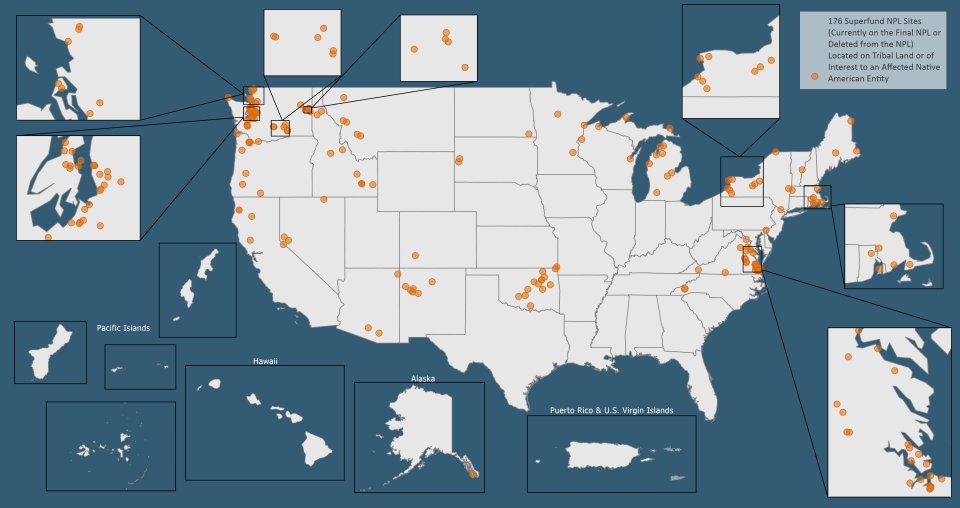
Almost 200 Superfund sites are located on Tribal land or are of interest to an affected Native American entity. EPA’s Superfund Redevelopment Program supports EPA staff and works with Tribes, states, communities and other partners in considering future use opportunities and integrating appropriate reuse options into the cleanup process at these sites.
Indigenous peoples and their communities have a historical continuity with lands and their environmental features, biodiversity and ecosystems that predate modern institutions and the Colonial-era systems that founded them. Indigenous communities have distinct social and economic systems as well as cultures and beliefs that are deeply connected with the natural resources of their ancestral homelands and the ecosystems that support these resources.
In the United States, many Tribes rely on local and regional ecosystems as sources of food, medicine and clothing as well as cultural sustenance. Tribes’ approaches to natural resource management, rooted in a deep respect for the environment and the natural world’s capacity to sustain communities over generations, provide best practices that guide environmental restoration and stewardship efforts.
Ecosystem Services at Superfund Sites: Reuse and Benefit to the Community (pdf) 2MB
This report provides more information about ecosystem benefits, such as cultural services, environmental education, sustainability and resilience, and subsistence and commercial extraction, and the positive impacts of these services at Superfund sites in reuse across the country.
Tribal leadership has made a vital difference at Superfund sites across the country. Sites have been restored and reused in ways that provide economic and ecosystem benefits and celebrate Tribal histories and cultures.
Quapaw Nation and the Tar Creek (Ottawa County) Superfund Site

In 2012, the Quapaw Nation became the first Native American Tribe to lead and manage cleanup at a Superfund site. The Quapaw Nation’s cleanup efforts have set the stage for projects that reflect the Tribe’s reuse priorities, including cultural preservation, agricultural use and the expansion of the Tribe’s traditional economic focus on ranching.
Learn more about reuse activities at the site.
Hear from the Quapaw Nation about cleanup and reuse.
Superfund Site Reuse Successes:
- Commencement Bay, Near Shore/Tide Flats – Tacoma, Washington (EPA Region 10)
- Eastern Surplus – Meddybemps, Maine (EPA Region 1)
- General Motors (Central Foundry Division) – Massena, New York (EPA Region 2)
- Indian Island/Tuluwat Village – Humboldt County, California (EPA Region 9) (pdf) 13MB
- Lower Duwamish Waterway – Seattle, Washington (EPA Region 10)
- Makah Reservation Warmhouse Beach Dump – Neah Bay, Washington (EPA Region 10)
- Portland Harbor – Portland, Oregon (EPA Region 10)
- Tar Creek (Ottawa County) – Northeast Oklahoma (EPA Region 6)
Tools and Resources for Restoration and Reuse
Superfund Redevelopment Program Tools and Resources
SRP Reuse Planning and Technical Assistance
SRP provides reuse planning and technical assistance to communities, stakeholders and EPA Regions to support the productive reuse and redevelopment of Superfund sites. These Regional Support Projects aim to facilitate redevelopment, remove barriers to productive reuse, and ensure that future uses of Superfund sites are well aligned with the cleanup and removal/remedial process. Regional Support Projects may focus on a single property at a Superfund site or include a larger neighborhood or area, depending on the extent of contamination.
Technical assistance and reuse planning support covers a variety of activities. These efforts can be structured as stand-alone, just-in-time services or as part of a longer-term redevelopment support process. SRP tailors technical assistance and reuse planning activities to meet the needs of specific sites, EPA site teams, stakeholders and communities.
Cleanup and Reuse at the Bird Dog Site at Tar Creek Superfund Site
Superfund Redevelopment Mapper
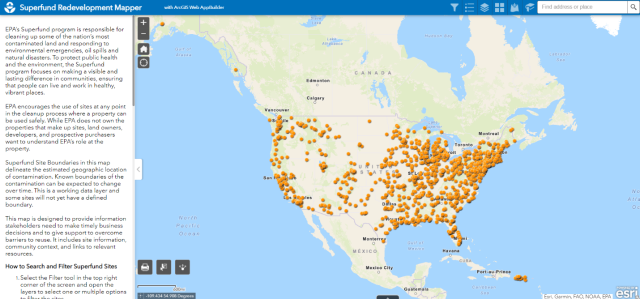
This tool helps stakeholders explore opportunities to reuse land on or near Superfund sites. It provides users with site locations and options for adding data layers that highlight site features and surrounding area characteristics.
Other Tools and Resources
Superfund Community Involvement provides technical assistance, tools and resources, and regional contacts for Superfund community involvement, including:
- The Technical Assistance Services for Communities Program
- The Technical Assistance Grant Program
- Community Advisory Groups
- The Superfund Job Training Initiative
- The Conflict Prevention and Resolution Center
EPA’s Superfund Job Training Initiative (SuperJTI) is a job readiness program that provides training and employment opportunities for people living in communities affected by Superfund sites. EPA’s goal is to help these communities develop job opportunities that remain long after Superfund sites have been cleaned up.
EPA’s Brownfields Program provides grants and technical assistance to communities, states, Tribes and others to assess, safely clean up and sustainably reuse contaminated properties. To learn more about EPA’s broader efforts to support the return of once-contaminated properties to productive use, read about the Land Revitalization Program.
- The Tribal Technical Assistance to Brownfields Program supports Indigenous communities in protecting and restoring sacred lands and accomplishing revitalization goals through the reuse, restoration and redevelopment of brownfields.
- The Revitalization-Ready Guide provides information for local and county governments, Tribes, quasi-governmental organizations and non-governmental organizations interested in facilitating the cleanup and reuse of brownfield properties.
- EPA’s Brownfields Program provides non-competitive funding to state and tribal response programs.
- Find examples of brownfields reuse in small, rural and tribal communities.
EPA’s RE-Powering America’s Land Initiative encourages renewable energy development on current and formerly contaminated lands, landfills and mine sites when such development is aligned with community visions for sites.
EPA’s Office of Community Revitalization offers technical assistance to help communities learn about and implement inclusive planning and development approaches that promote community revitalization and smart growth.
EPA’s Abandoned Mine Land Revitalization and Reuse webpage provides tools and resources for stakeholder involvement at abandoned mine lands, technical support and resources to explore innovative reuse opportunities available at former mine lands, and examples of reuses at mining sites.
EPA’s Natural Resource Damages webpage provides information about Natural Resource Damages and the roles and responsibilities of EPA and the Natural Resource Trustees.