


The Vessel Incidental Discharge Act (VIDA)
The Vessel Incidental Discharge Act establishes a uniform national framework for the regulation of discharges incidental to the normal operation of a vessel under Clean Water Act Section 312(p). VIDA is intended to prevent or reduce the discharge of pollutants from these vessels into U.S. waters, and to supersede the patchwork of existing federal, state and local requirements for the commercial vessel community.
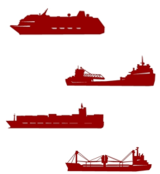
Who?
VIDA applies to the following vessels:
- Non-recreational, non-Armed Forces vessels (e.g., commercial, research and emergency rescue vessels) 79 feet in length and above; and
- Ballast water only from non-recreational, non-Armed Forces vessels less than 79 feet in length and fishing vessels of all sizes.
What?
VIDA directs the EPA to establish standards for discharges incidental to the normal operation of a vessel, except for sewage. For information regarding the regulations in place to control vessel sewage discharges, visit the EPA’s Vessel Sewage Discharges webpage.
Where?
VIDA, and the EPA’s associated regulations, apply to discharges into the waters of the United States or the waters of the contiguous zone. In practice, this includes internal navigable waterways, as well as the belt of seas extending 12 nautical miles from shore.
EPA, U.S. Coast Guard and State Responsibilities
VIDA defines specific roles for the EPA, the U.S. Coast Guard and states. The EPA’s primary responsibility is to develop national standards of performance for the incidental discharges from these vessels, while the USCG is to develop corresponding implementation, compliance and enforcement regulations for those standards, including any requirements governing the design, construction, testing, approval, installation and use of devices necessary to achieve the EPA standards.
VIDA requires that the EPA’s standards be:
- Technology-based; and
- At least as stringent as the requirements in the 2013 Vessel General Permit with limited exceptions.
In setting technology-based standards, the EPA is not to consider effects on receiving water quality. Instead, the EPA must consider the “best practicable control technology currently available” (BPT), the “best available technology economically achievable” (BAT) and the “best conventional pollutant control technology” (BCT). The standards can take the form of numeric limits and/or best management practices, as appropriate.
In 2024, the EPA published a final rule, the Vessel Incidental Discharge National Standards of Performance, in the Federal Register. The USCG has two years after issuance of the EPA's rule to finalize the corresponding implementing regulations. The EPA’s rule included three general discharge standards – General Operation and Maintenance, Oil Management, and Biofouling Management – as well as specific standards for 20 different equipment and systems onboard vessels.
Once both the EPA and USCG regulations are final, effective and enforceable, states will be preempted from establishing more stringent discharge standards. VIDA, however, includes provisions for states to pursue additional requirements through various petition processes.
VIDA also specified that the EPA, the USCG and the states all have responsibilities related to enforcement. The USCG is authorized to inspect vessels, establish procedures for investigating and reporting violations, and monitor vessels, as well as detain vessels, as appropriate, for noncompliance with the requirements. The EPA is authorized to take civil actions or pursue criminal penalties against any person that is in violation of the requirements. Finally, the requirements may also be enforced by states or political subdivisions of states. The specific enforcement authorities are described in Clean Water Act Section 312(k).
Non-Regulatory Programs under VIDA
VIDA includes several non-regulatory programs intended to improve understanding of invasive species risks from vessel discharges and to establish methods for addressing these risks. These programs include: (1) the Intergovernmental Response Framework, (2) the Coastal Aquatic Invasive Species Mitigation Grant Program and Mitigation Fund and (3) the Great Lakes and Lake Champlain Invasive Species Program.
Intergovernmental Response Framework
VIDA directs the USCG, in consultation with the EPA and acting in coordination with the Aquatic Nuisance Species Task Force, to establish an Intergovernmental Response Framework for Federal and intergovernmental response to aquatic nuisance species risks from vessel discharges. Under this framework, the EPA (in coordination with the USCG) is tasked with establishing a risk assessment and response framework using ballast water discharge data and aquatic nuisance species monitoring data to identify and track populations of aquatic invasive species, to evaluate the risk of these populations establishing and spreading, and to establish emergency best management practices to rapidly respond to emerging threats. At the request of the EPA and the USCG, the Aquatic Nuisance Species Task Force established a workgroup to help inform the development of the framework. More specifically, the workgroup will be meeting regularly to discuss the framework’s design and expectations, gather and evaluate state input, identify existing models and resources that can inform the framework, and consider potential emergency best management practices to respond to emerging threats.
Coastal Aquatic Invasive Species Mitigation Grant Program and Mitigation Fund
VIDA directed the establishment of the Coastal Aquatic Invasive Species Mitigation Grant Program and Mitigation Fund to prevent, mitigate and restore areas affected by aquatic invasive species. The program was authorized for 5 million dollars to be administered by the National Fish and Wildlife Foundation; however, no funding was ever appropriated.
Great Lakes and Lake Champlain Invasive Species Program
VIDA also called for the EPA to establish, in collaboration with other federal agencies, a Great Lakes and Lake Champlain Invasive Species Program. To address one of the stated purposes of that Program, the EPA teamed with the Maritime Administration and the Great Waters Research Collaborative – a project of the University of Wisconsin-Superior’s Lake Superior Research Institute – to research, develop and pilot ballast water management systems for use by commercial vessels operating solely within the Great Lakes and Lake Champlain Systems. Learn more about the Great Lakes Ballast Water Research and Development Plan, supported by Great Lakes Restoration Initiative funding.