


Sources and Solutions: Agriculture
Farmers apply nutrients on their fields in the form of chemical fertilizers and animal manure, which provide crops with the nitrogen and phosphorus necessary to grow and produce the food we eat. However, when nitrogen and phosphorus are not fully utilized by the growing plants, they can be lost from the farm fields and negatively impact air and downstream water quality.
This excess nitrogen and phosphorus can be washed from farm fields and into waterways during rain events and when snow melts, and can also leach through the soil and into groundwater over time. High levels of nitrogen and phosphorus can cause eutrophication of water bodies. Eutrophication can lead to hypoxia (“dead zones”), causing fish kills and a decrease in aquatic life. Excess nutrients can cause harmful algal blooms (HABs) in freshwater systems, which not only disrupt wildlife but can also produce toxins harmful to humans.
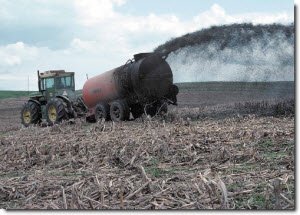
Fertilized soils, as well as livestock operations, are also vulnerable to nutrient losses to the air. Nitrogen can be lost from farm fields in the form of gaseous, nitrogen-based compounds, like ammonia and nitrogen oxides. Ammonia can be harmful to aquatic life if large amounts are deposited from the atmosphere to surface waters. Nitrous oxide is a potent greenhouse gas.
There are many ways that farmers can reduce nutrient losses from their operations1, including, but not limited to2.
- Adopting Nutrient Management Techniques: Farmers can improve nutrient management practices by applying nutrients (fertilizer and manure) in the right amount, at the right time of year, with the right method and with the right placement.3,4
- Using Conservation Drainage Practices: Subsurface tile drainage is an important practice to manage water movement on and through many soils, typically in the Midwest. Drainage water can carry soluble forms of nitrogen and phosphorus, so strategies are needed to reduce nutrient loads while maintaining adequate drainage for crop production. Conservation drainage describes practices including modifying drainage system design and operation, woodchip bioreactors, saturated buffers, and modifications to the drainage ditch system. 5,6
- Ensuring Year-Round Ground Cover: Farmers can plant cover crops7 or perennial species8 to prevent periods of bare ground on farm fields when the soil (and the soil and nutrients it contains) are most susceptible to erosion and loss into waterways.
- Planting Field Buffers: Farmers can plant trees, shrubs and grasses along the edges of fields; this is especially important for a field that borders water bodies. Planted buffers can help prevent nutrient loss from fields by absorbing or filtering out nutrients before they reach a water body.9
- Implementing Conservation Tillage: Farmers can reduce how often and how intensely the fields are tilled. Doing so can help to improve soil health, and reduce erosion, runoff and soil compaction, and therefore the chance of nutrients reaching waterways through runoff.10
-
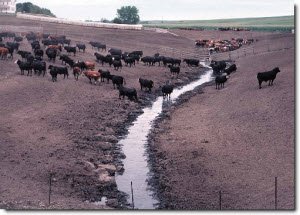
Keeping animals and their waste out of streams keeps nitrogen and phosphorus out of the water and protects stream banks. Managing Livestock Access to Streams: Farmers and ranchers can install fence along streams, rivers and lakes to block access from animals to help restore stream banks and prevent excess nutrients from entering the water.11
- Engaging in Watershed Efforts: The collaboration of a wide range of people, stakeholders and organizations across an entire watershed is vital to reducing nutrient pollution to our water and air. Farmers can play an important leadership role in these efforts when they get involved and engage with their State governments, farm organizations, conservation groups, educational institutions, non-profit organizations, and community groups.
1 Reducing Nutrient Loss: Science Shows What Works
2 USDA Natural Resource Conservation Service Conservation Practice Standards are the best available baseline nationally for implementation of these practices.
3 Pennsylvania Nutrient Management Program
4 Best Management Practices for Agricultural Nutrients
6 Conservation Drainage for the Midwest
7 Cover Crops - Keeping Soil in Place While Providing Other Benefits
8 Research shows perennials would reduce nutrient runoff to the Gulf of America's dead zone