


Cleanup and Remediation
EPA develops procedures and methods to contain and mitigate contamination and to remediate the environment following public health and environmental incidents and disasters. Contamination incidents could require the decontamination of multiple buildings and outdoor areas. EPA's goal is to protect human health and the environment, and to restore contaminated areas as efficiently as possible.
Wide-Area Decontamination
EPA has a long history of and extensive expertise in cleaning up contamination associated with accidental spills and industrial accidents. However, remediation after incidents involving chemical, radiological, and biological agents released into buildings and wide areas, such as outdoor urban centers, is a relatively new responsibility for the Agency. The Agency lacked substantial experience or a research history to support. The U.S. Department of War has expertise in the tactical decontamination of equipment in battlefield situations, but this expertise is not directly applicable to the decontamination of public facilities and outdoor areas that have a variety of porous surfaces and, potentially, must meet more stringent clean-up goals for public re-occupation.
A wide area contamination incident could require the decontamination of multiple buildings and city blocks.
Activities associated with site cleanup or decontamination aims to fill the most critical scientific gaps in the capabilities of EPA’s response community. This helps EPA make the most informed clean-up decisions. EPA is building a broader base of knowledge on the effectiveness of technologies for homeland security application by studying their efficacy and compatibility under diverse, realistic environmental conditions, and under diverse operating conditions.
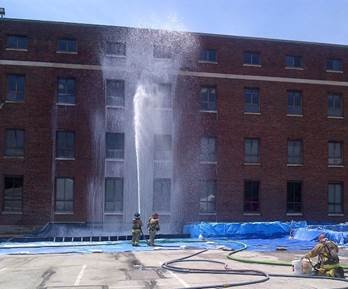
EPA has examined a broad range of decontamination methods and technologies from common low technology to specialized higher technology approaches. These approaches include investigating the best way to use water such as liquid and steam or other liquids, foams, fumigants, or specialized coatings to decontaminate surfaces.
Building this decontamination knowledge base begins with experimentation at the laboratory bench scale before moving to testing decontamination approaches at a larger scale. To ensure that decontamination methods tested in the laboratory will perform at a large scale, EPA built a room-sized chamber to test methods at a pilot scale. Decontamination methods that prove successful at the pilot scale are brought forward for testing at large scale or real-world scale. Large-scale demonstrations involve engagement with other federal, state, and local agencies, and they examine operational and logistical challenges along with scientific challenges.
Field Demonstrations
- Bio-Response Operational Testing and Evaluation (BOTE) Project
- Underground Transportation Restoration Project
- Radiological Technology Demonstration Project
- Analysis for Coastal Operational Resiliency (AnCOR)
- Operational Testing and Evaluation of Chemical Remediation Activities (OTECRA)