U.S. flag

An official website of the United States government

Here’s how you know

Dot gov

Official websites use .gov
A .gov website belongs to an official government organization in the United States.

HTTPS

Secure .gov websites use HTTPS
A lock (LockA locked padlock) or https:// means you’ve safely connected to the .gov website. Share sensitive information only on official, secure websites.

    • Environmental Topics
    • Air
    • Bed Bugs
    • Chemicals and Toxics
    • Climate Change
    • Emergency Response
    • Environmental Information by Location
    • Greener Living
    • Health
    • Land, Waste, and Cleanup
    • Lead
    • Mold
    • Pesticides
    • Radon
    • Science Topics
    • Water Topics
    • A-Z Topic Index
    • Laws & Regulations
    • By Business Sector
    • By Topic
    • Compliance
    • Enforcement
    • Guidance
    • Laws and Executive Orders
    • Regulations
    • Report a Violation
    • Environmental Violations
    • Fraud, Waste or Abuse
    • About EPA
    • Organization Chart
    • Staff Directory
    • Planning, Budget, and Results
    • Jobs and Internships
    • Headquarters Offices
    • Regional Offices
    • Lab and Research Centers
National Pollutant Discharge Elimination System (NPDES)
Contact Us

Combined Sewer Overflows (CSOs)
CSO Topics
  • Overview
  • Policy, Reports, Training, and Technical Assistance
  • Frequent Questions
  • CSOs in the Great Lakes Basin
  • Public Notification Requirements for the Great Lakes

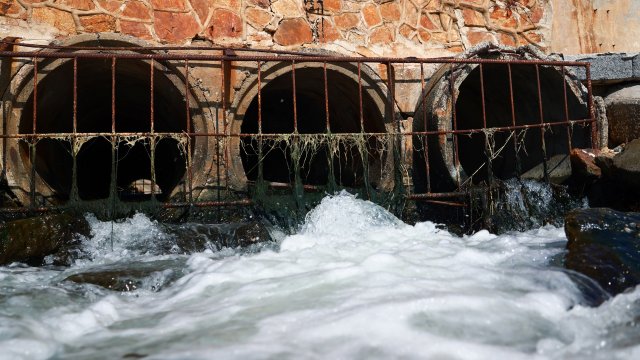
A combined sewer system (CSS) collects rainwater runoff, domestic sewage, and industrial wastewater into one pipe. Under normal conditions, it transports all of the wastewater it collects to a sewage treatment plant for treatment, then discharges to a water body. The volume of wastewater can sometimes exceed the capacity of the CSS or treatment plant (e.g., during heavy rainfall events or snowmelt). When this occurs, untreated stormwater and wastewater, discharges directly to nearby streams, rivers, and other water bodies.

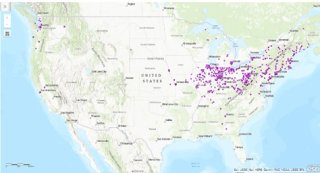
Combined sewer overflows (CSOs) contain untreated or partially treated human and industrial waste, toxic materials, and debris as well as stormwater. They are a priority water pollution concern for the nearly 860 municipalities across the U.S. that have CSSs.


CSO Control Policy

EPA’s CSO control policy is a national framework for controlling CSOs through the NPDES permitting program. It provides guidance on how communities with CSOs can achieve Clean Water Act (CWA)(274 pp, 571 K, About PDF) goals in a flexible, cost-effective manner. The CSO control policy also defines expectations for regulated communities, state water quality standards (WQS) authorities, and NPDES authorities.

  • EPA's Combined Sewer Overflow (CSO) Control Policy

In support of the CSO control policy, EPA developed the following guidance documents:

  • Smart Data Infrastructure for Wet Weather Control and Decision Support - Wet weather can significantly increase flows at wastewater treatment facilities, creating operational challenges and potentially affecting treatment efficiency, reliability, and control of treatment units at these facilities. In recent years municipalities and utilities have been considering how they can improve their operations and infrastructure by drawing on recent technological advances. This document focuses on how municipalities, utilities, and related organizations can use advances in technology to implement “smart data infrastructure” for wet weather control—that is, how they can use advanced monitoring data to support wet weather control and decision-making in real time or near real time. This document was originally developed in August 2018, the March 2021 version updated existing case studies with new information and added new case studies.
     
  • Combined Sewer Overflows Guidance for Nine Minimum Control Measures – Provides information on minimum technology-based controls for communities to use to address CSO problems.
     
  • Combined Sewer Overflows Guidance For Long-Term Control Plan – Describes how municipalities can develop comprehensive long-term control plans (LTCPs) that recognize the site-specific nature of CSOs and their impacts on receiving water bodies.
     
  • Guidance: Coordinating Combined Sewer Overflow (CSO) Long-Term Planning with Water Quality Standards Reviews – Addresses impediments to implementing the water quality-based provisions of the CSO control policy and actions states and CSO communities should take to overcome them.
     
  • Combined Sewer Overflows Guidance for Monitoring and Modeling – Provides guidelines for using monitoring and modeling in the development and implementation of a CSO control program.
     
  • Combined Sewer Overflows Guidance For Permit Writers – Describes how to develop and issue NPDES permits with CSO conditions that reflect the CSO control policy. This guidance is intended primarily for NPDES permit writers.
     
  • Post Construction Compliance Monitoring Guidance – Presents guidance on developing a post construction compliance monitoring program to assess the effectiveness of CSO controls.
     
  • Combined Sewer Overflows Guidance for Financial Capability Assessment and Schedule Development – Explains how a community can assess its financial capability and how this assessment and other factors identified in the CSO control policy can be used to develop compliance schedules for implementing CSO controls.
     
  • Combined Sewer Overflows Guidance For Funding Options – Describes a broad spectrum of options for funding capital, debt service, and operational costs of CSO controls. It includes benefits and limitations of the options.
     
  • Combined Sewer Overflows Screening and Ranking Guidance – Provides an informal tool to help permitting authorities establish CSO permitting priorities. It might also help permittees rank their CSOs to best allocate their resources.
     
  • A Screening Assessment of the Potential Impacts of Climate Change on CSO Mitigation in the Great Lakes and New England Regions – Provides a screening-level assessment of the potential impact of future climate change on CSOs in the New England and Great Lake regions.
     
  • The Long-Term Control Plan-EZ (LTCP-EZ) Template: A Planning Tool for CSO Control in Small Communities – Planning tool for small communities to use in developing an LTCP to address water pollution problems related to CSOs.
    • Description and Instructions for Using Template (PDF)
    • Description and Instructions for Using Template (WORD) (doc)
    • Template: LTCP-EZ (xls)
       
  • Green Long-Term Control Plan-EZ: A planning tool for Combined Sewer Overflow Control in Small Communities – Planning tool for small communities considering using green infrastructure when developing an LTCP to address water pollution problems related to CSOs.
    • Description and Instructions for Using Template (PDF)
    • Description and Instructions for Using Template (WORD) (docx)
    • Template: Green LTCP-EZ (xls)
  • NPDES Home
  • About NPDES
  • All NPDES Program Areas
  • Animal Feeding Operations
  • Aquaculture
  • Forest Roads
  • Industrial Wastewater
  • Municipal Wastewater
    • Combined Sewer Overflows (CSOs)
    • Sanitary Sewer Overflows (SSOs)
    • Peak Flows
    • Integrated Planning
  • National Pretreatment Program
  • Pesticide Permitting
  • Stormwater
  • Water Quality Trading
  • NPDES Technical Resources
Contact Us to ask a question, provide feedback, or report a problem.
United States Environmental Protection Agency

Discover.

  • Accessibility
  • Budget & Performance
  • Contracting
  • EPA www Web Snapshot
  • Grants
  • No FEAR Act Data
  • Plain Writing
  • Privacy
  • Privacy and Security Notice

Connect.

  • Data.gov
  • Inspector General
  • Jobs
  • Newsroom
  • Open Government
  • Regulations.gov
  • Subscribe
  • USA.gov
  • White House

Ask.

  • Contact EPA
  • EPA Disclaimers
  • Hotlines
  • FOIA Requests
  • Frequent Questions

Follow.

Last updated on November 23, 2021