U.S. flag

An official website of the United States government

Here’s how you know

Dot gov

Official websites use .gov
A .gov website belongs to an official government organization in the United States.

HTTPS

Secure .gov websites use HTTPS
A lock (LockA locked padlock) or https:// means you’ve safely connected to the .gov website. Share sensitive information only on official, secure websites.

    • Environmental Topics
    • Air
    • Bed Bugs
    • Chemicals, Toxics, and Pesticide
    • Emergency Response
    • Environmental Information by Location
    • Health
    • Land, Waste, and Cleanup
    • Lead
    • Mold
    • Radon
    • Research
    • Science Topics
    • Water Topics
    • A-Z Topic Index
    • Laws & Regulations
    • By Business Sector
    • By Topic
    • Compliance
    • Enforcement
    • Guidance
    • Laws and Executive Orders
    • Regulations
    • Report a Violation
    • Environmental Violations
    • Fraud, Waste or Abuse
    • About EPA
    • Our Mission and What We Do
    • Headquarters Offices
    • Regional Offices
    • Labs and Research Centers
    • Planning, Budget, and Results
    • Organization Chart
    • EPA History

Breadcrumb

  1. Home
  2. Emergency Response Research

Transport Studies

Contaminants in the environment move in response to wind, rain and human activities such as tracking by foot or vehicle.  Contaminants can percolate into the soil and enter groundwater, runoff into streams or be transported through the air.   EPA must be able to predict the movement of contamination in
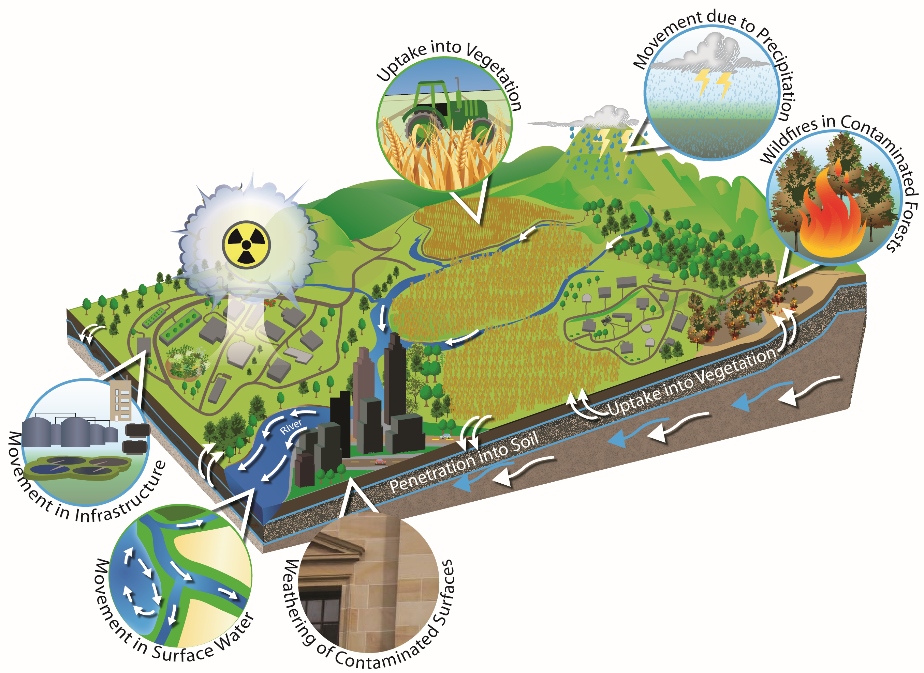
Movement of cesium through the environment
Movement of cesium in the environment.

the environment for several reasons.  Knowledge of where contamination might migrate will guide decisions on where to sample in order to characterize the extent of contamination.  Predicting where contamination will go determines who could be exposed so that precautions to minimize exposure can be taken.  Knowing how contaminants might move in the environment enables EPA to take countermeasures to minimize the spread of contamination.

EPA conducts transport studies at the laboratory level, through computer modeling and during field-scale exercises to better understand and minimize the spread of contamination in the environment.

Related Products

  • Contaminant Transport Studies

Emergency Response Research

  • Research Topics
    • Cleanup and Remediation
    • Communities, Resilience & Remediation
    • Contaminant Detection and Sampling & Analysis
    • Contaminant Fate, Transport & Exposure
    • COVID-19 Research
    • Oil Spill Research
    • Waste Management
    • Water Security
    • Wildland Fire Research
  • Models, Tools, & Applications
  • Outreach & Training
    • Webinar Series
    • Engagement Opportunities
    • Decon Conference
    • Technical Support to States & Territories
  • Publications
Contact Us About Emergency Response & Homeland Security Research
Contact Us About Emergency Response & Homeland Security Research to ask a question, provide feedback, or report a problem.
Last updated on October 14, 2025
  • Assistance
  • Spanish
  • Arabic
  • Chinese (simplified)
  • Chinese (traditional)
  • French
  • Haitian Creole
  • Korean
  • Portuguese
  • Russian
  • Tagalog
  • Vietnamese
United States Environmental Protection Agency

Discover.

  • Accessibility Statement
  • Budget & Performance
  • Contracting
  • EPA www Web Snapshot
  • Grants
  • No FEAR Act Data
  • Plain Writing
  • Privacy and Security Notice

Connect.

  • Data
  • Inspector General
  • Jobs
  • Newsroom
  • Regulations.gov
  • Subscribe
  • USA.gov
  • White House

Ask.

  • Contact EPA
  • EPA Disclaimers
  • Hotlines
  • FOIA Requests
  • Frequent Questions
  • Site Feedback

Follow.