


Navajo Nation Abandoned Uranium Mines Cleanup
There are over 500 abandoned uranium mines on and near Navajo Nation. This page provides information about contamination from the mines and how it is being addressed.
- Background
- Settlements
- Priority Mines
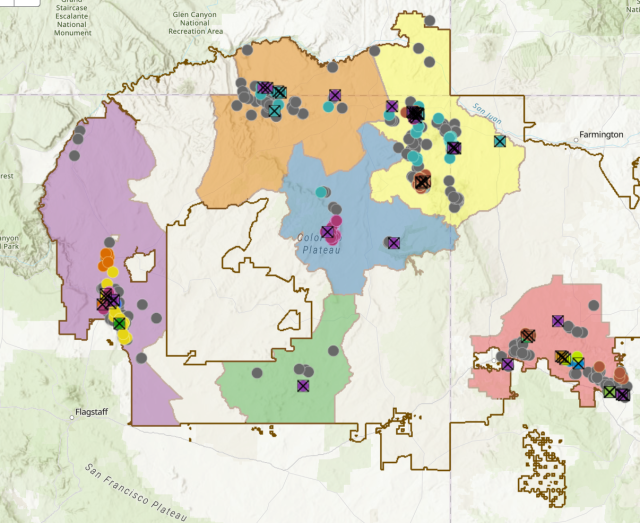
- Sites
- Community Involvement
- Community Outreach Network
- Community Contacts
- Ten-Year Plan
- Get Involved & Get Support
- Training and Professional Development
- Contracting With EPA
- Factsheets
Background
From 1944 to 1986, nearly 30 million tons of uranium ore were extracted from Navajo lands under leases with the Navajo Nation. Many Navajo people worked the mines, often living and raising families in close proximity to the mines and mills. Today the mines are closed, but a legacy of uranium contamination remains, including over 500 abandoned uranium mines (AUMs) as well as homes and water sources with elevated levels of radiation. Potential health effects include lung cancer from inhalation of radioactive particles, as well as bone cancer and impaired kidney function from exposure to radionuclides in drinking water. Learn more about health effects of uranium and how you can avoid contact with it.
EPA maintains a strong partnership with the Navajo Nation and, since 1994, the Superfund Program has provided technical assistance and funding to assess potentially contaminated sites and develop a response.
Settlements
EPA has entered into enforcement agreements and settlements valued at over $1.7 billion to reduce the highest risks of radiation exposure to the Navajo people from AUMs. As a result, funds are available to begin the assessment and cleanup process at 230 of the 523 abandoned uranium mines. The Abandoned Uranium Mine Settlements on the Navajo Nation Fact Sheet (pdf) provides information on the separate enforcement agreements and settlements to address abandoned uranium mines on the Navajo Nation. To learn more about EPA’s Superfund legal agreements please visit Negotiating Superfund Settlements.
Priority Mines
EPA and NNEPA prioritized forty-six mines (called priority mines) based on gamma radiation levels, proximity to homes and potential for water contamination identified in preliminary assessments documented in our Site Screen Reports. Detailed cleanup investigations were conducted at priority mines in 2018.
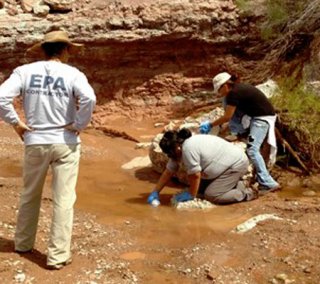
Forty-four priority mines are in the assessment phase which includes biological and cultural surveys, radiation scanning, and soil and water sampling. These assessments help to determine the extent of contamination. The assessment work at the priority mines will be documented in Removal Site Evaluation reports. These reports will be shared with communities and made available on our website.
Community Involvement
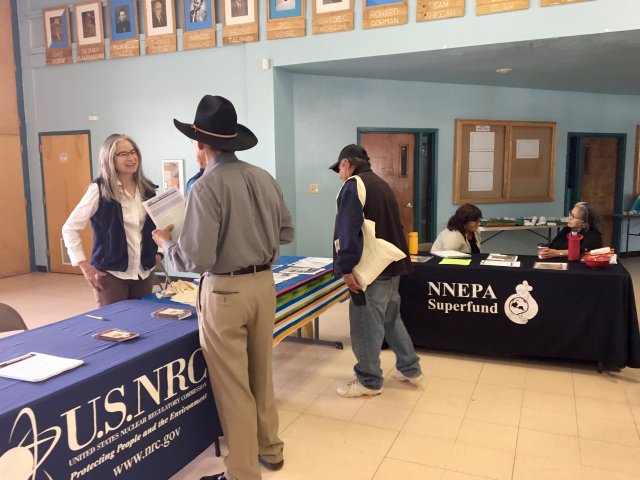
EPA works with communities to keep them informed of cleanup activities which may impact them. Regular community meetings are held to provide updates and get input from local residents about our work to address uranium contamination. Community Involvement Plans (CIPs) outline opportunities for individual participation and meaningful information sharing regarding the EPA’s activities on and near Navajo Nation Abandoned Uranium Mines. Points of contact at EPA are listed above-right in the Community Contacts box.
Community Outreach Network
In 2015, Federal and Navajo agencies formed the Community Outreach Network as part of the Five-Year plan. The Community Outreach Network includes representatives from EPA, the Bureau of Indian Affairs, the Nuclear Regulatory Commission, the Department of Energy, the Indian Health Service, the Agency for Toxic Substances and Disease Registry, the Navajo Nation Environmental Protection Agency, the Navajo Nation Abandoned Mine Lands/Uranium Mill Tailings Remedial Action Program, and the Navajo Nation Department of Health.
The Community Outreach Network plans and coordinates outreach events to enhance community understanding of the work agencies are doing to address uranium contamination on Navajo Nation. See the Community Outreach Network section of the Federal Plans page for more information. Points of contact at EPA and DOE are listed in the Contacts box.
Community Contacts
Eastern and Southern Regions: Priscilla Tom
tom.priscilla@epa.gov
(505) 240-0093
Central, North Central, and Northern Regions: Elsa Johnson
johnson.elsa@epa.gov
(415) 947-3552
Western Region: Michele Dineyazhe
dineyazhe.michele@epa.gov
(928) 310-4854
Western, Central, North-Central and Northern Regions: Ronnie Ben
ben.ronnie@epa.gov
(928) 225-5319
Ten-Year Plan
In October 2007, at the request of the U.S. House Committee on Oversight and Government Reform, EPA, along with the Bureau of Indian Affairs (BIA), the Nuclear Regulatory Commission (NRC), the Department of Energy (DOE), and the Indian Health Service (IHS) developed a coordinated Five-Year Plan to address uranium contamination in consultation with Navajo Nation EPA (NNEPA).
In 2014 a second Five-Year Plan was created which built upon the work done during the first five years, and established objectives and strategies to address the most significant risks to human health and the environment.
The Ten-Year Plan to Address Impacts of Uranium Contamination in the Navajo Nation - 2020-2029 continues the effort of the previous Five-Year Plans and identifies the next steps in addressing the human health and environmental risks associated with the legacy of uranium mining on the Navajo Nation. The Ten-Year Plan was developed in cooperation with multiple federal partner agencies including Bureau of Indian Affairs, Department of Energy, Nuclear Regulatory Commission, Navajo Area Indian Health Service, and the Agency for Toxic Substances and Disease Registry to incorporate goals and milestones for achieving assessment and cleanup actions.
Related Content: Progress Reports, Previous Plans and Fact Sheets
Get Involved & Get Support
Training and Professional Development
- Superfund Job Training Initiative
- Environmental Workforce Development and Job Training Grants (EWDJT)
Contracting With EPA
- EPA Resources for Small Businesses
- Contracting With EPA: Opportunities for Cleaning up Abandoned Uranium Mines on or near Navajo Nation
Fact Sheets
Recent News
-
EPA Initiates Cleanup of Uranium Mine Waste at Lukachukai Superfund Site on Navajo Nation
U.S. Environmental Protection Agency (EPA) is beginning the cleanup of 13,000 cubic yards of uranium mine waste rock at the Mesa V complex of three former mines in the Lukachukai Mountains on the Navajo Nation.
-
United Nuclear Corporation and General Electric to Perform $63 Million Cleanup of Uranium Mine Waste at Northeast Church Rock Mine in Navajo Nation
The United Nuclear Corporation (UNC) and General Electric Company (GE) have agreed to a Consent Decree with the United States, Navajo Nation and the State of New Mexico under the federal Superfund law.
Navajo Nation AUM Sites
- Cyprus Amax and Western Nuclear Mines
- Haystack No. 1, Section 24 (Nanabah Vandever), and Bebo Trespass Mines
- Mariano Lake Mine
- Mac and Black Jack Mines
- Northeast Church Rock Mine
- Old Church Rock Mine
- Quivira Mines (Tronox)
- Ruby Mines
- Trust Mines
- Section 32/33 Mines (Tronox)
- Section 26 Mine
- El Paso Natural Gas Mines
- EnPro Holdings Mines (formerly Coltec Industries)
- Section 9 Lease Mines
- Trust Mines