


Superfund Accomplishments Report Fiscal Year 2025
EPA’s 2025 Superfund Accomplishments Report celebrates the program’s successes in cleaning up the nation’s most contaminated land and ensuring all Americans live, work, and play in vibrant communities free from environmental hazards. The Trump EPA is laser focused on accelerating Superfund work to provide health and economic benefits to communities faster and returning sites to communities for productive reuse.
Looking ahead to 2026, the Superfund Accomplishments Report will focus on these efforts to harness our more than 45 years of cleanup experience to streamline programmatic actions and deliver faster cleanups and earlier protections to communities affected by Superfund sites. We will showcase success stories that deliver on Administrator Zeldin’s commitment to providing clean air, water, and land to every American. We will check in on progress being made through our new National Center of Excellence for CERCLA Residential Lead Cleanups which will serve as the hub for expediting cleanups that protect children, and we will highlight special initiatives, like how the Superfund program is helping communities return Superfund sites to productive uses that spur economic benefits for communities.
Table of Contents
- 2025 Superfund Annual Accomplishments Metrics
- In the News
- Protecting Human Health and the Environment
- Community Involvement Key to the Cleanup Process
- Centering Small Businesses as Key Stakeholders
- Cooperative Federalism and Cross-Agency Partnerships
- Superfund Training Initiatives
- Innovative Use of Cleanup Technologies to Expedite Site Cleanup
- Redevelopment Success Stories
- Addressing Lead Contamination at Superfund Sites
- Addressing PFAS Contamination at Superfund Sites
2025 Superfund Annual Accomplishments Metrics
Check out the Fiscal Year 2025 Superfund Annual Metrics for a snapshot of all the work EPA accomplished throughout last year!
In the News
This accomplishments report isn’t the only place you can read about the great work taking place. The Superfund program often shares its biggest successes through press releases and other national announcements. Click on the headlines below to read our most notable recent Superfund success stories and check out EPA's News Releases for the latest EPA News!
- EPA announces major agreement with developer to clean up Mohawk Tannery site in Nashua, N.H.
- EPA, state and local partners complete cleanup of American Nuclear Corp. Superfund Site
- EPA Advances Major Cleanup Plan for Jackson Ceramix Superfund Site
- EPA Region 2 Highlights Accomplishments Since April
- EPA Celebrates Another 100 Days with 100 More Pro-Environmental Actions
- Administrator Zeldin Releases EPA Region 7 Status Update Regarding West Lake Landfill Superfund Site and Coldwater Creek
- EPA conditionally approves GE-Housatonic Rest of River transportation and disposal plan
- EPA Completes Hazardous Materials Cleanup to Support Los Angeles County Wildfire Recovery
- EPA announces completion of Hurricane Helene response in western North Carolina
- EPA reaches agreement with Vistra Corp. for urgent battery cleanup at Moss Landing, launches website for public updates
- Two EPA Superfund success stories are unfolding along California's coast
- Trump EPA Announces Next Steps on Regulatory PFOA and PFOS Cleanup Efforts, Provides Update on Liability and Passive Receiver Issues
Protecting Human Health and the Environment

Time-Critical Site Cleanup Completed in New Hampshire
EPA completed a time-critical cleanup at the Associated Electric site in Hillsborough, New Hampshire, allowing the town to proceed with its plan to build new police and fire department facilities on the property. The previous site owners, a dry cleaner and an industrial equipment repair shop, improperly stored hazardous materials in two buildings. From late 2024 to January 2025, EPA disposed of drums and containers holding contaminants harmful to public health such as trichloroethylene, polychlorinated biphenyls and lead. After removal, the town secured grants to demolish the rundown structures and build their new facilities.
EPA Begins Expedited Cleanup Process for Contaminated Waterway in Boston

EPA published an Engineering Evaluation/Cost Analysis for the first mile of the Lower Neponset River Superfund site in Boston and Milton, Massachusetts, an important step toward removing contaminated sediment and soil and quickly reducing residents’ and recreational users’ exposure to contaminants at the site. This area of the site is known as the Phase I Reach. In 2024, EPA found site sediment and floodplain soils highly contaminated with polychlorinated biphenyls and other hazardous substances. As described in the Engineering Evaluation/Cost Analysis, EPA proposed to take actions to prevent potential dam failure and catastrophic release of contaminated sediments further downstream, which is a shared priority for the state, local communities and watershed advocacy groups.
EPA Restores Safe Green Space at Lindsay Street Park in Georgia
EPA finished cleanup at Lindsay Street Park at the Westside Lead Superfund site in northwest Atlanta’s English Avenue neighborhood. The completion restored and reopened a safe green space that has been closed since the discovery of elevated lead from historic foundry slag in 2022. EPA worked closely with the city of Atlanta, the Georgia Environmental Protection Division, and local community groups to ensure the park’s soil meets health standards and has safe lead levels. The park, which initially opened in 2015 as the first public park in English Avenue, features green infrastructure, a community playground and a stream that flows into Proctor Creek.

Community Involvement Key to the Cleanup Process

EPA Co-hosts Fishing Derby in Massachusetts
EPA strengthened connections with the local community and continued to track cleanup progress at the Resolve, Inc. Superfund Site by co-hosting the 20th annual Cornell Pond Fishing Derby in partnership with the Potentially Responsible Party group. The event drew record participation, while providing new fish tissue samples for monitoring PCB contamination at the pond.
Local anglers participated in the derby, competing for prizes and helping to collect samples of Largemouth Bass, Brown Bullhead, and American Eel, which were then tested for PCBs, one of the site’s primary contaminants of concern. The most recent data from the Derby showed significant reduction in PCB levels demonstrating excellent progress in the cleanup of PBS at the site. In addition to effectively conducting EPA’s required fish tissue sampling, the event provides a unique opportunity to involve the local community in the Superfund process – families and neighbors come together for an enjoyable morning of fishing and barbeque while supporting the PCB monitoring efforts at the pond and building community connections.
Novel Engagement Tools Help Protect Baltimore, Maryland, Communities
With support from the Superfund Technical Assistance Services for Communities Program, EPA developed user-friendly outreach products in English and Spanish, communicating fishing advisories for the area surrounding the Bear Creek Sediments Superfund site. The products were shared at the 2025 Turner Station Annual Community Resource Fair and included flyers, posters, stickers to attach to tackle boxes, and water bottles and coffee mugs displaying QR codes linking to the Maryland Department of the Environment’s fish advisory webpage. EPA’s information booth also included an interactive excavation and capping activity giving the public a first-hand look at the selected cleanup for the site. Products were developed in response to community feedback gathered during EPA’s 2023 Technical Assistance Needs Assessment, which pointed to the need to find better ways to ensure area subsistence anglers are aware of fishing advisories for the Baltimore Harbor and Patapsco River. To improve access to information about the cleanup approach, the Superfund Technical Assistance Services for Communities Program is developing an animated video to be shared with community members over social media and at community meetings.

Reaching the Home Stretch at Raybestos Memorial Ballfield in Connecticut
EPA will nearly finish its multiyear consolidation remedy at the Raymark Industries, Inc. Superfund site in Stratford, Connecticut. This is an important milestone for a once-controversial cleanup approach that has gained strong community support through EPA’s successful Superfund Community Involvement Program. The remedy involved digging up soil mixed with industrial waste from over 30 properties and removing contaminated sediment from Ferry Creek. EPA removed over 115,000 cubic yards of contaminated material and consolidated it at the former Raybestos Memorial Ballfield on-site. Thus far, EPA has graded and compacted the waste, put in 11 acres of liner material and placed 4 feet of separation soils (i.e., the final cover system). EPA worked closely with the town to preserve up to 4 acres of the property for commercial development, holding 48 bi-monthly Community Advisory Group meetings over 5 years, and updating the public through “In the Moment” videos capturing progress. After safe cleanup practices and consistent engagement, EPA has continued community support for the site’s final cleanup projects.

Engaging the Community in Kansas Improves Monitoring of Vapor Intrusion
EPA Region 7 staff met the needs of the community surrounding the Chemical Commodities, Inc. Superfund site by including a bi-lingual human health risk assessor at recent open houses. These outreach events allow staff to explain how vapor intrusion sampling is conducted and how vapor intrusion mitigation systems work to remove contaminated air from inside a house. Starting in 2003, the potentially responsible parties installed vapor intrusion mitigation systems in homes surrounding the Superfund site. The outreach events have resulted in a greater number of homeowners signing access agreements, which allows Region 7 staff to inspect the mitigation and evaluate if the system remains protective of human health.
Centering Small Businesses as Key Stakeholders
EPA Keeps Businesses Open During Response in Hockessin
The Hockessin Groundwater site team completed several project milestones while working closely with the community to limit impact on local businesses in Hockessin, Delaware. EPA conducted site activities on days and times that businesses were closed. EPA also planned treatment for the winter to minimize impact on a local plant nursery’s growing season. EPA removed about 500 pounds of perchloroethylene from the subsurface. The cleanup reduced PCE concentrations in soil to non-detectable levels. PCE levels in groundwater were reduced below EPA maximum contaminant levels. EPA is moving forward with the next phases of the cleanup and beginning site breakdown and restoration activities at the Hockessin Cleaners shopping center.

Cleanup Begins at Valmont Trichloroethylene (TCE) After Relocating a Small Business

EPA began cleanup at the Valmont TCE Superfund site in West Hazleton, Pennsylvania after working closely with local and state partners, community members and businesses to protect human health and the environment while supporting economic resilience and development. Before starting cleanup, EPA helped a small on-site family business relocate so it could continue operating during cleanup. EPA is using in-situ thermal remediation to treat contaminated soil and bedrock. It is a fast and effective method that will speed up the cleanup to allow the site to return to productive use. EPA is also removing and treating contaminated groundwater to ensure public health and the environment are protected.
Cooperative Federalism and Cross-Agency Partnerships
U.S. Department of Energy Partners with EPA to Lease Site Property in Paducah, Kentucky

For the first time under a 1998 joint DOE-EPA agreement, General Matter, a nuclear energy company, signed a lease with the U.S. Department of Energy for the reuse of a 100-acre parcel at the Paducah Gaseous Diffusion Plant site in Paducah, Kentucky. General Matter will be the first U.S.-owned company to enrich uranium. Its $1.5 billion investment will be the largest in western Kentucky's history. The project is expected to generate about $70 million in annual economic benefits for the Paducah region and create 140 high-paying jobs. General Matter will turn DOE’s depleted uranium hexafluoride waste into feedstock for uranium enrichment, saving taxpayers over $800 million in disposal costs. Through cross-agency partnership, the process took less than four months from document generation to determination that the lease and intended use of the property was safe and protective of public health and the environment. EPA finished its reviews in days and worked to quickly address comments with U.S. Representative Comer, who sent a letter of appreciation for EPA’s efforts. DOE is now working with EPA on possible additional leases.
Site Cleanup Means New Headquarters for Guam EPA

Redevelopment plans at the Dededo Transfer Station Waste Piles site in Guam include a new headquarters for the Guam Environmental Protection Agency. The EPA time-critical removal action at the site is complete and Guam EPA will assume management of the property. Redevelopment plans also include a new laboratory to support environmental analysis for projects in Guam, the Northern Mariana Islands, American Samoa and the Pacific Freely Associated States. The site was once a transfer station used for solid waste management and debris staging after typhoons. More than 44,000 cubic yards of soil and debris contaminated with lead, arsenic and polychlorinated biphenyls were removed by EPA. Guam EPA, the Guam Solid Waste Authority and the Guam Department of Public works will work together to remove remaining solid waste not addressed by Superfund.
2025 Tribal Lands and Environment Forum

Tribal Environmental professionals from across the country gathered to learn from each other at the 2025 Tribal Lands and Environment Forum in Minneapolis, MN. More than 700 participants from Tribes, states, and EPA took part in the four-day conference featuring more than 60 sessions and four field trips. A dedicated Superfund track featured presentations on remediation projects, restoration projects, Tribal involvement at Superfund sites, Tribal site assessment programs, and the importance of cultural reconnection to contaminated lands. TLEF is the largest annual Tribal environmental conference, serving as a host for Tribal environmental professionals to meet, share knowledge, and learn from one another how to improve management and protection of Tribal lands and human health.
2025 Tribal Superfund Working Group Site Visit

The Tribal Superfund Working Group annual site visit was hosted this year by the Confederated Salish and Kootenai Tribes at Council Grove State Park, Missoula, MT. The site visit offered the chance for the Tribal Superfund Working Group to learn about the Tribes involvement with the Millford Dam Sediments site and the Smurfit-Stone Mill Frenchtown site, both located within the CSKT traditional treaty rights territory. The Tribal Superfund Working Group was created to help Tribal environmental professionals share knowledge and experiences working on superfund issues.
Superfund Training Initiatives
EPA Coordinates Multi-Agency Biological Response Training
Drawing upon decades of Superfund experience, EPA coordinated a “biological response” training program as part of the Analysis for Coastal Operational Resiliency program. Biological response refers to a multi-agency effort designed to test and evaluate a complete response to a biological contamination incident - from the initial public health authorities and law enforcement reactions through environmental remediation. EPA staff’s field knowledge of Superfund remedial and emergency response operations provided critical context for planning realistic biological responses. United States Coast Guard, Department of Homeland Security, and Federal Bureau of Investigation staff participated, reflecting the multi-agency approach required for effective biological incident response. The program’s success in developing specialized capabilities reflects the broader goals of effective government action that protects both public health and economic interests.
Superfund Job Training Initiative (SuperJTI)

Twenty-four members of the Navajo Nation graduated from the Superfund Job Training Initiative program in the Lukachukai Mountains Mining District, a National Priorities List site in Arizona. Graduates earned six technical certifications needed to be eligible for employment with the remedial contractors at the Mesa V Mine and Cove Transfer Station site. The certifications and experience gained supports future employment outside of remediation contracting at the local Superfund site. SuperJTI is a federally funded job readiness program that provides training and employment opportunities for people living in communities affected by Superfund sites. The goal of the program is to help communities develop a skilled workforce that leads to employment sustained long after a Superfund site has been cleaned up.
At a Glance:
- SuperJTI trainings have a 76% job placement rate.
- SuperJTI trained and created employment opportunities for residents through 31 projects across the country.
- SuperJTI is credited with speeding up Superfund cleanups and providing economic opportunities.
Innovative Use of Cleanup Technologies to Expedite Site Cleanup
“Record of Decision” Moves Cleanup Forward at Anniston Polychlorinated Biphenyls Site

EPA signed a Record of Decision for the Choccolocco Creek and floodplain at the Anniston PCB site in Anniston, Alabama. A “Record of Decision” documents the remedial action plan for a site or operable unit. This record marks an environmental restoration milestone as the remedial design and remedial action will speed up the site's cleanup. It combines interim and final remedies to reduce ecological risks while conserving habitat. The site team worked closely with the community by holding extended meetings and a prolonged comment period to ensure that community priorities were included in remedy decisions.
EPA Expedites Cleanup Process at Contamination Site in Nebraska
EPA oversaw an efficient cleanup to address Tetrachloroethene, known as PCE, soil contamination from former dry-cleaners at the PCE Southeast Contamination site in downtown York, Nebraska. This in-situ thermal remediation method reduced costs by speeding up the removal of perchloroethylene and trichloroethylene in soil. EPA worked closely with community members to limit impacts on local businesses and residents during cleanup.


Funding Innovative Cleanup Work at the Palermo Wellfield Superfund Site
EPA awarded over $10 million to a contractor for innovative soil and groundwater cleanup at the Palermo Wellfield Superfund Site in Tumwater, Washington. The funding ensures long-term protection from perchloroethylene contamination. EPA is running an innovative soil vapor extraction system, utilizing a new horizontal remediation well method, as part of a pilot test to remove these PCE contaminants from soil. Further remedial actions planned for 2026 and 2027 are expected to bring groundwater contamination to levels below EPA’s drinking water standards.
Redevelopment Success Stories

Redevelopment Engagement in Columbia Falls
Developers plan to bring jobs and affordable housing to Columbia Falls, Montana, through redevelopment of land purchased at the Anaconda Aluminum Co. Columbia Falls Reduction Plant. The sale happened soon after EPA Region 8 approved the cleanup plan for the site, which allows for redevelopment to happen concurrently with the cleanup. The plant operated for over 50 years as an aluminum smelter, leaving behind large amounts of waste containing cyanide compounds.
Addressing Lead Contamination at Superfund Sites
Tri-State Mining District Focuses Lead Awareness Outreach to Protect Children
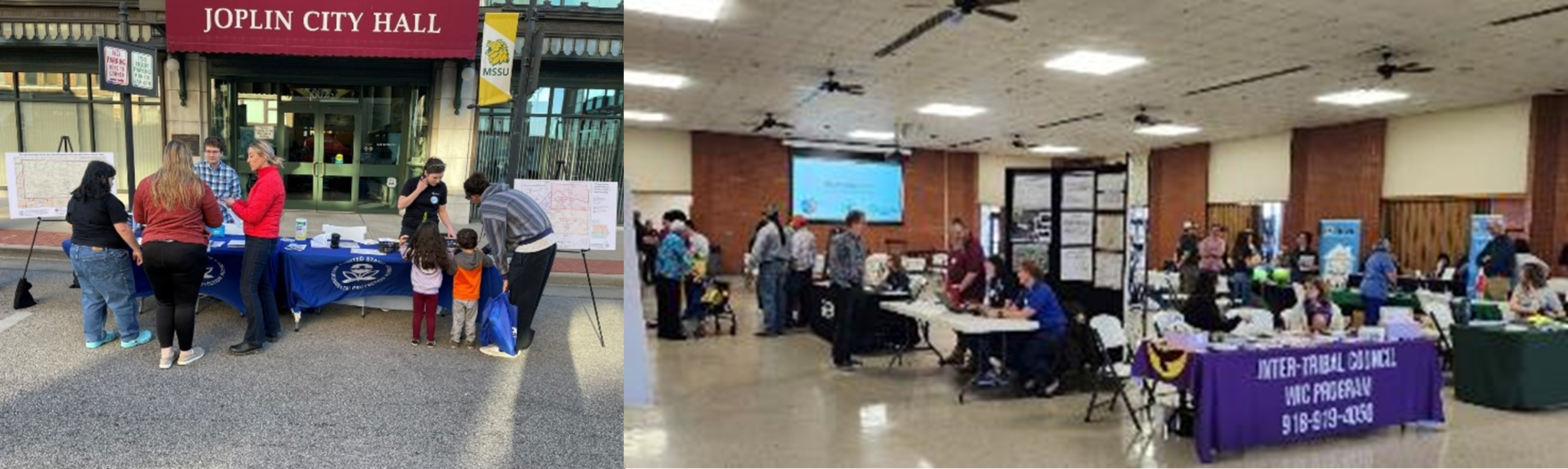
EPA provided a child-specific lead awareness and mitigation campaign in the Tri-State Mining district, which includes parts of Kansas, Missouri and Oklahoma. Children were the focal population of this campaign because they face the greatest health risks from lead exposure. With support from EPA’s Technical Assistance Services for Communities Program, Superfund site teams within the district worked with state and local governments to develop a lead awareness and mitigation campaign for children and parents. At multiple community events, children made buttons, completed activity books, and collected stickers and temporary tattoos themed around lead awareness. Meanwhile, EPA staff spoke with parents and guardians about the risks of lead exposure, the importance of annual blood lead level testing, and simple steps to reduce everyday lead exposure.
Community outreach and education about reducing lead exposure are prime examples of how EPA is using layers of protection to keep kids safe. Layering lead education with available clean-up authorities, results in more nationally consistent cleanup decisions and implementation, thereby accelerating the reduction of direct exposures to lead.
More than 400 community members participated in events for the Oronogo-Duenweg Mining Belt Superfund site and the Tar Creek Superfund site. Jasper County and Ottawa County Health Departments provided free blood tests for eligible children at these events, and Oklahoma Department of Environmental Quality offered a sign up for free residential yard testing to Ottawa County residents. The Tar Creek event, co-hosted by ODEQ, EPA, and the Quapaw Nation of Oklahoma, also served to boost community turnout at a site where it had declined after more than 40 years of clean up. Building on these experiences, Technical Assistance Services is supporting the Tar Creek site team in partnering with Ottawa County elementary schools to explore ways to incorporate lead awareness into K-5 curricula.

EPA Advances Lead Awareness and Education with New Children's Activity Book
Site teams working on lead cleanups now have a new resource to educate kids and families about lead exposure. “Fred the Fox Stays Safe from Lead in Soil” is an interactive children’s activity book that gives families actionable tips to reduce exposure from lead in soil, while keeping it fun for kids. This new resource also advances EPA’s vision of providing layers of protection to protect kids from lead exposure.
EPA Begins Soil Removal at Three Homes in Massachusetts

EPA began the next phase of residential lead cleanups in the Bliss Corner Neighborhood site in Dartmouth, Massachusetts, removing highly contaminated soil and reducing health risks at three priority homes in the community. The homes had lead levels five times higher than EPA removal levels. The site was used for unregulated dumping starting in the 1930s. Lead and polychlorinated biphenyls at the site continue to impact the neighborhood. Since October 2020, the Massachusetts Department of Environmental Protection (MassDEP) and EPA have worked together to sample over 100 mostly residential properties. MassDEP requested EPA's help for a time-critical removal action. EPA dug up and disposed of contaminated soil at 18 properties, including homes, businesses and town-owned areas. Ongoing investigations aim to find remaining high-risk properties, further reduce potential exposure, and define the contamination area. This work demonstrates the vision of the EPA’s residential lead guidance, updated in October 2025, by applying removal authority to expedite cleanup and eliminate exposure to lead contaminated soil.
Successful Lead-Related Community Involvement in East Helena
The East Helena Superfund site team, the Montana Department of Environmental Quality and Lewis & Clark County Public Health collaborated to host one of the most successful community outreach events for the site so far. During parent-teacher conferences at three East Helena schools, community members were educated about soil lead exposure risks for children, and over 70 families signed up for residential yard cleanups. Because of the legacy of soil contamination left behind from over a century of lead and zinc smelting, residents were encouraged to get blood-lead testing and to take part in a residential yard cleanup program. This cleanup and blood testing aligns with EPA’s vision to build layers of protection through public education and outreach, in addition to institutional controls.

Addressing PFAS Contamination at Superfund Sites

Town Hall Communicates Completion of PFAS Actions at Ellsworth Air Force Base
EPA shared preliminary results of a completed per- and polyfluoroalkyl substances risk assessment at Ellsworth Air Force Base during the annual PFAS town hall in Rapid City, South Dakota. Residents expressed satisfaction with the progress but wanted more education for local physicians on PFAS health impacts. In response, EPA worked with the Air Force and the Agency for Toxic Substances and Disease Registry to provide more information about PFAS to area physicians.
Streamlining PFAS Cleanup at Hill Air Force Base

EPA implemented two pilot studies of innovative treatment technologies to streamline the cleanup of per- and polyfluoroalkyl substances found in groundwater at the site in Utah. The studies reduced contaminant levels to EPA tap water regional screening levels and discharge permit limits. After completion, the community was updated on the pilot studies and remedial investigation activities. EPA hosted two open houses in Fall 2025. A third pilot study is scheduled for Spring 2026.