


Farmer and Rancher Inquiry Tool: Grazing Guide
EPA Offices Managing Agriculture Relevant Statutes and Regulations
In this section:
- Office of Chemical Safety and Pollution Prevention (OCSPP)
- Office of Water (OW)
- Office of Air and Radiation (OAR)
- Office of Land and Emergency Management (OLEM)
Office of Chemical Safety and Pollution Prevention (OCSPP)
OCSPP’s mission is to protect you, your family, and the environment from potential risks from pesticides and toxic chemicals.
OCSPP includes the:
- Office of Pesticide Programs (OPP)
- Regulates use of all pesticides in the United States
- Regulates the manufacture of all pesticides in the United States, and
- Establishes maximum levels for pesticide residues in food.
- Office of Pollution Prevention and Toxics (OPPT)
- Evaluates new and existing chemicals and their risks, and
- Prevents or reduces chemical pollution before it gets into the environment.
Statutes and Regulations OCSPP implements:
Federal Insecticide, Fungicide, and Rodenticide Act (FIFRA) –7 U.S.C. § 136
FIFRA authorizes the EPA to regulate the distribution, sale, production, and use of pesticides and pesticide devices in the United States.
- Registration of Pesticides – 40 CFR § 152
Office of Water (OW)
OW ensures drinking water is safe, and restores and maintains oceans, watersheds, and their aquatic ecosystems to protect human health, supports economic and recreational activities, and provides healthy habitat for fish, plants and wildlife.
OW includes the:
- Office of Ground Water and Drinking Water (OGWDW)
- Implementations of the Safe Drinking Water Act, and
- Protects underground sources of drinking water from activities such as injection of non-hazardous fluids through the Underground Injection Control Program.
- Office of Wastewater Management (OWM)
- Oversees the Clean Water Act,
- Manages animal feeding operations, and
- Manages National Pollutant Discharge Elimination System (NPDES) permits for water outfalls and discharges.
- The Office of Wetlands, Oceans and Watersheds (OWOW)
- Covers permitting discharges of dredge or fill material.
Statutes and Regulations OW implements:
Clean Water Act (CWA) – 33 U.S.C. §1251 et seq.
CWA establishes the basic structure for regulating discharges of pollutants into the waters of the United States and regulating quality standards for surface waters.
Safe Drinking Water Act (SDWA) – 42 U.S.C. §300f et seq.
SWDA protects public health by regulating the nation’s public drinking water supply and requires many actions to protect drinking water and its sources.
Office of Air and Radiation (OAR)
OAR develops national programs, policies, and regulations for controlling air pollution and radiation exposure.
OAR includes:
- Office of Air Quality Planning and Standards (OAQPS)
- Develops regulations to limit and reduce air pollution, and
- Assists states and local agencies with monitoring and controlling air pollution, including hazardous air pollutants.
- Office of Transportation and Air Quality (OTAQ)
- Reduces air pollution and greenhouse gas emissions from mobile sources and the fuels that power them,
- Advances clean fuels and technology, and
- Encourages business practices that minimize emissions.
Statutes and Regulations OAR implements:
Clean Air Act (CAA) – 42 U.S.C. §7401 et seq.
The CAA is the comprehensive federal law that regulates air emissions from stationary and mobile sources and authorizes EPA to establish National Ambient Air Quality Standards (NAAQS) to protect public health and public welfare and to regulate emissions of hazardous air pollutants.
Office of Land and Emergency Management (OLEM)
OLEM works to protect the human health and environment of all communities by preventing contamination, cleaning up and returning land to productive use, and responding to emergencies.
OLEM includes:
- Office of Resource Conservation and Recovery (ORCR)
- Establishes and implements regulatory standards, incentive-based programs, and best practices in collaboration with communities, governments, businesses, and other organizations.
- Office of Superfund Remediation and Technology Innovation (OSRTI)
- Implements the Comprehensive Environmental Response, Compensation, and Liability Act (CERCLA) and
- Administers Superfund, the federal government's program to clean up the nation's uncontrolled hazardous waste sites.
Statutes and Regulations OLEM implements:
Resource Conservation & Recovery Act (RCRA) – 42 U.S.C. § 6901 et seq.
RCRA gives EPA the authority to control hazardous waste from generation, transportation, treatment, to storage and disposal through the development of regulations, guidance, and policies.
Comprehensive Environmental Response, Compensation, and Liability Act – 42 U.S.C. §9601 et seq.
CERCLA, also known as Superfund, authorizes the President to respond to releases or threatened releases of hazardous substances into the environment with emphasis on the cleanup of inactive hazardous waste sites.
Emergency Planning & Community Right-to-Know Act (EPCRA) – 42 U.S.C. §11001 et seq.
EPCRA increases the public's knowledge and access to information on chemicals, their uses, and releases into the environment to improve chemical safety. Additionally, it requires communities to prepare chemical emergency response plans, oversee, and coordinate local planning efforts.
Learn more about the statutes and regulations related to livestock operations.
Learn more about the statutes and regulations related to crop operations.
Farming Operation Questions
In this section:
- Federal Insecticide, Fungicide, and Rodenticide Act
- Clean Water Act
- Safe Drinking Water Act
- Clean Air Act
- Resource Conservation and Recovery Act
- Emergency Planning and Community Right-to-Know Act
Federal Insecticide, Fungicide, and Rodenticide Act
Does your agricultural operation utilize pesticides?
If yes, all pesticides must only be used in manners consistent with the labeling.
The Keep Safe: Read the Label First EPA webpage provides information about how to read pesticide labels. Additionally, follow label instructions for storing pesticides and containers.
Contact your state’s Department of Agriculture to learn if you may also be subject to local regulations.
Do you apply pesticides for the production of an agricultural commodity on land you or your employer owns or rents?
If yes, you are considered a private applicator. Federal Certification Standards for Pesticide Applicators outline the standards for certification for both private and commercial applicators.
Does your agricultural operation use or apply restricted-use pesticides (RUPs)?
RUPs are not available for purchase or use by the general public. RUPs have the potential to cause unreasonable adverse effects to the environment and injury to applicators or bystanders without added restrictions.
Federal law requires any person who applies or supervises the use of restricted use pesticides (RUPs) to be certified in accordance with EPA regulations and state, territorial and tribal laws. Pesticide applicators must know how to apply RUPs properly and effectively.
You must be certified in each state, territory, and area of Indian country where you make RUP applications. Contact the state certifying agency for requirements.
Does your agricultural operation employ pesticide handlers or agricultural workers who perform tasks related to crop production (growing and harvesting)?
If yes, note that EPA in conjunction with the Pesticide Educational Resources Collaborative (PERC) has a guide to help users of agricultural pesticides comply with the requirements of the federal Worker Protection Standard. The “How to Comply” manual includes:
- Details to help you determine if the WPS requirements apply to you.
- Information on how to comply with the WPS requirements, including exceptions, restrictions, exemptions, options, and examples.
- “Quick Reference Guide”- a list of the basic requirements (excluding exemptions, exceptions, etc.).
- New or revised definitions that may affect your WPS responsibilities.
- Explanations to help you better understand the WPS requirements and how they may apply to you.
You should read this manual if you employ agricultural workers or handlers, are involved in the production of agricultural plants as an owner/manager of an agricultural establishment or a commercial (for-hire) pesticide handling establishment, or work as a crop advisor.
Are you subject to additional requirements of an application exclusion zone when applying pesticides in crop production labeled with the Worker Protection Standard statement?
Depending on the application type and droplet size used, an application may require a 25-foot or 100-foot radius that occurs during the application, moves with the equipment during application, and can extend outside of an agricultural establishment (e.g., school grounds, residential neighborhoods).
Review the Worker Protection Standard Application Exclusion Zone page to review how you plan to apply the pesticide to determine if the Application Exclusion Zone (AEZ) applies to your operation when applying pesticides.
Does the pesticide label (1) require spay drift buffers and/or runoff/erosion mitigation and (2) include a reference to the mitigation menu?
Check the pesticide label to determine how many mitigation points are required for the crop being treated. Pesticide users will need to plan their pesticide applications in advance to determine whether they are subject to spay drift buffer and/or runoff/erosion mitigation. These mitigation requirements will appear on product labels and/or Bulletins for the product in the Bulletins Live! Two System. If a label directs users to check Bulletins, they must do so to determine if additional mitigation requirements apply to their farm/field(s), beyond the requirements that appear on the label.
For many types of applications, the Mitigation Menu outlines the steps pesticide applicators can follow to determine which runoff/erosion mitigation measures to consider and employ before using a pesticide. Similarly, pesticide applicators can use the mitigation menu to identify ecological spray drift buffer reduction options, when given the option to do so on the product label.
The Pesticide App for Label Mitigations (PALM), a mobile-friendly tool that helps farmers and applicators use EPA’s mitigation menu to reduce pesticide exposure to nontarget species from agricultural crop uses. PALM combines the functionality of the spray drift and runoff calculators in a mobile-friendly and easy-to-use web interface.
Does the pesticide label require you to check the Bulletins Live! Two system before making a pesticide application?
A pesticide user must follow applicable mitigation requirements listed on the label. Additionally, if the label directs the user to check the Bulletins Live! Two system, they must do so to determine if additional mitigation requirements apply to the farm/field(s) and meet those requirements to legally apply the pesticide. The Pesticides and Endangered Species Educational Resources Toolbox has Q&A, webinars, quick-start guides, and more.
Do you store pesticides on your agricultural operation?
For pesticides in small portable containers, such as 55-gallon drums or smaller containers, EPA regulates pesticide storage through specific storage instructions on pesticide labels. Some states regulate the storage of pesticides in small portable containers.
Do you have old pesticide containers on your agricultural operation that you want to dispose?
The Federal Insecticide, Fungicide, and Rodenticide Act (FIFRA) governs the sale, distribution and use of pesticides in the United States. Pesticides are regulated under FIFRA until they are disposed, after which they are regulated under the Resource Conservation and Recovery Act (RCRA), which ensures responsible management of hazardous waste and non-hazardous solid waste.
For additional information see EPA’s Requirements for Pesticide Disposal page.
Clean Water Act
Do you need a National Pollutant Discharge Elimination System (NPDES) permit?
If you discharge pollutants from a point source into a Water of the United States, you need an NPDES permit.
If you are building or expanding a building on your operation, you may need a construction stormwater permit. You should ask the NPDES permitting authority.
If you discharge pollutants into a municipal sanitary sewer system, you do not need an NPDES permit, but you should ask the municipality about their permit requirements.
If you discharge pollutants into a municipal storm sewer system, you may need a permit depending on what you discharge. You should ask your NPDES permitting authority.
Who issues NPDES permits and how do you apply for a permit in your State?
NPDES permits are issued by the EPA or authorized states. EPA is the permitting authority in three states (Massachusetts, New Hampshire, and New Mexico) and for certain discharges in other states, territories, and Indian Country. To apply for a state issued NPDES permit, please use the NPDES Permits around the Nation permit map to be directed to your state’s application page. To apply for an EPA-issued permit, please use the resources on EPA’s NPDES Applications and Forms-EPA Applications page.
Does your agricultural operation apply biological or chemical pesticides near or directly in Waters of the United States?
The NPDES permitting program regulates discharges from pesticide applications consistent with section 402 of the Clean Water Act (CWA). Point source discharges of biological pesticides and chemical pesticides that leave a residue in waters of the U.S. are required to comply with NPDES requirements. EPA and the states issue Pesticide General Permits (PGPs) under the NPDES program to offer coverage for pesticide operators. The permit covers mosquito and other flying insect pest control; weed and algae pest control; animal pest control; and forest canopy pest control. Activities not eligible for coverage under a PGP may be eligible for coverage under an individual permit.
Does your agricultural operation need a dredge and fill permit for activities affecting a “Water of the United States”?
In general, Section 404 of the Clean Water Act requires permits for the discharge of dredged or fill material into waters of the United States, including certain wetlands. However, certain activities are exempt from permit requirements under Section 404(f)(1).
You do not generally need a permit under Section 404 if your discharges of dredged or fill material are associated with normal farming, ranching, or silviculture activities such as plowing, cultivating, minor drainage, and harvesting for the production of food, fiber, and forest products or upland soil and water conservation practices. This exemption pertains to "normal farming" and harvesting activities that are part of an established, ongoing farming or forestry operation. If an activity represents a new use of the water, and the activity would result in a reduction in reach or impairment of flow or circulation of “waters of the United States,” the activity is not exempt. For more information, please see Clean Water Act Section 404 and Agriculture.
Does your agricultural operation need a Spill Prevention Control and Countermeasure (SPCC) Plan?
SPCC can apply to a farm that:
- Stores, transfers, uses, or consumes oil or oil products, such as diesel fuel, gasoline, lube oil, hydraulic oil, adjuvant oil, crop oil, vegetable oil, or animal fat; AND
- Stores more than 2,500 U.S. gallons in aboveground containers; AND
- Could reasonably be expected to discharge oil to waters of the United States.
Under Water Resources Reform and Development Act (WRRDA), a farm is not required to have an SPCC Plan if it has:
- An aggregate aboveground storage capacity less than 2,500 gallons OR
- An aggregate aboveground storage capacity greater than 2,500 gallons and less than 6,000 gallons; AND no reportable discharge history.
If your farm stores more than 6,000 gallons, then review the EPA requirements to determine the type of plan that may be required. Frequent Spill Prevention, Control, and Countermeasure (SPCC) Questions for Farms.
Where can you learn more about nutrient management and water quality protection?
Nonpoint source pollution management includes practices that target reducing fertilizer loss and runoff. Please visit the Nonpoint Source Program to learn more about pollution sources and management practices.
Do you apply biosolids to your agricultural fields?
If yes, individual states, Tribes, or localities may have more stringent requirements and additional criteria. For more information about classes of biosolids and land application in your area, please contact your regional EPA office and state department of environment. Learn more about biosolids and EPA’s Use or Disposal of Sewage Sludge Part 503 regulations.
Safe Drinking Water Act
Does your agricultural operation have a Class V injection well?
Class V wells involve the injection of non-hazardous fluids underground. Many underground injection control (UIC) wells that would be found in agricultural operations are Class V wells.
If yes, you need to follow UIC regulations to protect underground sources of drinking water. Check out the Class V Federal Requirements and contact your state or EPA Regional office for more information.
Does your agricultural operation have at least 15 service connections or serve a minimum of 25 people over a period of at least 60 days a year?
If yes, your operation is classified as a public drinking water system and may be subject to Safe Drinking Water Act, regulations and state drinking water requirements. Except for the state of Wyoming, all other state drinking water programs are managed by your state's department of environment. Please see our list of state websites.
Learn more about Drinking Water Requirements for States and Public Water Systems.
- Primary standards are legally enforceable: National Primary Drinking Water Regulations.
- Secondary standards are non-mandatory guidelines to assist public water systems in managing their drinking water for aesthetic considerations: National Secondary Drinking Water Standards.
Clean Air Act
Is your agricultural operation located in an area of nonattainment?
If yes, you need to comply with your state’s State Implementation Plan. To determine if your operation is in an area of nonattainment, see state list of current nonattainment area counties for all criteria pollutants.
Does your agricultural operation have a grain terminal or storage elevator with a permanent storage capacity?
Contact your state permitting authority to determine if this applies to your operation.
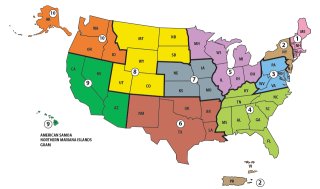
If yes, any grain terminal elevator having a permanent storage capacity of more than 2.5 million U.S. bushels or any grain storage elevator having a permanent storage capacity of more than 1.0 million U.S. bushels must comply with the New Source Performance Standard for grain elevators. Contact your state permitting authority to determine if this applies to your operation.
Does your agricultural operation or farm equipment use a boiler (steam generating unit)?
If yes, air emission regulations for boilers may apply. Boilers (Steam Generating Units) are commonly used as a source of energy on farms. There are two types of air emission regulations for boilers. Contact your state permitting authority to determine if this applies to your operation.
Does your agricultural operation store anhydrous ammonia, propane, or chlorine?
If your operation stores greater than 10,000 pounds of ammonia, 10,000 pounds or propane, or 2,500 pounds of chlorine, you need to submit a Risk Management Plan. Although there is one specific exemption for ammonia held by an operator for use as an agricultural nutrient, there is no general exemption from the risk management program regulations for agricultural operations. If fertilizers, pesticides, or any other materials present at an operation are (or contain) regulated substances in excess of the applicable threshold quantity, the operation must comply with the requirements in 40 CFR Part 68. Ammonia held for distribution at an operation would not be exempt. In addition, even if an operator farmer is exempt from the Risk Management Plan rule, they are still subject to the General Duty Clause under CAA §112(r)(1).For more information, view EPA’s Clean Air Act Section 112(r): Accidental Release Prevention/Risk Management Plan Rule factsheet.
Resource Conservation and Recovery Act
Does your agricultural operation store more than 25 gallons of used oil in underground or above ground tanks?
If yes, agricultural operations exceeding 25 gallons are required to store the used oil in tanks meeting underground or above ground technical requirements and use transporters with EPA authorization numbers for removal from the farm. However, farmers who generate an average of 25 gallons or less per month of used oil from vehicles or machinery used on the farm in a calendar year are exempt from used oil regulations. Resource Conservation and Recovery Act (RCRA) Training Module on Used Oil.
Does your agricultural operation handle hazardous waste?
If yes, you may need to follow RCRA requirements. Please check out your state and local government for more information.
Does your agricultural operation create hazardous waste?
If yes, you are considered a Hazardous Waste Generator. Please see the Hazardous Waste Generator Regulatory Summary table for specific guidance. Additionally, you may be subject to follow local regulations depending on where your operations take place, check if you have local ordinances to comply with.
Does your agricultural operation store 1,100 gallons of oil (e.g. diesel, motor fuel, unleaded) in an underground storage tank (UST)?
- If yes, but its use is exclusively for heating your home. No EPA requirements.
- If yes, then must comply with Underground Storage Tank requirements.
- If the tank’s use is comingled between regulated (farm use) and nonregulated purpose (home use) then it is considered a regulated tank.
Resources for UST Owners and Operators. ‘Musts for USTs’ booklet summarizes federal UST requirements for installation, reporting, spill and overfill prevention, corrosion protection, release detection, walkthrough inspections, compatibility, operator training, repairs, financial responsibility, release response, and closure. Frequently Asked Questions page about Underground Storage Tanks.
Do you think there might be a leak in your underground storage tank?
If there are concerns or visual evidence of a leak, the owner or operator must report the event to the implementing agency within 24 hours. EPA describes the requirements for responding to petroleum or hazardous substances UST system releases, taking corrective actions, and completing remediation for those releases. Contact your implementing agency regarding particular state or tribal specific requirements:
- States: Underground Storage Tanks state contacts.
- Indian Country: Contact EPA Regional Office.
Emergency Planning and Community Right-to-Know Act
Do I need to submit an EPCRA report for animal waste air emissions?
Not at this time, if the release is air emissions from animal waste at farms, such as ammonia and hydrogen sulfide. Learn more about EPCRA Reporting Requirements for Air Releases of Hazardous Substances from Animal Waste at Farms.