


Showerheads

Showering is one of the leading ways we use water in the home, accounting for nearly 17 percent of residential indoor water use—for the average family, that adds up to nearly 40 gallons per day. That's nearly 1.2 trillion gallons of water used in the United States annually just for showering, or enough to supply the water needs of New York and New Jersey for a year! By retrofitting your shower with a WaterSense labeled showerhead, you can save a considerable amount of this water.
On This Page
Shower With Power
Did you know that standard showerheads use 2.5 gallons of water per minute (gpm)? Water-saving showerheads that earn the WaterSense label must demonstrate that they use no more than 2.0 gpm. The WaterSense label also ensures that these products provide a satisfactory shower that is equal to or better than conventional showerheads on the market. EPA worked with a variety of stakeholders—including consumers who tested various showerheads—to develop criteria for water coverage and spray intensity. All products bearing the WaterSense label—including water–efficient showerheads—must be independently certified to ensure they meet EPA water efficiency and performance criteria.
For more information please read A New Reason to Sing in the Shower (PDF)(3 pp, 280 K, About PDF) in the February 2010 issue of the AWWA Journal. (Reprinted from Journal AWWA, Vol. 101, No. 2 February 2010, by permission). Copyright 2010, American Water Works Association. Permission to reproduce this document is granted for informational purposes only and does not represent or imply approval or endorsement by AWWA of any particular product or service.
Whether you are replacing an older, inefficient showerhead or simply looking for ways to reduce water use and utility bills in your home, look for the WaterSense label on showerheads along with faucets, faucet accessories, and toilets to help you identify models that save water and perform well. In many areas, utilities offer rebates and vouchers that can lower the price.
A WaterSense Labeled Showerhead Factsheet (1 pp, 378K, About PDF) is also available in PDF.
WaterSense Savings
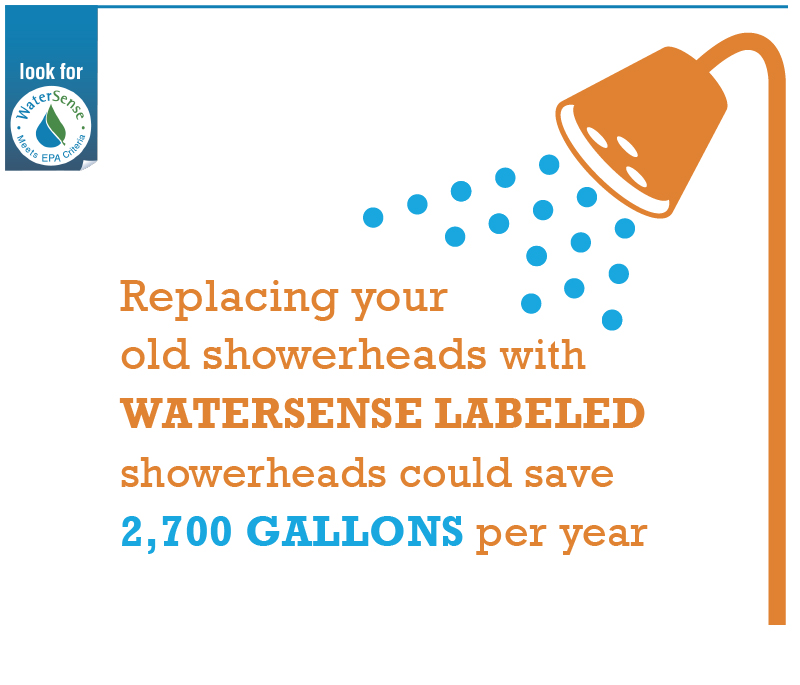
The average family could save 2,700 gallons per year by installing WaterSense labeled showerheads. Since these water savings will reduce demands on water heaters, they will also save energy. In fact, the average family could save more than 330 kilowatt hours of electricity annually, enough to power a house for 11 days.
On a national scale, if every home in the United States installed WaterSense labeled showerheads, we could save more than $2.9 billion in water utility bills and more than 260 billion gallons of water annually. In addition, we could avoid about $2.5 billion in energy costs for heating water.
This WaterSense Showerhead Bath Hack #1 video shows how easy it is to replace your showerhead.
Tip: It's also a good idea to check and, if needed, replace the washer or "o" ring inside the showerhead while making this repair.
Performance
WaterSense labeled showerheads are independently certified to meet rigorous performance requirements including:
- Spray force: Ensures showerhead spray force (or “pressure”) is sufficient to provide user satisfaction.
- Spray coverage: Assesses showerhead spray distribution over the bather to ensure adequate coverage (e.g., shower stream is not too narrow or too wide).
- Pressure compensation: Ensures the showerhead will provide for a minimum flow across a range of household water pressures.
When EPA initiated specification development for showerheads, users generally had poor perceptions of early “low-flow” models. At the time, there were no universally accepted criteria for measuring showerhead performance.
EPA devoted substantial time and resources to identify showerhead attributes that are important to users through research, coordination with a variety of stakeholders, and a targeted user satisfaction study. As a result of the user testing, WaterSense determined that spray force and spray coverage were the criteria that most influenced user satisfaction. EPA worked closely with the ASME/CSA Joint Harmonization Task Group on Plumbing Fittings to develop companion tests that could measure the identified performance attributes in a laboratory setting. EPA then used the results of the user satisfaction study to establish the specific criteria that could differentiate products with which the users were generally dissatisfied, with the intent of excluding products that are unsatisfactory to most users. The test methods and criteria have since been adopted into the national ASME/CSA plumbing standard and are applicable to all high-efficiency showerheads.
For more information on how WaterSense assessed performance when developing the specification:
- WaterSense Performance Overview: Ensuring Products Perform (pdf)
- WaterSense Performance Overview: Showerheads (pdf)
Specification
In July 2018, EPA released a revised version of the WaterSense Specification for Showerheads (Version 1.1). The specification changes are minor and clarify the existing requirements for a showerhead to qualify to earn the WaterSense label. The changes also reflect recent revisions to the American Society of Mechanical Engineers (ASME) A112.18.1/Canadian Standards Association (CSA) B125.1 Plumbing Supply Fittings standard, which is now consistent with the WaterSense Specification for Showerheads. The specification updates ensure that WaterSense labeled showerheads are tested, marked, and labeled consistently and will continue to meet EPA’s criteria for water efficiency and performance..
- WaterSense Specification for Showerheads, Version 1.1 (PDF) (6 pp, 273K, About PDF)
- Summary of Revisions to the WaterSense Specification for Showerheads (PDF) (5 pp, 272K, About PDF)
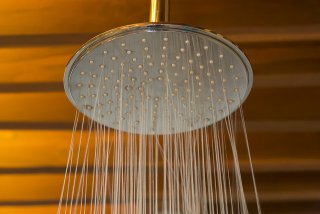
Version 1.1 of the WaterSense Specification for Showerheads also revises, through reference to ASME A112.18.1/CSA B125.1, the spray force performance testing protocol to accommodate water-efficient rain showers. More information on the changes to the spray force test protocol and criteria can be found in WaterSense’s Explanation of Showerhead Performance Testing.
- Explanation of Performance Testing Under the WaterSense Specification for Showerheads (PDF) (8 pp, 585K, About PDF)
Version 1.1 of the WaterSense Specification for Showerheads replaces Version 1.0, which EPA released on March 4, 2010. For more information about the WaterSense specification development process for showerheads, please see the Specification for Showerheads Background Materials page.
Manufacturers that produce showerheads meeting EPA’s efficiency and performance criteria can apply to have their products certified to earn the WaterSense label. Before submitting products for testing, manufacturers must have a signed WaterSense partnership agreement with EPA. Visit the Join WaterSense page to learn more about partnership.